Lower-fat batch cooks
If you make several portions of soup, sauce, bakes or porridge, compare the oat drink’s declared fat on a consistent basis and consider how much of an opened carton each batch will use.


For batch recipes where the oat drink’s contribution to fat matters, compare nutrition figures on the same per-100-ml basis rather than choosing a barista carton by default: Tesco lists 1.2 g fat per 100 ml for its Oat Drink, while Oatly Semi lists 1.4 g, according to their UK product information. Also choose a carton whose after-opening instructions fit your cooking schedule, and check fortification and allergens on the product you buy.
If you make several portions of soup, sauce, bakes or porridge, compare the oat drink’s declared fat on a consistent basis and consider how much of an opened carton each batch will use.
Long-life cartons can suit cooking planned for a later date. Their unopened storage instructions differ from the refrigeration and use-within instructions that apply after opening.
If fortification or dietary restrictions affect your choice, check the individual carton for added nutrients and its oat, gluten and cross-contact wording. A dairy-free description does not settle those questions.
Start with the nutrition basis for the amount your recipe uses, then check whether the carton and its label suit your storage plans and dietary requirements.
| Priority | What to check | Your needs |
|---|---|---|
| Fat per 100 ml | Compare like-for-like label figures. Tesco lists 1.2 g per 100 ml for its Oat Drink; Alpro lists 1.5 g per 100 ml for Oat No Sugars. Sainsbury’s lists 3.3 g per 250 ml serving for its Long Life Oat Drink, so account for that different serving size. | I’m making several portions and want to know how much fat the oat drink adds to the recipe. A barista label alone does not answer that question. |
| Carton storage | Check storage before opening, then refrigeration and the use-within period after opening. Tesco specifies 5 days after opening; Sainsbury’s Long Life Oat Drink specifies 3 days, according to their product pages. | I may use one carton across cooking sessions, so I need its opened period to fit the amount I will use. |
| Fortification and allergens | Compare the listed calcium, iodine and vitamins if they matter to your choice. Read the exact allergen and gluten statements: the Food Standards Agency notes that oats remain an allergen even in food labelled gluten-free or very low gluten. | For dairy-free recipes, I want the particular carton—not just the oat-drink category—to fit my ingredient requirements. |
Barista positioning does not establish a lower fat figure. Minor Figures lists 4.3 g fat per 200 ml for Barista Oat, while Tesco lists 1.2 g per 100 ml for its Oat Drink; compare on the same volume basis before deciding.
For a batch recipe where fat is the deciding factor, use the nutrition panel. Consider coffee-focused properties separately if the recipe calls for them.
A long-life carton still has a use-within period once opened. Sainsbury’s specifies 3 days for its Long Life Oat Drink, while Tesco specifies 5 days for its Oat Drink.
Plan the number of cartons around the volume your batches will use, and follow each carton’s refrigeration instruction.
Drink left after the stated period may go unused.
Fortification and allergen statements differ. Marks & Spencer says its Semi Oat Drink is not suitable for coeliacs or people with a milk or wheat allergy; the Food Standards Agency identifies oats as an allergen in their own right.
Check the purchased pack for the nutrients and allergen statements relevant to you, including any manufacturing warnings.
Unopened long-life drink and a finished chilled dish have different storage instructions. Opening the carton also changes how the drink must be stored.
Follow the carton for the drink. For the cooked dish, UK Government food-hygiene guidance for businesses calls for cooling cooked food promptly, keeping chilled food cold and reheating until steaming hot throughout.
These examples show why the exact product matters: fat figures, storage instructions and dietary warnings are not interchangeable across oat drinks.
Tesco Oat Drink 1L lists 1.2 g fat per 100 ml on Tesco’s product page.
Sainsbury’s Long Life Oat Drink 1L is a UHT carton listing 3.3 g fat per 250 ml serving.
Oatly Semi Oat Drink Long Life 1L lists 1.4 g fat per 100 ml on Sainsbury’s product page.
Alpro labels Oat No Sugars Drink 1L low fat and lists 1.5 g fat and 0.0 g sugars per 100 ml.
M&S Plant Kitchen Semi Oat Drink lists 1.5 g fat per 100 g—a weight-based figure, rather than a per-100-ml figure.
Minor Figures positions Barista Oat for coffee and lists 4.3 g fat per 200 ml serving.
These oat drink cartons offer different pack sizes and product styles to consider for batch cooking. Check each pack’s nutrition, storage and allergen details against your recipe before choosing.
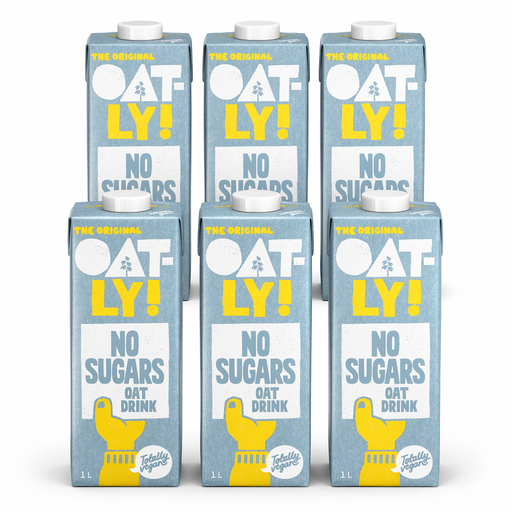 No image available
Oatly says this No Sugars drink can replace milk by volume in cooking and baking recipes. With six 1L cartons, plan how you will use each opened carton; check the pack’s storage and oat-allergen instructions.
 No image available
This long-life multipack may suit planned cooking sessions if its pack size fits your usage. It is Oat Original, not Alpro Oat No Sugars: check this product’s own fat figure, opened-carton instructions and allergen statement, as well as its fit for the recipe.
 No image available
Consider this barista-style multipack if coffee use also matters. For batch meals where fat is the priority, compare its own per-100-ml nutrition panel and check that it suits the intended recipe; also review the opened-carton and allergen instructions.
Oatly says its Oat Drink No Sugars can replace milk in equal volumes for cooking and baking. That guidance applies to that product; check how your particular recipe turns out, since texture and thickening can vary.
Follow the individual carton’s refrigeration and use-within instructions. Tesco specifies 5 days for its Oat Drink, Sainsbury’s specifies 3 days for its Long Life Oat Drink, and the Oatly Semi listing says approximately 5 days when refrigerated at a maximum of 8°C.
No: long-life storage applies before opening. The Oatly Semi and Sainsbury’s Long Life products both require refrigeration once opened; their use-within periods differ, so read the carton you buy.
No. The Food Standards Agency identifies oats as an allergen even when a food is labelled gluten-free or very low gluten, and Marks & Spencer says its Semi Oat Drink is unsuitable for coeliacs. Check the exact pack’s allergen statement and any gluten-free claim.
No. The carton’s instructions apply to the drink itself. For a cooked dish, UK Government food-hygiene guidance for businesses calls for cooling cooked food promptly, keeping chilled food cold and reheating food until steaming hot throughout; follow storage instructions for the other ingredients too.