Cooks planning a milk-based dish
If the recipe calls for milk, compare fat per 100 ml and look for product-specific cooking guidance. A milk-substitution claim does not mean an oat drink will reproduce the texture of dairy cream.


For an Italian-night recipe that calls for milk, Oatly Oat Drink Semi lists 1.4 g fat per 100 ml and is described by Oatly as suitable for cooking and baking; that does not establish how it will perform in a cream-heavy sauce. If fat is the main consideration, M&S Only 3 Ingredients lists 0.5 g per 100 ml but is not fortified; for a no-sugars drink, Alpro Oat No Sugars lists 0.0 g sugars per 100 ml. Check the exact carton’s nutrition and allergen information before serving guests.
If the recipe calls for milk, compare fat per 100 ml and look for product-specific cooking guidance. A milk-substitution claim does not mean an oat drink will reproduce the texture of dairy cream.
Check the sugars figure as well as fat per 100 ml. A no-sugars formulation and a lower fat figure are separate considerations.
For guests with milk or wheat allergy, coeliac disease or other food-hypersensitivity concerns, read the exact carton’s ingredients, allergen and precautionary statements. A vegan label is not an allergen clearance.
Start with the intended use, then compare nutrition figures on the same per-100-ml basis. The annex to Regulation (EC) No 1924/2006, published by legislation.gov.uk, gives no more than 1.5 g fat per 100 ml as the low-fat condition for liquids.
| Priority | What to check | Your needs |
|---|---|---|
| Fat | Compare fat per 100 ml, not per carton or serving. M&S lists 0.5 g per 100 ml for Only 3 Ingredients, while Oatly lists 1.4 g per 100 ml for Oat Drink Semi. | I’m choosing a lighter-fat option and want to compare cartons on the same basis. |
| Cooking | Check whether the maker describes use in cooking or baking and whether the recipe calls for milk rather than cream. Oatly describes Oat Drink Semi as a substitute where a recipe specifies cow’s milk. | My dish needs a milk-based ingredient; I don’t want to assume the result will have the texture of a cream sauce. |
| Hot drinks | Read the carton’s preparation advice. Tesco advises adding its oat drink before hot liquid and avoiding boiling water; Sainsbury’s advises letting hot water cool slightly to reduce separation. | Coffee after the meal matters to me, so I’ll check how the particular drink should be added. |
| Sugars | Read sugars per 100 ml rather than relying on a variant name. Alpro lists 0.0 g sugars per 100 ml for Oat No Sugars and 1.5 g fat per 100 ml on its UK product page. | I want a no-sugars drink and still need to check its fat figure. |
| Ingredients and fortification | Compare the ingredient list with any added calcium, iodine or vitamins. M&S Only 3 Ingredients contains water, oats and salt but is not fortified. | A short ingredient list appeals to me, but I may also want to compare fortified options. |
| Allergens | Check the current ingredients and precautionary statements for the exact product. The Food Standards Agency cautions that vegan labelling should not stand in for allergen labelling. | I’m serving someone with an allergy or coeliac disease, so I need to check the particular carton before pouring it. |
Barista positioning describes an intended coffee use, not its fat figure. Minor Figures lists 3.7 g fat per 200 ml for Organic Barista Oat, equivalent to 1.85 g per 100 ml.
Compare fat per 100 ml before choosing a barista-style drink for a low-fat aim.
M&S Only 3 Ingredients lists 0.5 g fat per 100 ml but is not fortified; other named oat drinks list added nutrients.
Check both the fat figure and the ingredient and nutrition information if fortification matters to your choice.
Tesco and Sainsbury’s give product-specific advice intended to reduce curdling or separation in hot drinks.
Follow the instructions on the carton and try a small amount before serving an unfamiliar drink hot.
The Food Standards Agency warns against treating vegan labelling as a substitute for allergen information. Some named oat drinks also carry specific suitability warnings.
Read the exact product’s allergen and precautionary statements when serving a guest with an allergy or coeliac disease.
These product-line examples help compare formulations and stated uses; they do not describe every drink from each brand.
Oatly positions Oat Drink Semi for drinking, cooking and baking.
Oat No Sugars is an option for comparing sugars alongside fat.
Organic Barista Oat is positioned by Minor Figures for coffee preparation.
Tesco Oat Drink is an own-label option with added nutrients.
Sainsbury’s Oat Drink is a fortified own-label option.
M&S lists both a fortified Semi Oat Drink and an unfortified Only 3 Ingredients Oat Drink.
These multipacks offer oat drinks to consider for drinks alongside an Italian meal. Check each carton’s nutrition, intended use and allergen information before choosing one for a recipe or a guest.
 No image available
For a no-sugars drink alongside the meal, compare the figures on this eight-carton pack with your requirements. Alpro’s UK page lists 0.0 g sugars per 100 ml for Oat No Sugars; check this pack’s current fat figure on the carton before relying on a precise value. Its suitability for a cooked sauce is a separate question.
 No image available
Consider this barista-labelled eight-carton pack if coffee follows the meal. Check fat and sugars per 100 ml on the carton: a barista name alone establishes neither a low-fat figure nor suitability for a cooked sauce.
 No image available
If you want an oat drink alongside the meal, compare this Original variant’s fat and sugars per 100 ml with the No Sugars variant. The eight-carton format is explicit in its name; check the carton before choosing it for a heated recipe.
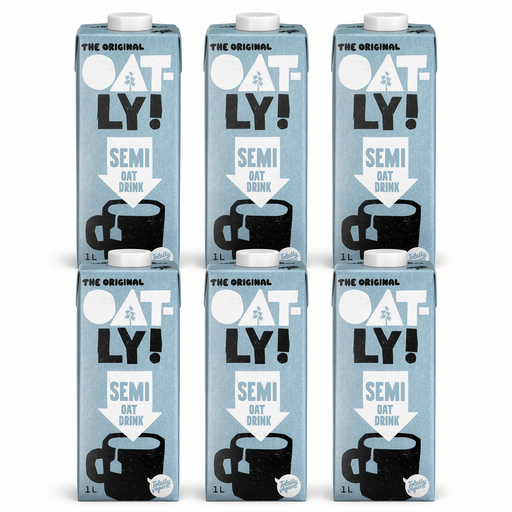 No image available
This listing names Semi, but its accompanying description describes a Barista variant. Confirm which carton the six-pack contains and check its fat per 100 ml and intended use before choosing it for a hot drink or recipe.
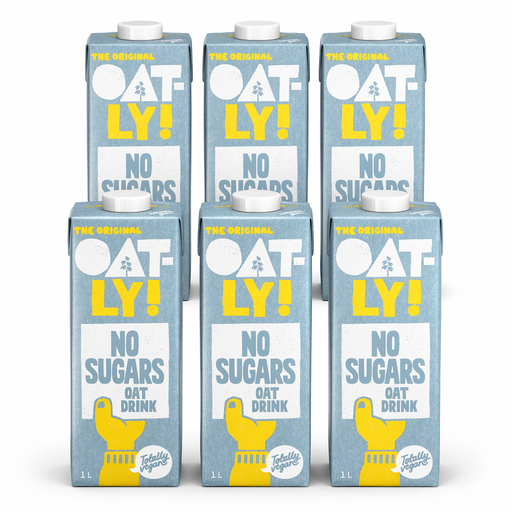 No image available
For a no-sugars drink, check the nutrition panel on this six-carton pack, including fat per 100 ml. Its name does not establish how it will perform in coffee or a cooked Italian dish.
Compare fat per 100 ml. The annex to Regulation (EC) No 1924/2006, published by legislation.gov.uk, sets the low-fat condition for liquids at no more than 1.5 g fat per 100 ml; a per-serving figure may use a different volume.
Of the drinks compared here, M&S Only 3 Ingredients Oat Drink has the lowest listed figure at 0.5 g fat per 100 ml. M&S says it is not fortified, so compare that distinction as well as the fat figure.
If the recipe calls for milk, Oatly says its Oat Drink Semi can replace cow’s milk in cooking or baking, and lists 1.4 g fat per 100 ml. That manufacturer statement does not promise the texture of dairy cream in a cream-heavy sauce.
No. The Food Standards Agency cautions that vegan labelling is not a substitute for allergen labelling. Check the exact carton’s ingredients and precautionary statements for the guest’s particular allergy or coeliac requirements.
Consider a multipack if you have a use for the remaining cartons and can follow their storage instructions. Check the pack count and each carton’s directions after opening rather than assuming every oat drink keeps for the same period.