Households making several daily pours
If oat drink goes into tea, coffee, cereal and cooking, estimate how much you use each week before choosing a carton count. Compare nutrition per 100ml as well as the amount usually poured.


Buy a family pack if your household will use the cartons within their storage instructions, then compare the drinks by what goes into each usual pour. Oatly Fibre Low-Cal declares 20 kcal per 100ml, while Alpro Oat No Sugars declares 0g sugars and 44 kcal per 100ml; the no-sugars option is not the lower-calorie one in this comparison, and a suitable multipack of the Oatly variant should not be assumed.
The right pack depends on how often the household uses oat drink and which details matter for each person using it.
If oat drink goes into tea, coffee, cereal and cooking, estimate how much you use each week before choosing a carton count. Compare nutrition per 100ml as well as the amount usually poured.
Check energy and sugars separately on the nutrition table. A no-sugars label does not tell you how its calories compare with another oat drink.
Read the exact carton’s ingredients, allergen information, fortification and child-use instructions. These details can differ between oat drinks, including products from the same brand.
Start with the nutrition table and your usual pour, then check whether the pack size and storage directions fit how quickly your household uses a carton.
| Priority | What to check | Your needs |
|---|---|---|
| Energy per pour | Compare kcal per 100ml, then use the volume you normally pour. The NHS explains that labels give nutrition per 100ml and sometimes per portion; a stated portion may differ from yours. | Oat drink goes into several drinks or bowls of cereal each day, so I want to account for the amount actually used, not just the carton size. |
| Sugars and fibre | Read sugars and fibre alongside energy on equivalent volumes. Alpro UK states that Oat No Sugars has 0g sugars and 44 kcal per 100ml; Oatly states that Fibre Low-Cal has 20 kcal and 2.0g fibre per 100ml. | A no-sugars formulation matters to me, but I also want to know whether another drink differs in calories or fibre. |
| Fortification | Check the exact product for added calcium, iodine and vitamins rather than relying on the word ‘oat’. The UK Office for Health Improvement & Disparities says the nutrient content of plant-based drinks varies considerably. | If oat drink regularly replaces dairy milk at home, I want to know what the carton contains before choosing a multipack. |
| Pack use and storage | Confirm the carton count and volume, unopened storage directions, and instructions after opening. Work out whether your household can use the pack at its normal rate. | Several cartons are practical for us only if we will use them without leaving opened drink beyond its stated storage period. |
| Coffee use | Decide whether a coffee-focused formulation is needed for the drinks you make. Marks & Spencer states that its Barista Oat Drink has 65 kcal per 100g; keep its stated unit in mind when reading other labels. | Frothing matters for our coffees, but I do not want that requirement to determine every other pour in the household. |
| Household suitability | Read allergen statements and any child-use cautions on the specific carton. Marks & Spencer says its unfortified Only 3 Ingredients Oat Drink is not recommended as a dairy replacement for children under 36 months. | Before sharing one pack across the family, I need to check that its ingredients and stated uses fit everyone who will drink it. |
More cartons change how much you buy, not what is in each serving. The NHS notes that a manufacturer’s stated portion may differ from the amount you use.
Compare labels per 100ml and estimate your household’s usual daily or weekly volume before selecting a pack size.
Alpro UK declares 0g sugars and 44 kcal per 100ml for Oat No Sugars, while Oatly declares 20 kcal per 100ml for Fibre Low-Cal. Those are different selection criteria.
Check energy, sugars and fibre separately, using the same volume for each comparison.
The UK Office for Health Improvement & Disparities says plant-based drinks vary considerably in nutrient content. Marks & Spencer describes its Only 3 Ingredients Oat Drink as unfortified.
If the drink regularly replaces dairy milk, check the exact carton’s nutrient information.
A barista formulation addresses coffee preparation, while a shorter ingredients list does not establish that a drink is fortified or suitable for every household member.
Match a coffee-focused drink to your actual coffee use, and check the label separately for nutrition, allergens and child-use cautions.
These examples show why the formulation matters more than choosing by brand name alone.
Alpro Oat No Sugars is a no-sugars option to compare with lower-calorie drinks rather than treating those descriptions as interchangeable.
Oatly’s Fibre Low-Cal Edition offers a distinct nutrition profile for comparing everyday pours.
Sainsbury's Oat Drink 1L is an example of a fortified standard oat drink.
M&S has oat drinks with different intended uses, including a barista product and an unfortified three-ingredient product.
Minor Figures Barista Oat is a coffee-focused option offered by the manufacturer in a case format.
These Joybuy listings cover everyday and coffee-focused oat drinks, including stated multipacks. Compare the exact carton information and intended use before choosing a pack for your household.
 No image available
This stated eight-carton pack may suit a household that uses a no-sugars oat drink regularly. Compare the listing’s per-100ml nutrition with your usual pour, and check its storage and allergen instructions before sharing the pack.
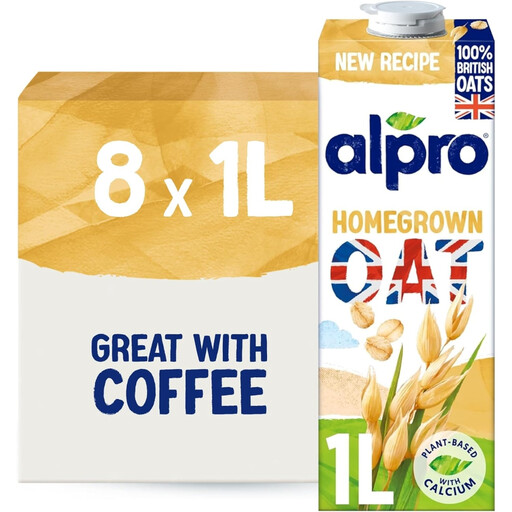 No image available
This stated eight-carton pack is an option for repeated household use when the original formulation fits your preferences. Check its sugars and energy on the nutrition table rather than treating it as the no-sugars variant, and follow the carton’s storage and allergen directions.
 No image available
This stated eight-carton, coffee-focused pack is worth considering if the household regularly uses oat drink in coffee. Check its nutrition for the volume you pour and whether a barista formulation also fits your other daily uses.
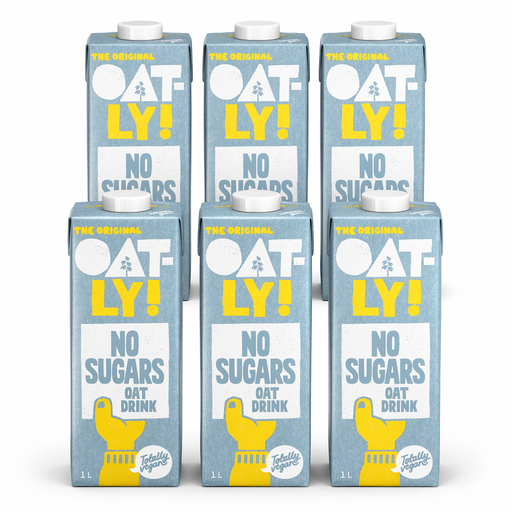 No image available
This no-sugars listing offers another oat drink to compare for everyday pours. Its title says ‘6’ but also identifies a 1L drink: confirm what the order contains before treating it as a six-carton pack, and check the exact label for nutrition and allergens.
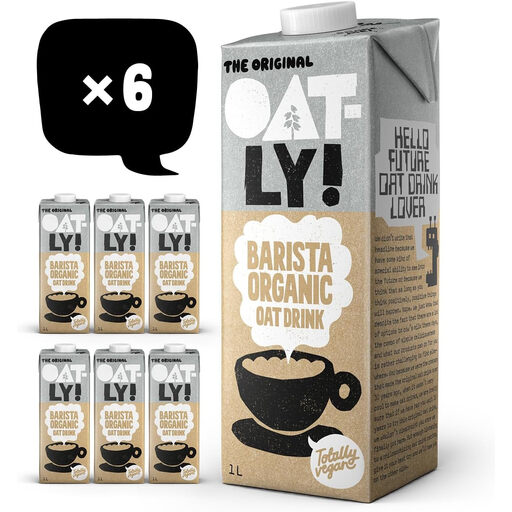 No image available
This stated six-carton organic barista pack is relevant if coffee is a regular use at home. Check its per-100ml nutrition and nutrient information against your other oat-drink options, particularly if the same cartons will also replace dairy milk in other drinks or meals.
No. Alpro UK states that Oat No Sugars has 0g sugars and 44 kcal per 100ml, while Oatly states that Fibre Low-Cal has 20 kcal per 100ml. Compare both measures on the same volume and decide which matters for the pours your household makes.
Oat drinks do not all have the same nutrient content, according to the UK Office for Health Improvement & Disparities. If your household regularly uses one in place of dairy milk, read the exact carton for added nutrients; Marks & Spencer, for example, describes its Only 3 Ingredients Oat Drink as unfortified.
Do not assume so from the product category. Marks & Spencer says its unfortified Only 3 Ingredients Oat Drink is not recommended as a dairy replacement for children under 36 months. Check the exact product’s child-use directions and seek professional advice for a child’s individual dietary needs.
Match the carton count to the amount your household normally uses, then read that product’s unopened and after-opening storage instructions. A pack is useful only if its contents fit your routine without leaving opened cartons beyond their stated use period.