What should you check?
Decide whether organic production or added nutrients matter most for this use, then compare the exact cartons rather than relying on the range name.
Certified-organic oat drink
Consider it when: organic production is a purchasing priority and the drink is not being relied on to supply calcium or protein.
Bear in mind: organic status does not establish fortification; Oatly says its Organic Oat Drink is not fortified.
Fortified oat drink
Consider it when: oat drink regularly replaces milk and added calcium is a priority. The NHS includes unsweetened, calcium-fortified oat alternatives in its dairy-and-alternatives guidance.
Bear in mind: added nutrients do not establish that the drink meets the person’s overall nutrition needs or an organic requirement.
| Priority | What to check | Your needs |
|---|
| Organic status |
Look for an organic claim on the exact carton and check its certification details. Do not treat a short ingredient list as certification. |
I want an oat drink identified as organic, rather than one that simply sounds natural. |
| Added nutrients |
Check for added calcium and the amounts stated on the pack. Check vitamin D, vitamin B12 and iodine where they matter to the wider diet. |
If this replaces milk most days, I want to know which nutrients the drink contributes, not assume an organic carton is fortified. |
| Overall intake |
Compare protein and energy on the same per-100ml basis, alongside the amount usually served. Consider the drink as part of meals and snacks, not in isolation. |
When appetite is limited, I need to consider what the person eats and drinks across the day, not judge nutrition by one carton. |
| Allergen suitability |
Read the exact pack’s allergen and suitability statements, including any information about oats, wheat or milk. |
I cannot assume every oat drink suits someone with coeliac disease or an allergy. Marks & Spencer lists its Plant Kitchen Whole Oat Drink as unsuitable for coeliacs and for people with milk or wheat allergy. |
Brand and range references
These ranges illustrate different organic and fortification choices; check the label of the particular drink you intend to buy.
Oatly
Oatly identifies its Organic Oat Drink as an organic option for everyday drinks and cooking.
- Oatly says its Organic Oat Drink is not fortified.
- If added calcium or vitamins are a priority, check the exact carton rather than relying on its organic name.
Rude Health
Rude Health lists an organic oat drink made with organic gluten-free oats.
- Its product information lists 11% organic gluten-free oats, organic sunflower oil and sea salt alongside spring water.
- Check the exact product’s nutrition and allergen information if it will replace milk regularly.
Plenish
Plenish distinguishes its organic drinks from its enriched range.
- Plenish says its enriched oat range includes added calcium, vitamin B2, vitamin B12 and iodine.
- Plenish says that enriched range is not certified organic; check which range the carton belongs to.
M&S Plant Kitchen
Plant Kitchen Whole Oat Drink is an example of an oat drink listed with added nutrients rather than an organic claim.
- Marks & Spencer lists added calcium, iodine, vitamin D and vitamin B12 for this product.
- Marks & Spencer lists it as unsuitable for coeliacs and for people with milk or wheat allergy.
Oat drinks on Joybuy
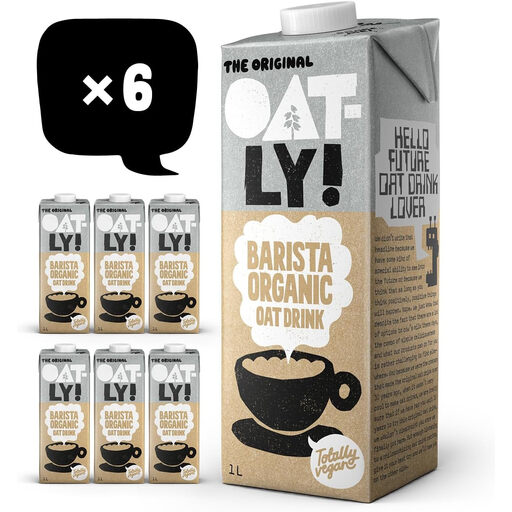
This organic-labelled barista oat drink is an option for hot drinks and ordinary kitchen use; check its exact label before relying on it as a regular milk alternative.
 No image available
Oatly Organic Barista Oat Drink 6x1L
An organic-labelled barista oat drink for uses such as coffee. Before using it regularly instead of milk, check the cartons for organic certification details, added nutrients and nutrition information.
View on Joybuy
Questions about oat drinks
Does organic oat milk provide all the nutrients an older person needs?
No. An organic claim does not establish that a drink is fortified or meets someone’s overall nutrition needs. Oatly says its Organic Oat Drink is not fortified, and the British Dietetic Association highlights protein, calcium, folate and vitamin B12 in diets for people over 65. Check the exact carton alongside the wider diet.
What matters if oat drink replaces milk most days?
Check whether it is unsweetened and contains added calcium, then look for vitamin D, vitamin B12 and iodine if these matter to the person’s wider diet. The NHS includes unsweetened, calcium-fortified oat alternatives in its dairy-and-alternatives guidance; the carton’s protein content also needs considering separately.
How can I check an organic claim on a UK oat drink?
Look for an organic claim and certification details for the exact product on its pack or product information. UK government organic-labelling guidance distinguishes certified organic food from a product that merely contains an organic ingredient.
When should I seek advice instead of changing oat drinks?
Speak to a GP if an older person has substantial unintentional weight loss or you are concerned they may be malnourished; seek professional advice about swallowing difficulties too. The NHS identifies people aged 65 and over as particularly at risk of malnutrition, and a drink choice cannot replace an assessment of the cause and their individual needs.
Are all oat drinks suitable for coeliac disease or milk allergy?
No. Suitability depends on the exact product: Marks & Spencer lists Plant Kitchen Whole Oat Drink as unsuitable for coeliacs and for people with milk or wheat allergy. Read the carton’s allergen statement and seek medical advice where needed.


