Families sharing snack staples
A 1L carton can be used across cereal, porridge, smoothies and baking during half term. If oat drink is used regularly in place of dairy, compare the nutrients on each carton rather than choosing by brand alone.


For shared cereal, porridge and smoothies, start by comparing 1L oat drinks for the nutrients listed on the exact carton, especially if the family regularly avoids dairy. A no-sugars variant suits a different preference, while a bulk pack makes sense only if its flavour, storage requirements and quantity fit how the household will use it. For coeliac disease, look for an explicit gluten-free label; do not assume an oat drink is suitable as a young child’s main milk drink.
A 1L carton can be used across cereal, porridge, smoothies and baking during half term. If oat drink is used regularly in place of dairy, compare the nutrients on each carton rather than choosing by brand alone.
Check the exact oat drink’s ingredients, allergen declaration and fortification. An oat-based label does not tell you whether a particular carton meets the family’s dietary requirements.
Multiple cartons may suit a household that uses oat drink regularly and has room to store them. Minor Figures lists a 12 × 1L Barista Oat case, but its coffee-focused format still needs to suit the intended snacks.
Choose the type of drink for its intended use, then compare the exact carton’s label and a pack size you can use.
| Priority | What to check | Your needs |
|---|---|---|
| Fortification | Look for calcium, iodine, vitamin D and B12 on the exact carton. Check protein separately; a barista label or short ingredient list does not establish its nutrient content. | I use oat drink regularly instead of dairy and want to know which nutrients this particular carton lists. |
| Sugars and ingredients | Distinguish a no-sugars label from a no-added-sugars claim. Read the ingredients and nutrition information for the precise variant. | For everyday snacks, I may prefer a no-sugars version; for other uses, flavour or a shorter ingredient list may matter more. |
| Gluten and allergens | For coeliac disease or gluten avoidance, look for an explicit gluten-free label on the pack. Read its oat and other allergen declarations. | Someone in my household needs a suitable product, so I cannot assume every oat drink is gluten-free. |
| Pack and storage | Compare carton count and volume, unopened storage instructions and use-after-opening directions. Check whether the flavour suits all planned snacks. | We will use several cartons during half term, but a larger pack only helps if we have space and can use it as directed. |
Fortification varies between oat-drink variants. When dairy is routinely avoided, the nutrients in a particular carton become more important to check.
Compare calcium, iodine, vitamin D, B12 and protein on the label. For a child with an allergy or restricted diet, seek individual advice on an appropriate milk alternative.
Coeliac UK notes that oat products can be contaminated with gluten-containing grains. Oats also need attention in the allergen declaration.
If gluten avoidance is necessary, choose a product explicitly labelled gluten-free and check the declaration on the exact pack.
Minor Figures lists a 12 × 1L Barista Oat case, but a coffee-focused drink is not automatically the right choice for every cereal or smoothie use.
Check the carton’s ingredients, nutrition, storage directions and flavour against the household’s planned use before committing to a case.
M&S lists water, oats and salt for its Only 3 Ingredients Oat Drink. Its separate Semi Oat Drink is described by Marks & Spencer as enriched with calcium, iodine and vitamins D and B12.
Decide whether ingredient simplicity or listed fortification matters for this purchase, then compare the relevant variants rather than the brand alone.
An own-label 1L oat drink for everyday uses.
A range that includes Original and Barista oat drinks.
Oat-drink variants include Semi, No Sugars and Organic.
Separate oat drinks address fortified and short-ingredient-list preferences.
A barista-focused range that includes a 12 × 1L Barista Oat case.
These multipacks offer no-sugars, original, vanilla and barista-labelled oat drinks for households planning several snack occasions. Compare each variant’s label and carton count for your intended use.
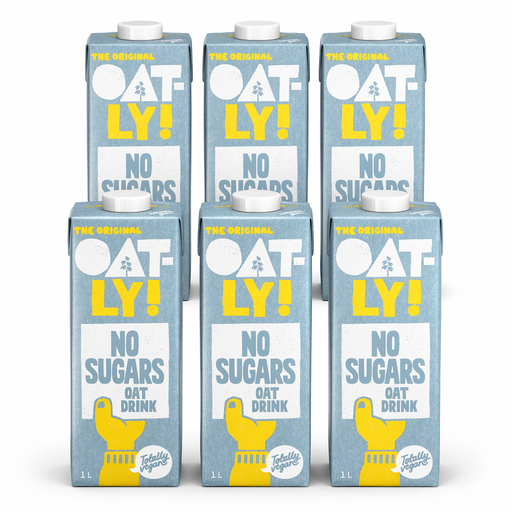 No image available
A six-carton option for shared cereal or smoothies when a no-sugars-labelled variant is preferred. Check the exact pack for fortification and, if needed, an explicit gluten-free label.
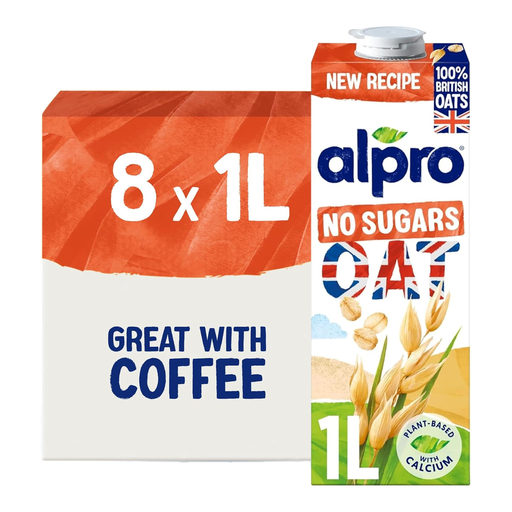 No image available
Eight long-life cartons may suit a household using oat drink throughout the break. Check the current carton’s sugars and ingredients: the product wording about naturally occurring sugars is inconsistent. Check its gluten declaration if relevant.
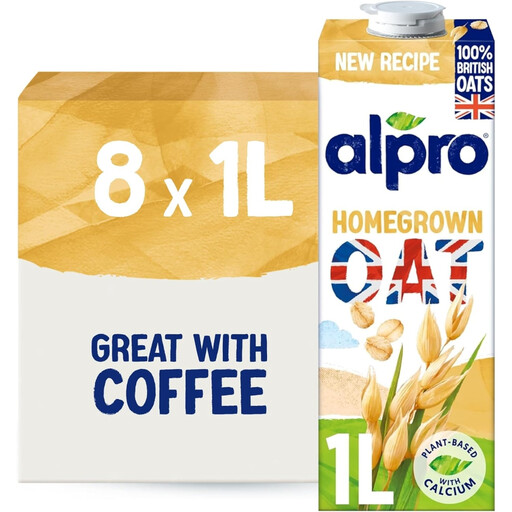 No image available
An eight-carton original variant to consider for recurring cereal or smoothie use. If iodine fortification is important, check the current carton: the product description and listed ingredients differ on that detail. Check the gluten declaration too.
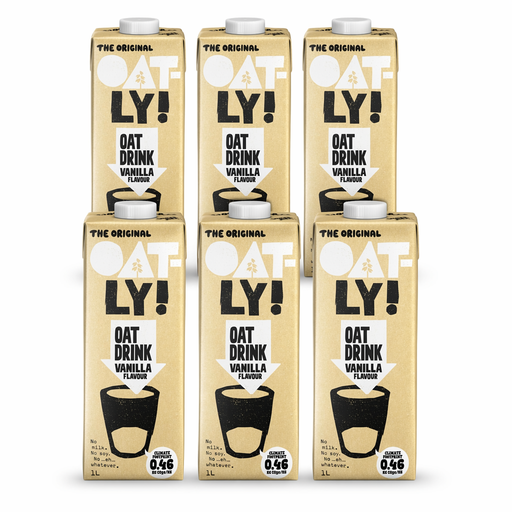 No image available
Consider this six-carton pack when vanilla flavour suits the planned snacks. It is a different choice from a no-sugars variant, so read the ingredients and sugars information; check the exact pack’s gluten-free labelling if needed.
 No image available
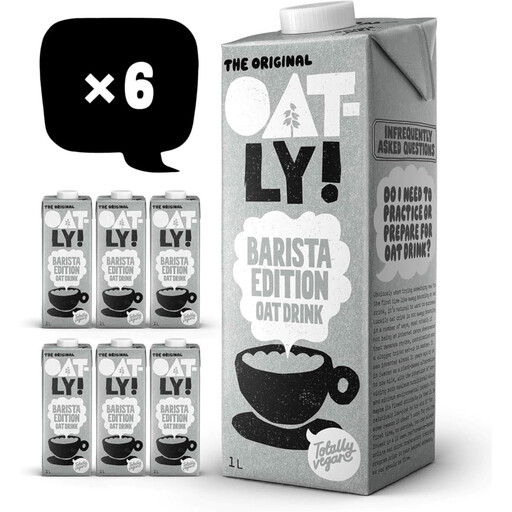
This six-carton barista variant is worth comparing if the household also uses oat drink in coffee. For snack-only use, check whether its flavour and carton label meet your needs; look for explicit gluten-free labelling if relevant.
Not automatically. Frimley Healthier Together NHS advises that plant-based alternatives should not be used as a main milk drink until a child is over one year old. For a child with cow’s-milk protein allergy or a restricted diet, seek individual advice on a suitable alternative.
Check the exact carton for calcium, iodine, vitamin D and B12 fortification, as well as protein, ingredients and allergens. NHS North West Knowledge Now identifies those four added nutrients when discussing suitable plant-based milk alternatives for children aged one and over with cow’s-milk protein allergy.
No. Coeliac UK notes that oat products can be contaminated with gluten-containing grains. For coeliac disease or necessary gluten avoidance, look for an explicit gluten-free label on the exact drink and read its allergen declaration.
Choose a barista variant if its hot-drink use matters to your household, but compare its exact label with an everyday oat drink for cereal and smoothies. Barista positioning alone does not establish the same fortification or suitability for a child’s diet.