Vegan smoothie makers
If you use oat milk after training, compare its labelled protein with the other foods in your smoothie or meal. The drink need not be your only protein-containing ingredient.


Choose a vegan-labelled oat drink as a base for a post-training smoothie or meal, rather than relying on the drink alone when protein is a priority. Minor Figures Everyday Oat, for example, lists 2.1 g protein per 200 ml; a 2015 review in Current Sports Medicine Reports discusses both carbohydrate and protein in recovery meals after endurance exercise. Fortification, allergens and gluten suitability vary by product, so check the exact carton before buying.
If you use oat milk after training, compare its labelled protein with the other foods in your smoothie or meal. The drink need not be your only protein-containing ingredient.
Some oat drinks have added calcium, vitamin B12, vitamin D or iodine. Check which nutrients the particular carton lists rather than assuming every oat drink is fortified.
A vegan label does not establish gluten-free suitability. Read the individual product’s gluten claim, ingredients and allergen statement if oats, wheat or gluten affect your choice.
Start with the whole post-training meal: decide what you want the oat drink to contribute, then check its label against that need.
| Priority | What to check | Your needs |
|---|---|---|
| Protein | Compare labelled protein using the same serving size. Consider which other protein-containing foods will be in the meal. | I’m making a smoothie after training and want its ingredients, not just the oat drink, to cover my protein needs. |
| Carbohydrate | Read carbohydrate per serving and consider it alongside the rest of the meal, particularly when the interval before another endurance session is short. | After a demanding endurance session, I want to know what the drink contributes to a carbohydrate-containing meal. |
| Fortification | Check the exact carton for added calcium, vitamin B12, vitamin D and iodine. A short ingredient list does not establish fortification. | If I use oat drink regularly, I want to know whether it contributes any of these nutrients to my wider vegan diet. |
| Gluten and allergens | Look for a product-specific gluten-free claim and read the oat, wheat and allergen wording. M&S labels its Only 3 Ingredients Oat Drink as unsuitable for coeliacs or people with a wheat allergy. | I need the particular carton to suit my dietary restrictions; vegan labelling alone does not answer that question. |
| Vegan certification | Distinguish wording such as ‘suitable for vegans’ from a third-party certification mark on the exact product. | If independent certification matters to me, I’ll check for the mark on the carton rather than infer it from the drink’s name. |
Minor Figures lists 2.1 g protein per 200 ml of Everyday Oat and 0.7 g per 200 ml of Barista Oat. Choosing between those drinks does not settle what the entire post-training meal supplies.
Use the drink as a smoothie base or alongside food, and check where the meal’s protein will come from.
Vegan suitability and gluten suitability are separate label questions. M&S labels its Barista Oat Drink as vegan but not suitable for coeliacs.
Check the current carton’s gluten claim, ingredients and allergen statement for the specific product you intend to use.
M&S states that its Only 3 Ingredients Oat Drink is unfortified, while its Barista Oat Drink has added calcium, iodine, vitamin B12 and vitamin D.
If those added nutrients matter to your choice, compare the nutrient panels rather than judging by ingredient-list length.
Minor Figures Barista Oat is described for coffee use and lists 0.7 g protein per 200 ml. Its barista designation does not describe a recovery-protein function.
Choose a barista formulation for coffee use; for a post-training meal, check protein on a consistent serving basis and consider the other foods you are having.
These examples show why the exact product matters: drinks under the same broad oat-milk label can differ in protein, fortification and allergen wording.
Oatly’s UK nutrition information discusses fortified, unflavoured oat drinks.
Alpro offers UK oat drinks for shoppers comparing ingredients and nutrition across individual products.
Everyday Oat is presented for uses including smoothies, while Barista Oat is presented for coffee.
Tesco lists an own-label oat drink in its UK oat-drink range alongside branded products.
M&S describes both an unfortified three-ingredient oat drink and a fortified Plant Kitchen Barista Oat Drink.
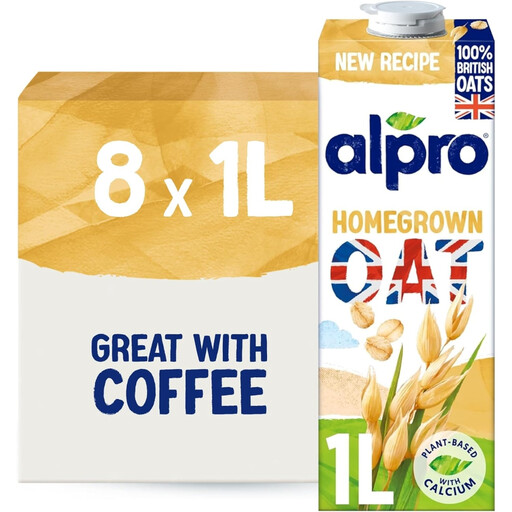
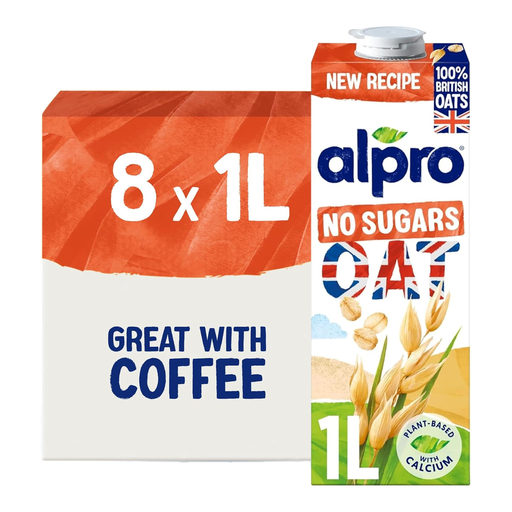
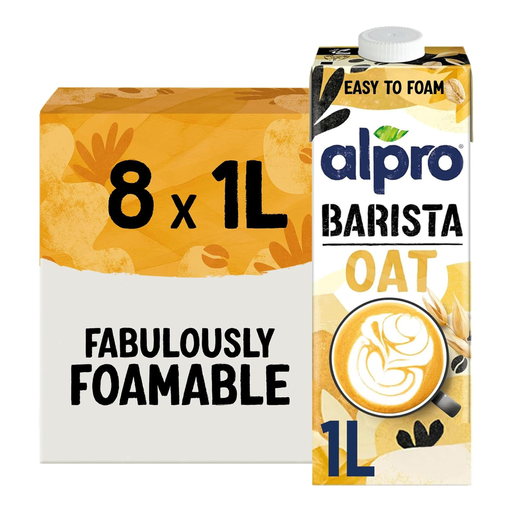
These Alpro oat drinks offer long-life options to consider for a smoothie or for coffee alongside a post-training meal. Check each carton’s vegan wording, protein and allergen information against your needs.
 No image available
For a post-training smoothie alongside a separate protein-containing food, compare this oat drink’s current protein and nutrient panel with the rest of your meal. Check the carton’s vegan and allergen wording if either affects your choice.
 No image available
For a smoothie with a separate protein-containing food, compare this variant’s protein, carbohydrate and allergen information with your needs. If sugar content is part of the decision, use the nutrition panel on the current carton rather than the variant name alone.
 No image available
This barista variant is an option to consider for coffee with a post-training meal. If protein is a priority, assess the whole meal and check this carton’s protein, vegan and allergen wording rather than relying on the barista designation.
If protein is a priority, assess oat milk as one part of the meal rather than the whole recovery choice. Minor Figures lists 2.1 g protein per 200 ml of Everyday Oat, and a 2015 review in Current Sports Medicine Reports discusses carbohydrate and protein together in recovery meals after endurance exercise. Check what protein-containing food you will have with the drink.
That depends on what you want the drink to contribute to your wider diet. NHS guidance on vegan diets discusses fortified dairy alternatives and planned sources of nutrients including vitamin B12, vitamin D, iodine and calcium. Check the exact carton for added nutrients; fortification does not tell you how much protein the meal contains.
No. Vegan wording and gluten suitability answer different questions: M&S labels its Plant Kitchen Barista Oat Drink vegan but not suitable for coeliacs. Check the specific carton’s gluten claim and allergen statement before choosing a drink for someone with a gluten-related restriction.