Smoothie and breakfast makers
If you use a substantial amount of oat drink in a smoothie, shake or bowl of cereal, its protein per serving may affect how much the drink contributes to the meal.


If the oat drink itself needs to add protein to a smoothie or breakfast, consider a protein-enriched option: Tesco Groceries lists Plenish Clean Protein Oat at 4g protein per 100ml, while Oatly lists its Organic oat drink at 1.1g per 100ml. If mild everyday use or coffee texture matters more, choose a drink for that use and check the protein contribution of the whole meal; a barista label alone does not tell you how much protein the drink provides.
If you use a substantial amount of oat drink in a smoothie, shake or bowl of cereal, its protein per serving may affect how much the drink contributes to the meal.
A mild drink can suit cereal, tea or cooking when other ingredients provide most of the meal’s protein. Check its nutrition panel rather than assuming a simple ingredient list means more protein.
If coffee texture is the priority, a barista drink may be the relevant type to consider. Check protein separately: a product intended for frothing is not necessarily protein-enriched.
Choose when: The drink needs to add a measurable amount of protein to a smoothie, shake or breakfast.
Bear in mind: A formula with added oat and pea protein is different from a plain oat drink; check whether its flavour and texture suit your intended use.
Choose when: You want a short ingredient list and plan to get most of the meal’s protein from other foods.
Bear in mind: Oatly Organic and M&S Only 3 Ingredients are not fortified, according to their respective product pages.
Choose when: The drink’s intended performance in coffee matters more than its protein contribution.
Bear in mind: Check the nutrition panel: Minor Figures lists 0.7g protein per 200ml for Barista Oat, while M&S lists 1.0g per 100g for its Barista Oat Drink.
Start with the amount of drink you use, then compare its protein figure and the features that matter for that particular drink or meal.
| Priority | What to check | Your needs |
|---|---|---|
| Protein contribution | Read protein per 100ml and calculate the amount in your serving. Keep figures stated per 100g on their own basis unless you have the information needed to convert them. | I use enough oat drink in a smoothie or breakfast that its protein contribution matters. Tesco Groceries lists Plenish Clean Protein Oat at 4g per 100ml; Oatly lists its Organic drink at 1.1g per 100ml. |
| Flavour and use | Check whether the exact product is intended for everyday drinks, cereal, smoothies or coffee. Consider how its flavour and texture work in the serving you make. | For tea or cereal, I want an everyday drink; for coffee, I may care more about a barista formula. I would not use coffee positioning as a shortcut for judging protein. |
| Fortification | Read the ingredients and nutrition panel for added calcium, iodine or vitamins. Do not assume that organic and barista versions of a brand have the same formulation. | If oat drink regularly replaces dairy for me, I want to know whether the particular carton is fortified. Oatly says its Organic drink is not, and M&S says the same of Only 3 Ingredients. |
| Ingredients and allergens | Check the current pack’s ingredient list, allergen advice and suitability statements for the exact variant. | I need to make sure the drink suits my ingredient requirements, rather than relying on the word “oat” or on another product from the same brand. |
| Storage | Check whether the carton needs chilling before opening and follow its own refrigeration and use-by directions afterwards. | If I buy several cartons for regular breakfasts, I want a format and opening instructions that fit how quickly I will use each one. |
Protein varies by product. Tesco Groceries lists 4g per 100ml for Plenish Clean Protein Oat, while Oatly lists 1.1g per 100ml for its Organic drink.
Compare the protein figure on the exact pack and work out what your usual serving contributes.
Barista positioning concerns coffee use, not a guaranteed protein level. Minor Figures lists 0.7g per 200ml for Barista Oat; M&S lists 1.0g per 100g for its Barista Oat Drink.
Choose a coffee-focused formula for that use, then assess its protein separately from the rest of the meal.
Oatly Organic and M&S Only 3 Ingredients both state that they are not fortified; other oat-drink formulas list added micronutrients.
If fortification matters to your choice, read the nutrition panel for the specific product.
Ingredient advice and directions after opening belong to the individual drink, not to oat drinks as a category.
Read the current pack’s allergen and suitability statements, then follow its storage instructions.
These examples show why the exact oat-drink variant matters more than the brand name alone.
Clean Protein Oat is a protein-enriched option to examine when the drink needs to contribute protein to a smoothie or breakfast.
Oatly Organic is a simple-ingredient everyday drink; its figures do not describe every Oatly variant.
Its Everyday and Barista oat drinks are positioned for different uses, including cereal and coffee.
The named M&S oat drinks cover short-ingredient, semi and coffee-focused formulas with different nutrition panels.
Alpro has oat-drink variants for shoppers considering an everyday drink or a coffee-focused formula.
These everyday and barista oat drinks are options to consider when mild flavour, cereal or coffee use matters and you are checking protein separately. They are not presented as protein-enriched alternatives.
 No image available
Consider this everyday oat drink for cereal or smoothies when other ingredients provide most of the meal’s protein.
Check the current pack for protein per 100ml, allergen advice and directions after opening.
 No image available
This No Sugars variant is an everyday option for shoppers choosing an oat drink for cereal or hot drinks rather than for its protein content.
Check its current nutrition panel for protein per 100ml as well as the sugars declaration.
 No image available
Consider this barista variant when choosing an oat drink for coffee, while assessing its protein contribution separately.
Read this variant’s own nutrition and fortification information; figures for Oatly Organic Oat Drink do not establish those of Oatly Barista.
 No image available
This is a coffee-focused option to consider when a barista formula matters more to you than getting protein from the drink.
Check the pack’s protein per 100ml and allergen advice; the Barista and Original variants should be assessed separately.
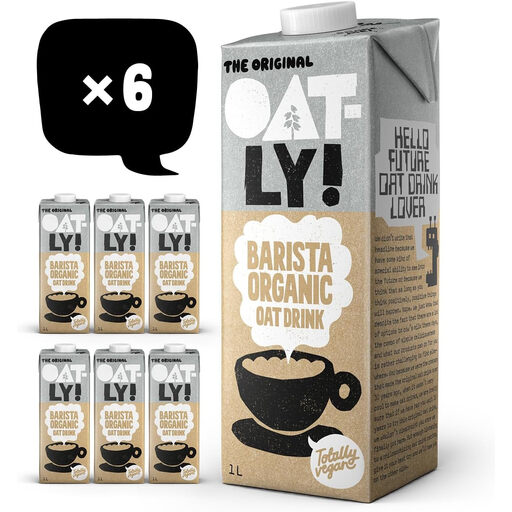 No image available
Consider this organic barista variant for coffee or other hot drinks if those characteristics matter more than using the drink as a protein ingredient.
Check its own ingredient list, fortification information and protein figure; do not apply details from Oatly’s non-barista Organic drink.
No. Tesco Groceries lists 4g protein per 100ml for Plenish Clean Protein Oat, while Oatly lists 1.1g per 100ml for its Organic oat drink. Compare the exact products and the amount you use rather than relying on “oat milk” as a protein guide.
Choose a protein-enriched oat drink if you want the liquid itself to contribute protein. If you prefer a standard mild drink, consider the protein in the other breakfast ingredients as well; Cambridge University Hospitals NHS Foundation Trust identifies foods including pulses and tofu as protein-rich options.
No. Coffee texture does not establish protein content: Minor Figures lists 0.7g protein per 200ml for Barista Oat, while M&S lists 1.0g per 100g for its Barista Oat Drink. Read the panel on the variant you intend to use.
Yes, if added calcium, iodine or vitamins affect your choice. Oatly says its Organic oat drink is not fortified, and M&S says the same of Only 3 Ingredients; other formulas have different ingredient lists, so check the exact carton.
Do not assume so from the word “oat”. Read the current pack’s ingredients, allergen advice and suitability statement for the exact product before deciding whether it meets your requirements.