Shoppers tracking protein
If you use oat drink in breakfast, smoothies or shakes to add protein, check the amount per serving. A protein-enriched formulation and an ordinary oat drink can have very different label figures.


If you want an oat drink to contribute more protein to your diet, compare the protein figure on the label rather than relying on “filtered”, “long life” or “barista”. Plenish Drinks states that its protein-enriched Clean Protein Oat contains 40g per litre; Oatly Organic lists 1.1g per 100ml, while Asda Groceries lists 0.4g per 100ml for Alpro Oat Original Long Life. Choose storage format, fortification and coffee suitability separately from protein content.
If you use oat drink in breakfast, smoothies or shakes to add protein, check the amount per serving. A protein-enriched formulation and an ordinary oat drink can have very different label figures.
If you need unopened cartons for cupboard storage, check the storage instructions as well as the nutrition panel. Long-life packaging does not tell you how much protein the drink contains.
If you want an oat drink for coffee, compare its coffee-use description with its protein figure. A barista formulation is not, by itself, a protein-enriched one.
Start with the protein figure for the amount you will use, then check whether the carton meets your separate needs for storage, added nutrients, coffee use and allergen labelling.
| Priority | What to check | Your needs |
|---|---|---|
| Protein | Compare grams of protein per 100ml and per serving. Check whether protein has been added rather than assuming every oat drink has a similar figure. | I want the drink itself to contribute protein to breakfast or a shake, so its label figure matters more to me than the word “filtered”. |
| Fortification | Look for added calcium, vitamin D, vitamin B12 and iodine on the particular carton. Check protein separately: added nutrients do not establish its protein content. | If oat drink regularly replaces dairy in my plant-based diet, I want to know which nutrients it provides. The NHS advises people following a vegan diet to include some fortified dairy alternatives. |
| Storage | Read the unopened storage instructions and the directions after opening. Do not assume that a protein-enriched drink has the same storage requirements as a long-life carton. | Cupboard storage before opening matters in my kitchen; if I choose a chilled drink instead, I need to plan for fridge space. |
| Coffee use | Check the product’s coffee-use description, then read its protein and fortification information independently. | For coffee, I care about how the drink is intended to be used, but I do not want “barista” to stand in for a protein figure. |
| Allergens | Read the current oat declaration, gluten-free statement and any product-specific coeliac warning. A gluten-free claim does not mean a drink is free of oats. | If I need to avoid gluten or oats, I need the statement for the exact carton. The Food Standards Agency notes that oats remain an allergen even when labelled gluten-free. |
Plenish Drinks states 40g protein per litre for Clean Protein Oat, whereas Oatly lists 1.1g per 100ml for Organic and Asda Groceries lists 0.4g per 100ml for Alpro Oat Original Long Life. Those are different products, not interchangeable protein choices.
Compare the current labels on the same per-100ml basis, then consider how much of the drink you will actually use.
Storage format and intended coffee use answer different questions from protein content. The word “filtered” alone gives you no amount to compare.
Check the protein panel first if protein is your priority; check storage and coffee-use information for those separate requirements.
Oatly says its Organic oat drink is not fortified, and M&S says the same of its Only 3 Ingredients Oat Drink. The NHS advises people following a vegan diet to include some fortified dairy alternatives and to plan for nutrients including calcium, vitamin D, vitamin B12 and iodine.
If oat drink is a regular dairy replacement, read its added-nutrient information alongside its protein figure.
M&S marks its Barista Oat Drink and Only 3 Ingredients Oat Drink as unsuitable for coeliacs. The Food Standards Agency also notes that oats remain an allergen when a product is gluten-free.
Check the current pack for a suitable gluten-free statement and any coeliac warning. If you have an oat allergy, a gluten-free statement does not remove the oat ingredient.
These examples show why the particular formulation matters more than the brand name alone.
Oatly Organic is a long-life oat drink.
Alpro sells oat drinks as well as a separate plant-protein range.
Minor Figures Barista Oat is intended for coffee use.
Tesco lists both its own-label oat drink and a separate protein-enriched Plenish product.
Sainsbury’s describes its own-label Oat Drink as ultra heat treated.
M&S lists a simple-ingredient oat drink and a separate barista version.
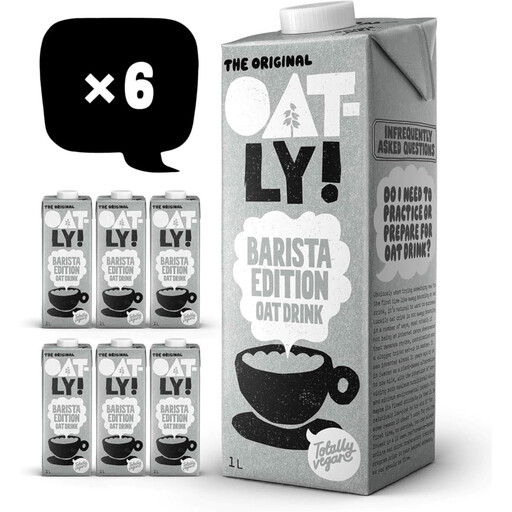
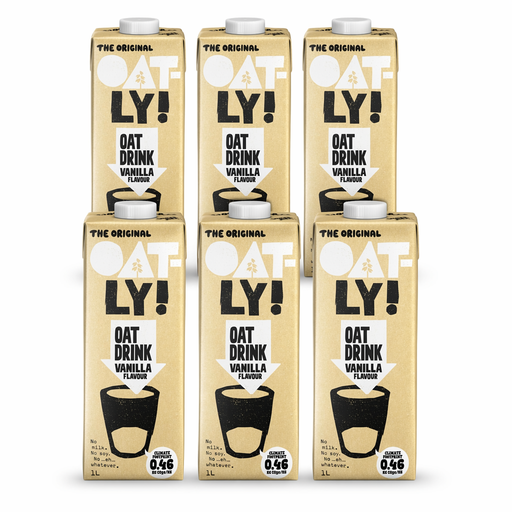
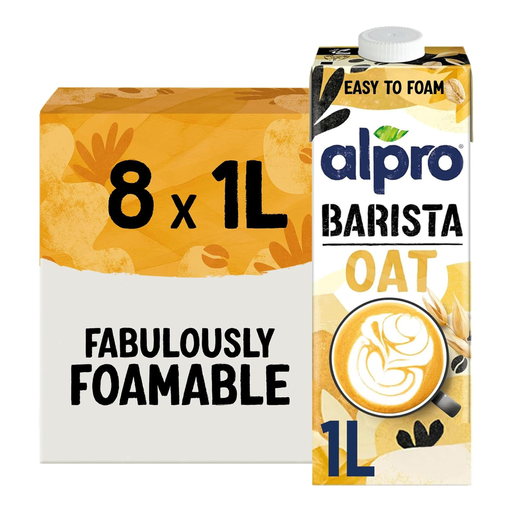
These long-life oat-drink packs suit a choice centred on storage format, vanilla flavour or coffee use. Check the current nutrition panel if the drink’s protein contribution is your deciding factor.
 No image available
A long-life barista option for shoppers choosing an oat drink for coffee. The pack contains six 1L cartons; compare the current protein panel separately from its coffee-use description.
 No image available
A vanilla-flavoured long-life option in six 1L cartons. Check the pack’s unopened storage instructions and current nutrition panel, particularly if sugar or protein content affects your choice.
 No image available
An eight-carton long-life barista pack for coffee use. Barista positioning does not establish a protein amount, so compare the current panel if protein is a priority.
Do not assume so from the oats alone. Oatly lists 1.1g protein per 100ml for Organic, while Asda Groceries lists 0.4g per 100ml for Alpro Oat Original Long Life. If the drink is intended to add protein, compare its per-100ml figure with a specifically protein-enriched option.
Storage format does not determine protein content. Oatly says its Organic drink can be stored at room temperature unopened and lists 1.1g protein per 100ml; Tesco Groceries lists Plenish Clean Protein Oat as chilled, while Plenish Drinks states it contains 40g per litre. Check storage directions and protein separately.
Yes, particularly if you follow a vegan diet. The NHS advises including some fortified dairy alternatives and identifies calcium, vitamin D, vitamin B12 and iodine as nutrients to plan for. Check which, if any, are added to the particular oat drink; fortification does not tell you its protein content.
No. M&S marks its Barista Oat Drink and Only 3 Ingredients Oat Drink as unsuitable for coeliacs. Check the current carton for a suitable gluten-free statement and product-specific warnings. The Food Standards Agency notes that oats remain an allergen even in gluten-free products, so a gluten-free label does not make an oat drink suitable for someone with an oat allergy.
No protein amount follows from the word “filtered” alone. For a high-protein choice, use the carton’s protein figure per 100ml and your likely serving size; check ingredients, fortification and storage instructions for the other parts of your decision.