Hosts replacing sweet biscuits
If you want a savoury base for toppings, distinguish a no-added-sugar claim from the total-sugars figure on the nutrition panel. Neither tells you everything about the oatcake or the finished serving.


Choose a no-added-sugar oatcake if avoiding added sugar is the point of replacing sweet biscuits at a coffee morning. That wording does not mean sugar-free: compare total sugars per 100g, then check salt, saturated fat, allergens and the toppings you plan to serve. An oatcake with a low total-sugars figure is not necessarily a no-added-sugar choice.
If you want a savoury base for toppings, distinguish a no-added-sugar claim from the total-sugars figure on the nutrition panel. Neither tells you everything about the oatcake or the finished serving.
Choose an oatcake specifically labelled gluten free rather than assuming oats make a conventional product suitable. Check the current pack’s ingredients and allergen statements, and ask guests about their oat requirements.
Fine-milled and thin oatcakes offer different bases for cheese or spreads. Consider the texture, the toppings and any guest allergies alongside the nutrition panel.
Start with the reason you want to change the biscuit selection, then compare packs on the same per-100g basis before planning portions and toppings.
| Priority | What to check | Your needs |
|---|---|---|
| Total sugars | Compare the “of which sugars” figures per 100g. The NHS describes 5g of total sugars or less per 100g as low; this figure does not show whether sugar was added. | I want to compare oatcakes on the same basis rather than judge them by the front of the pack. |
| Added sugar | Check whether the pack says “no added sugar”, and read the ingredients as well as the nutrition panel. No added sugar does not mean zero total sugars. | If avoiding added sugar is my reason for switching, a low total-sugars figure alone will not answer my question. |
| Other nutrients | Read salt and saturated fat per 100g alongside sugars. Use the serving information to work out what your planned portion contains. | I do not want a sugar-focused choice to make me overlook the rest of the nutrition panel. |
| Guest suitability | For a gluten-free serving, look for an explicitly labelled product. Check the current ingredients and allergen statements, including any milk or oat-related restrictions relevant to guests. | Guests may need a separate option, and I want them to be able to inspect its packaging. |
| Finished serving | Choose a texture that works with the intended topping, and consider the topping’s ingredients and portion separately from the oatcake’s figures. | Jam or a sweet spread changes what is on the plate, even if the oatcake itself has no added sugar. |
An oatcake can carry no-added-sugar wording and still show naturally occurring sugars on its nutrition panel.
Check “of which sugars” per 100g, then read the salt and saturated-fat figures before choosing what to serve.
Conventional oatcakes may contain wheat flour. A gluten-free label also does not answer every guest’s question about oats or other allergens.
Use a specifically labelled gluten-free pack when needed, keep its packaging available and check suitability with the guest.
The oatcake’s nutrition panel does not include jam, chutney or a spread added at the table.
Offer a choice of toppings and consider the oatcake and topping together when comparing servings.
A Nairn’s Fine Milled listing at Tesco identifies a 250g pack, while the Joybuy listing identifies a 218g pack. The pack size alone cannot establish that their ingredients and nutrition panels match.
Check the exact pack and its current label before carrying figures from one listing over to another.
These examples illustrate differences to check on particular oatcakes; a brand name alone does not establish the nutrition or allergens of another product.
Nairn’s makes fine-milled and gluten-free oatcakes relevant to different coffee-morning needs.
Stockan’s Orkney Thin oatcakes provide a thin option for serving with savoury toppings.
M&S Scottish Oatcakes offer a traditional oatcake to compare by its total-sugars figure.
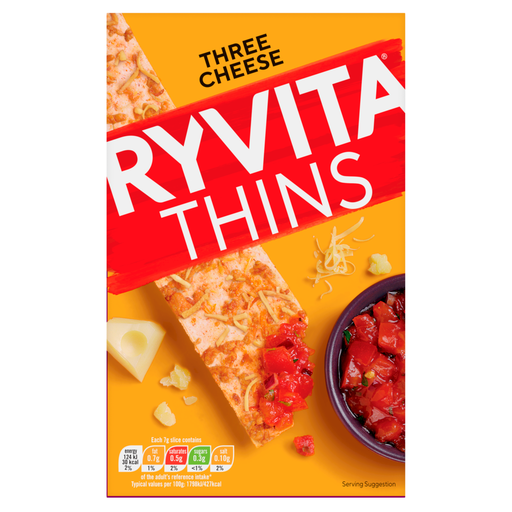
These selections include two flavoured Nairn’s oatcakes and a Ryvita cheese flatbread. The flatbread is an alternative savoury base, not an oatcake; check each pack if your coffee-morning choice depends on a no-added-sugar claim.
 No image available
A cheese-flavoured oatcake to consider when a gluten-free option is needed and the guest can eat oats. The product information identifies milk as an allergen; check the current pack and its sugars, salt and saturated-fat figures before serving.
 No image available
The Marmite and cheese flavour makes this a more specific savoury choice than a plain base for varied toppings. Check the pack’s allergen statement and compare its sugars, salt and saturated fat per 100g with other options.
 No image available
These cheese flatbreads are a savoury serving option, but they are not oatcakes. If added sugar or gluten matters to your guests, check the current ingredients and allergen statement rather than treating them as interchangeable with an oatcake.
No. A no-added-sugar oatcake can still contain naturally occurring sugars. Read its “of which sugars” figure per 100g to see the total shown on the nutrition panel.
The NHS describes 5g of total sugars or less per 100g as low. That measures total sugars, not whether sugar was added, so check the claim and ingredients separately if avoiding added sugar is your goal.
No. Choose a product explicitly labelled gluten free, then check its current ingredients and allergen information with the guest. Do not assume a conventional oatcake is suitable simply because it contains oats.
The sugars figure does not describe the oatcake’s salt or saturated fat. Compare those figures per 100g as well, and account for any topping when deciding what to put out.
Follow the storage instructions and best-before date on the pack you buy. If you open it ahead of time, check that pack for any instructions on storing the remaining oatcakes.