Tea-break biscuit replacers
If you want an oatcake in place of a sweet biscuit, start with a plain option and compare its sugars per 100g. The topping is a separate part of the choice.


For a morning tea break, a plain oatcake labelled no added sugar can be an alternative to a sweet biscuit, but compare its ingredients and total sugars per 100g rather than relying on that claim alone. Consider how many oatcakes you will eat and what you will put on them; if gluten-free suitability matters, choose a product explicitly labelled for that purpose.
If you want an oatcake in place of a sweet biscuit, start with a plain option and compare its sugars per 100g. The topping is a separate part of the choice.
Look for gluten-free and suitable-for-coeliacs wording on the specific product where that suitability is required. Check its current allergen statement too; an ordinary oatcake is not interchangeable with one carrying those labels.
A plain, rough or seeded oatcake may suit different topping and texture preferences. Check the ingredients and nutrition panel of the particular variety rather than assuming its style tells you its sugar content.
Compare the sugar information first, then check the portion, toppings and any dietary labelling that matters to you.
| Priority | What to check | Your needs |
|---|---|---|
| Sugar claims | Read a no-added-sugar claim alongside the ingredients and total sugars per 100g. The NHS uses 5g or less of total sugars per 100g as its low-sugar threshold. | I want an oatcake instead of a sweet biscuit, but I do not want to mistake no added sugar for no sugars. |
| Portion and toppings | Compare per-oatcake values where given, as well as per-100g figures. Check the ingredients and nutrition information for anything you add on top. | A couple of oatcakes with a topping make up my tea break, so the oatcake alone does not tell me about the whole snack. |
| Gluten and allergens | Check gluten-free and suitable-for-coeliacs wording on the exact product if required. Read its allergen and precautionary statements on the current pack. | I need to know whether this particular oatcake meets my gluten or allergen requirements, not just whether it looks like a plain oatcake. |
| Ingredients and texture | Compare plain and seeded varieties by their ingredients and sugars per 100g. Marks & Spencer lists sugar among the ingredients of its Scottish Seeded Oatcakes. | Seeds or a different texture appeal to me, but I still want to check the sugar panel before choosing a variety. |
A product carrying a no-added-sugar claim can still show sugars on its nutrition panel. The NHS distinguishes naturally occurring sugars from free sugars.
Compare total sugars per 100g, read the ingredients and check any topping separately.
Ingredients differ: ASDA Groceries lists wheat and oats for Stockan's Orkney Thin Oatcakes, while its Nairn's Gluten Free Original listing explicitly says suitable for coeliacs.
Where gluten-free or coeliac suitability is required, check the wording and allergen statement on the exact pack you intend to use.
Marks & Spencer lists sugar in its Scottish Seeded Oatcakes and gives 4.6g sugars per 100g. Seed content alone does not establish the sugar figure.
Compare the current sugars panel and ingredients with a plain oatcake if reducing sugar is your priority.
Per-100g figures help compare products of different sizes, while per-oatcake figures describe an individual piece. Tesco Groceries gives both for its Scottish Rough Oatcakes.
Use the same per-100g basis to compare varieties, then check the per-oatcake information for the portion you plan to have.
These examples describe specific listed oatcakes, not every variety made or sold under each name.
A range that includes plain and specifically labelled gluten-free oatcakes.
An own-label rough oatcake with both per-100g and per-oatcake sugar figures on its listing.
An own-label rough oatcake with serving and per-100g values available for comparison.
A retailer with listings for oatcakes that have different gluten-related labelling.
Its Scottish Seeded Oatcakes offer a seeded variety for shoppers comparing texture and ingredients.
A retailer listing specific Nairn's oatcake varieties with no-added-sugar claims.
These options include two savoury oatcakes and a chocolate-and-ginger oat biscuit. The biscuit is an alternative to compare, not a plain oatcake for toppings.
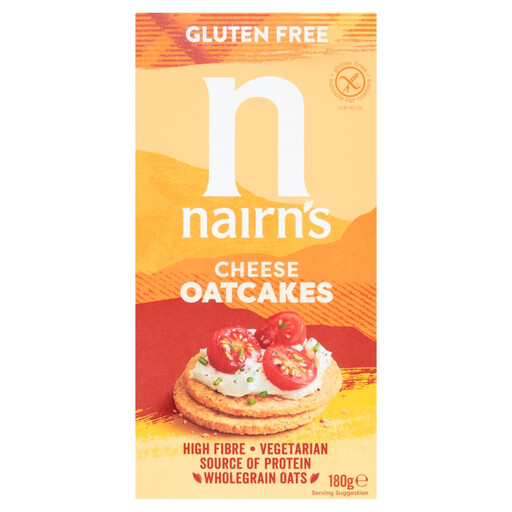 No image available
A cheese-flavoured oatcake labelled gluten free. The 180g pack is a savoury option rather than a plain base; check the current pack for its full allergen and suitability wording.
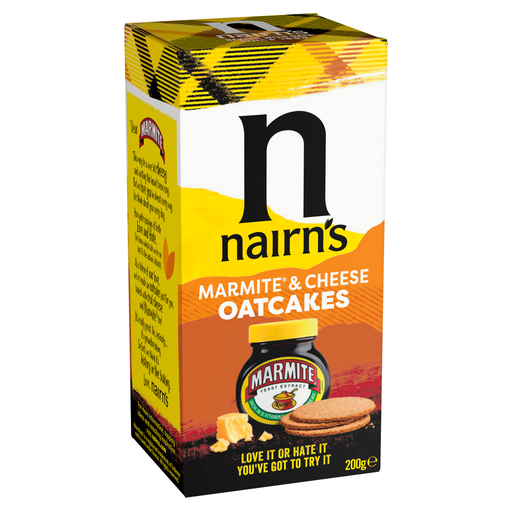 No image available
The Marmite and cheese flavour makes this 200g oatcake pack a savoury choice rather than a neutral base. Compare its sugars panel and check the allergen statement before choosing it for your tea break.
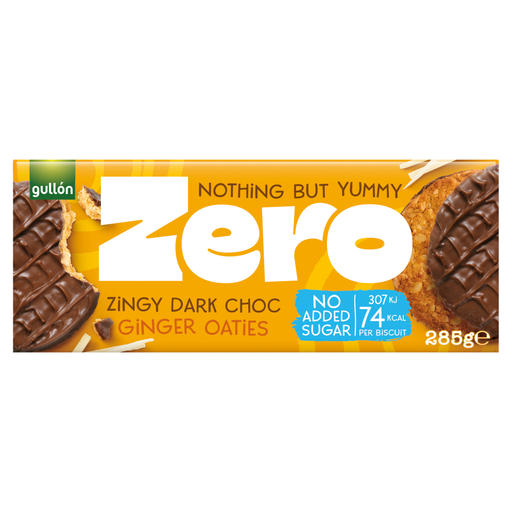 No image available
This chocolate-and-ginger oat biscuit is a sweet biscuit option, not a plain oatcake. If it appeals as a tea-break alternative, compare its ingredients and sugars panel with the oatcakes you are considering.
No. An oatcake labelled no added sugar can still have a total-sugars value on its nutrition panel. Compare that figure per 100g and read the ingredients; the NHS uses 5g or less of total sugars per 100g as its low-sugar threshold.
No; compare named products rather than relying on the style. ASDA Groceries lists 0.7g sugars per 100g for Nairn's Rough Oatcakes, while Marks & Spencer lists 4.6g per 100g and sugar in the ingredients for its Scottish Seeded Oatcakes. Those figures do not establish a rule for every plain or seeded oatcake.
No. If coeliac suitability is required, look for an explicit suitable-for-coeliacs statement on the specific product and read its current allergen information. ASDA Groceries gives that wording for Nairn's Gluten Free Original Oatcakes; it should not be assumed for ordinary oatcakes.
Check the topping separately: a no-added-sugar claim on an oatcake describes the oatcake, not everything served with it. Read the topping's ingredients and nutrition information if sugar is the reason you are changing your tea-break biscuit.
Use sugars per 100g to compare different products on the same basis, then look at per-oatcake values where available to assess the portion you plan to eat. Tesco Groceries, for example, lists both measures for its Scottish Rough Oatcakes.