Hosts putting out several toppings
Plain oatcakes give guests a base for cheese, chutney or spreads. A fine-milled variety is a starting point when you want the toppings, rather than the oatcake’s own flavour, to lead.


Choose plain fine-milled oatcakes when guests will add different toppings, or rough oatcakes when a coarser texture matters more. Neither is a like-for-like substitute for a sweet digestive biscuit. If a guest needs gluten-free food, check that the specific pack is labelled gluten-free; that label does not make oatcakes suitable for someone who reacts to oats.
Plain oatcakes give guests a base for cheese, chutney or spreads. A fine-milled variety is a starting point when you want the toppings, rather than the oatcake’s own flavour, to lead.
Rough oatcakes offer a different texture from fine-milled ones and are worth considering for a savoury spread. They are not intended to taste like sweet digestive biscuits.
Choose a pack specifically labelled gluten-free and read its current allergen information. Gluten-free oatcakes still contain oats, so the label does not address an oat allergy or a reaction to avenin.
Decide whether the oatcakes will carry toppings or be eaten on their own, then check the texture and the dietary information on the pack.
| Priority | What to check | Your needs |
|---|---|---|
| Topping base | Look for a plain variety if you will serve several spreads. Nairn’s lists wholegrain oats at 88% in its Fine Milled Oatcakes 218g; check the current pack for its ingredients. | I’m putting out cheese, chutney and spreads, so I want the toppings to remain the main flavours. |
| Texture | Compare fine-milled and rough varieties rather than treating all plain oatcakes alike. Nairn’s describes its Rough Oatcakes 250g as made with rough wholegrain oats. | For a savoury plate, I’d rather serve a coarser oatcake than a fine-milled one. |
| Flavour | Check whether cheese, fruit or seeds are part of the variety. A flavoured oatcake gives guests an option to eat on its own, but its flavour may not suit every topping. | There’s little topping preparation planned, so an oatcake with its own flavour would be useful. |
| Dietary suitability | For gluten-free food, check the specific pack for a gluten-free label. Read the ingredient and precautionary allergen statements for each guest’s requirements; gluten-free does not mean oat-free. | If a guest has a dietary restriction, I need to check the pack before setting the oatcakes out. |
A wheat-free recipe description is not a gluten-free label. Even a gluten-free oatcake remains unsuitable for someone who reacts to oats.
For a guest who needs gluten-free food, choose a specifically labelled pack and check its current allergen statements. Do not use an oatcake for a guest who must avoid oats.
Cheese or other added flavours may work on their own but may not pair with every spread on a mixed coffee-morning table.
Use plain oatcakes for the shared toppings and serve any flavoured variety separately, so guests can choose how to eat it.
Someone choosing around an allergy needs the ingredient and precautionary information for the exact oatcakes being served, not a general description of the variety.
Keep the current packaging available at the coffee morning and check it before describing an oatcake as suitable for a guest.
Nairn’s has distinct Fine Milled, Rough and Gluten Free oatcake products, giving hosts different texture and dietary-label options to consider.
Tesco’s oatcake listings provide a place to compare plain and flavoured varieties for a coffee-morning spread.
M&S Scottish Oatcakes are an own-label option for a rustic texture alongside savoury toppings.
Sainsbury’s Rough Oatcakes offer an own-label rough variety to consider for a savoury coffee-morning plate.
Waitrose lists both Nairn’s Rough Oatcakes and its own Rough Oatcakes.
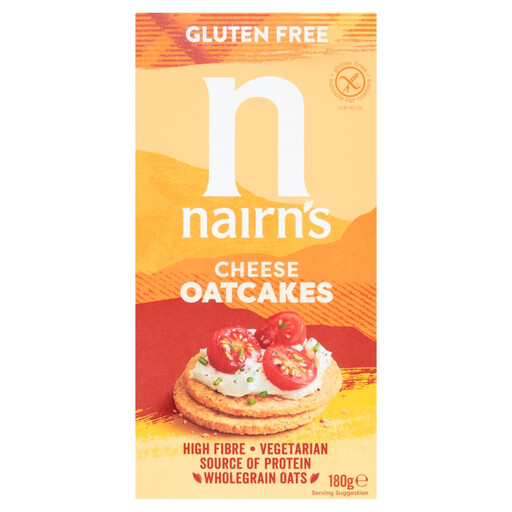
This cheese-flavoured, gluten-free oatcake is an option for guests who can eat oats and want a savoury variety that does not need a topping.
 No image available
The cheese flavour makes these a savoury option to serve on their own rather than a plain base for varied toppings. Gluten-free does not mean oat-free; check the current pack’s ingredient and precautionary allergen statements before serving guests with dietary restrictions.
No: the plain oatcakes discussed here are savoury options for toppings rather than sweet digestive biscuits. Put out a sweet biscuit as well if guests may expect that familiar coffee-morning option.
Start with plain fine-milled oatcakes if you want the cheese or chutney to take the lead. Choose a rough variety when a coarser oat texture is part of what you want to serve.
Choose a pack specifically labelled gluten-free rather than relying on a wheat-free recipe description. The Food Standards Agency defines “gluten-free” as no more than 20 mg/kg gluten in food as sold; also check the pack’s allergen information for the guest’s needs.
No. Gluten-free labelling does not mean oat-free. Nairn’s states that its Gluten Free Oatcakes 213g are not suitable for people who react to avenin, a protein in oats.