Topping-led snackers
A plain oatcake gives you a base for a sweet or savoury topping. Choose its texture with the finished snack in mind, not just the oatcake on its own.


Choose a plain oatcake if you want a crisp base for your own topping, or a digestive if you want a sweet biscuit to eat as it comes. Texture and recipes vary, so compare the ingredients and nutrition panels of the particular packs you are considering. If you need to avoid gluten, choose an explicitly gluten-free product rather than assuming an ordinary oatcake is suitable.
A plain oatcake gives you a base for a sweet or savoury topping. Choose its texture with the finished snack in mind, not just the oatcake on its own.
A digestive is the more direct choice if you want a sweet biscuit straight from the packet rather than a base to top.
Look for an explicitly gluten-free product and check the current pack. Coeliac UK cautions that an oat-based recipe, or oats described as pure or organic, does not by itself establish gluten-free suitability.
Start with how you will eat your elevenses, then compare texture, the complete snack and any dietary requirements on the packs in front of you.
| Priority | What to check | Your needs |
|---|---|---|
| Biscuit or base | Decide whether you want a sweet biscuit as it comes or a plain oatcake to top. Check the ingredients of the particular product. | I want something ready to eat with tea, or a base for a topping I choose myself. |
| Texture | Look for rough, fine-milled or seeded variants. Nairn's describes its Fine Milled oatcakes as thinner and less coarse than its Rough version; Waitrose lists seeds in its Seeded recipe. | A coarse, crumbly bite appeals to me, or I would rather have a thinner oatcake or a recipe containing seeds. |
| Nutrition and portion | Compare fibre, sugars, saturates and salt on the same per-100g basis. The NHS notes that a labelled portion may differ from the amount you eat; include any topping when considering the finished snack. | I want to compare the biscuits or oatcakes fairly, then account for how many I will eat and what I will add. |
| Ingredients and allergens | Check the current ingredients and allergen information for the exact variant. If avoiding gluten, look for explicit gluten-free labelling rather than relying on the word oat. | I need a product that fits my ingredient requirements; if oats themselves are a concern, I need to check those too. |
Ordinary oatcakes can carry ingredient or manufacturing warnings relevant to gluten avoidance. Coeliac UK also notes that standard oats can come into contact with wheat, barley or rye.
Look for an explicitly gluten-free variant and read its current pack. A gluten-free label does not settle whether oats themselves suit you.
A topping changes the ingredients and nutrition of the snack you actually eat. Comparing only the plain oatcake with a ready-to-eat digestive misses that difference.
Decide what you would put on the oatcake, then compare the complete snacks.
A sugar figure does not describe the rest of a product's nutrition panel. Nairn's lists 1.61g salt per 100g for its Fine Milled oatcakes, for example.
Compare sugars, saturates and salt separately on a consistent per-100g basis, then consider the portion you expect to eat.
These details describe named oatcake and biscuit lines, not every product sold under each brand.
Its Rough, Fine Milled and Gluten Free Original oatcakes offer distinct texture and labelling choices.
Its Scottish Oatcakes are an oat-and-wheat option to consider with a topping.
Its Scottish Rough Oatcakes and Digestives illustrate the plain-oatcake and sweet-biscuit choices.
Its Rough Oatcakes are listed as four wrapped packs of six, a format to consider if you divide a pack across breaks.
Its Rough and Seeded oatcakes offer a choice between recipes without and with listed seeds.
Its Oatcakes are an oatmeal-based option for a plain snack or topping base.
These options include digestives for a sweet biscuit break and a cheese-flavoured, gluten-free oatcake for a savoury one. Compare each variant's current pack if ingredients or allergens affect your choice.
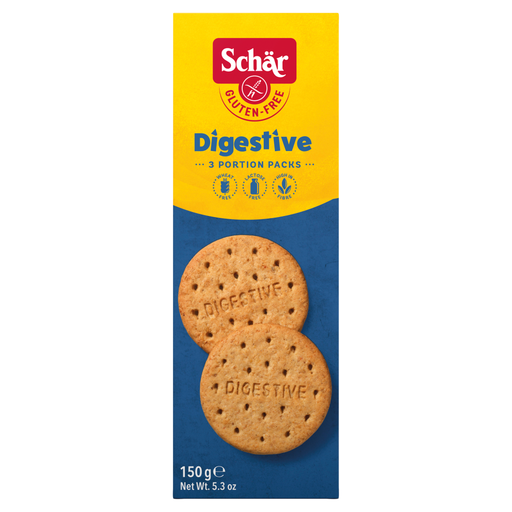 No image available
A gluten-free digestive option if you want a biscuit rather than a topping base. Check the pack for its full ingredient and allergen information.
 No image available
A dark-chocolate digestive for eating as it comes, supplied as two 266g packs. Check the current ingredients and allergens if you have dietary requirements.
 No image available
A milk-chocolate digestive for a sweet biscuit break. Compare its current nutrition panel with a plain digestive or oatcake if those are your alternatives.
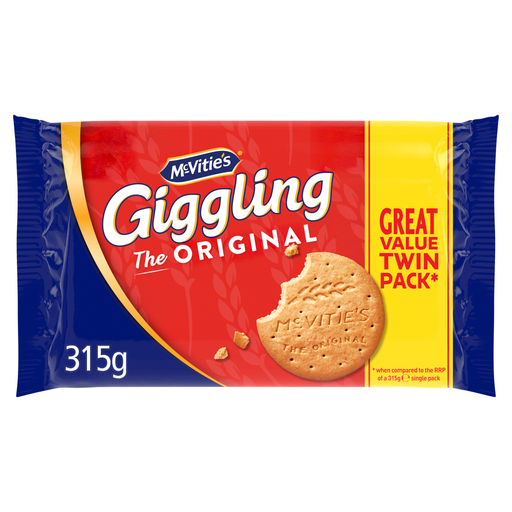 No image available
A plain digestive option for eating as it comes or adding a topping, supplied as two 315g packs. Check the current pack if you need to avoid particular ingredients.
 No image available
A cheese-flavoured, gluten-free oatcake for a savoury break rather than a plain base for sweet toppings. Read the current ingredient and allergen information if other dietary requirements apply.
Do not treat the name as evidence of a digestive benefit. For elevenses, compare the ingredients and nutrition panels of the biscuits and oatcakes you are considering.
The crisp oatcakes described here can be eaten as they come or paired with a topping. If you add one, include it when considering the ingredients and nutrition of your finished snack.
Do not assume they are. Coeliac UK explains that standard oats can come into contact with wheat, barley or rye, and that descriptions such as pure oats do not establish gluten-free status. Look for explicit gluten-free labelling and check the particular pack.
Follow the instructions on your pack. Tesco, Asda and Waitrose advise keeping their listed oatcakes in an airtight container once opened.