Teams running an espresso station
If breakfast includes cappuccinos or lattes, choose a drink positioned for coffee use and trial it with the actual equipment. A self-service automated machine needs its own product-compatibility check.


Choose a barista oat drink when foamed espresso drinks are central to breakfast service, and a standard oat drink when the main uses are cereal, tea and cold self-service. An automated dispenser calls for a machine-specific compatibility check; whichever format you choose, check the current pack’s allergen information and opened-pack instructions before service.
If breakfast includes cappuccinos or lattes, choose a drink positioned for coffee use and trial it with the actual equipment. A self-service automated machine needs its own product-compatibility check.
For a general oat-drink option, compare the exact carton’s ingredients, fortification and handling instructions. Coffee-focused positioning matters less if guests will mainly pour the drink cold.
Keep information for each exact product available at the buffet. Plant-based wording alone does not establish suitability for a guest with coeliac disease, oat allergy or milk allergy.
Start with how guests will use the drink, then check the equipment, pack and service controls for each candidate.
| Priority | What to check | Your needs |
|---|---|---|
| Foamed coffee | Look for coffee or frothing instructions on the exact product. Trial its texture and behaviour with your espresso machine and serving routine. | I need an oat option for cappuccinos or lattes, not just something to pour over cereal. |
| Automated dispensing | Check the machine supplier’s product guidance, cleaning requirements and the drink’s stated use. Oatly positions Baristamatic specifically for automated coffee machines. | Our machine dispenses the oat drink, so a general barista label is not enough to settle compatibility. |
| Cereal and tea | Compare ingredients and any stated fortification. Test hot-drink preparation: Sainsbury’s warns that its Oat Drink can separate unless the water cools slightly. | A drink that works for cold self-service and our tea routine matters more to me than foam. |
| Pack format | Compare carton and portion formats against your service volume, handling and waste records. Dairy Industries International reported a 97ml hospitality oat-drink format in July 2026; that format alone does not establish an advantage for every buffet. | I need a format staff can manage at our breakfast stations or on room trays. |
| Allergen information | Check the current carton and supplier information for the exact product. Food Standards Agency and Food Standards Scotland guidance requires food businesses to provide allergen information for prepacked and non-prepacked food and drink. | Guests must be able to get an accurate answer about the oat drink we are serving today. |
| Storage after opening | Record each product’s refrigeration and consume-within instructions. Marks & Spencer states five days after opening for its Barista Oat Drink, but three days for its Only 3 Ingredients Oat Drink, with both kept at 0°C to +5°C. | Our team needs instructions it can follow across breakfast shifts without applying one rule to every carton. |
Suitability differs by product and by the guest’s concern. Marks & Spencer states that its Barista Oat Drink is not suitable for people with a milk allergy or for coeliacs.
Use the current product label and a SKU-specific allergen record when answering guests; check any gluten-free or allergy-suitability wording against the exact product.
Hot-drink behaviour varies by formulation and preparation. Sainsbury’s advises letting water cool slightly before adding its Oat Drink to avoid separation.
Trial the candidate in your actual espresso or tea routine before ordering it for that station.
Even products from the same retailer can have different consume-within periods, as the two Marks & Spencer oat drinks illustrate.
Put the exact carton’s storage and opened-pack directions into the breakfast procedure, and monitor refrigeration under your food-safety controls.
That word does not tell a supplier whether the priority is flavour, coffee use, ingredients, fortification or pack handling.
Define the characteristic you want, then compare current product labels and service trials against that requirement.
These brand examples illustrate different product approaches; check the exact variant before applying a claim to your buffet.
Offers separate oat drinks positioned for barista service and automated coffee machines.
Positions Barista Oat for coffee preparation.
Offers a Barista Oat product for coffee service in a 6 x 1L pack.
An own-brand oat-drink option to assess for general buffet service.
Its Oat Drink provides an example of a fortified drink for general service.
Offers a coffee-positioned Barista Oat Drink and a separate Only 3 Ingredients Oat Drink.
These options cover barista-labelled drinks and a general oat drink for a buffet serving coffee alongside cereal or other drinks. Check each exact pack against your equipment and service requirements.
 No image available
A barista-labelled pack to consider where breakfast includes coffee and cereal. Trial the exact drink in the hotel’s coffee equipment, and check its current allergen and opened-pack directions.
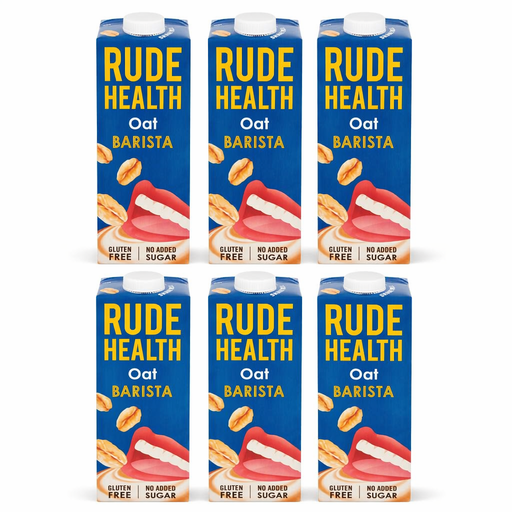 No image available
Consider this barista-labelled 1L carton for a coffee station after a trial with its equipment. Check finished-product gluten-free wording on the current pack before using it in guest information; an ingredient description alone does not settle suitability.
 No image available
A long-life oat-drink pack to assess for cereal and general drinks service. Check the current carton for ingredients, fortification and storage directions, and trial it separately if the coffee station requires foam.
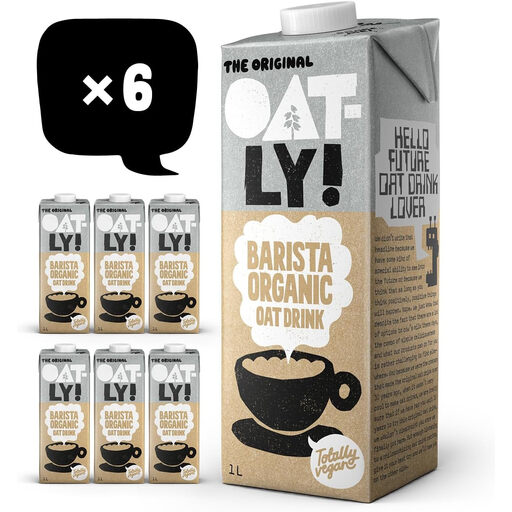 No image available
This organic barista-labelled variant may be relevant to a hot-drinks station. Trial this exact product rather than assuming it behaves like another Oatly Barista variant, and follow its own allergen and opened-pack instructions.
 No image available
A barista-labelled long-life pack for consideration at a coffee-led buffet. Alpro positions Barista Oat for coffee, but check this pack’s current information and trial it with the hotel’s particular machine before service.
Yes. Food Standards Agency guidance for England, Northern Ireland and Wales, and Food Standards Scotland guidance for Scotland, say food businesses must provide allergen information for prepacked and non-prepacked food and drink. Keep the information tied to the exact product being served.
No. Check the exact current product’s gluten-free claim and the controls used in service. The Food Standards Agency defines gluten-free as no more than 20 mg/kg gluten and notes that oats must still be identified as an allergen; Minor Figures describes its Barista Oat as gluten free, while Marks & Spencer says its listed oat drinks are not suitable for coeliacs.
No. Check the exact product’s current allergy statement rather than relying on plant-based wording. Marks & Spencer states that its Barista Oat Drink is not suitable for people with a milk allergy.
Follow that carton’s storage and consume-within instructions alongside the hotel’s food-safety controls. Marks & Spencer specifies 0°C to +5°C and five days after opening for its Barista Oat Drink, but 0°C to +5°C and three days for its Only 3 Ingredients Oat Drink.
No. A barista-positioned drink is relevant when foamed coffee is a central use; for cereal and cold service, compare standard drinks against the buffet’s ingredient, fortification and handling needs. Trial any candidate used in hot drinks: Sainsbury’s warns that its standard Oat Drink can separate if the water has not cooled slightly.