Who this is for

Home bakers adapting a wheat loaf with oats

For people adding oats to a yeast or soda bread who need a workable dough and the right oat format. A study in the Polish Journal of Food and Nutrition Sciences found that higher oat substitution increased water absorption and reduced measured wet gluten; 5% and 10% oat-product blends had fairly good quality under its test conditions.

Shoppers using instant oats as a cupboard shortcut

For bakers wanting quick-cooking wholegrain oats without milk, sugar, flavourings or added vitamins changing a savoury or carefully measured recipe. Plain wholegrain rolled oats are available in quick and sachet formats.

Bakers checking gluten and allergens

For people baking for coeliac disease, gluten sensitivity or relevant allergies who need to check the product’s gluten-free claim and allergen statement rather than relying on “pure”, organic or wholegrain wording.

What to check before buying

Plain quick or instant oats

Choose this when: You want a lighter or faster-cooking oat format while keeping control of sugar, milk, salt and hydration.

Trade-off: Smaller oats may blend in more smoothly, but can give less visible flake texture; sachets can be awkward for custom weights.

Standard wholegrain rolled oats

Choose this when: Your recipe calls for flakes in the dough or on top, or you want a more distinct oat texture.

Trade-off: Larger flakes may need soaking or a recipe designed for their texture and hydration.

Fortified or prepared oat cereals

Choose this when: Added dairy, sweetness, vitamins or a smooth oat-flour base are intentional parts of the recipe.

Trade-off: These products are not neutral substitutes for plain rolled oats.

Priority What to check Your needs
Plain ingredient list Check whether the list contains only wholegrain rolled oats. Look for milk, sugar, flavourings, oat flour, calcium or added vitamins that may change the recipe. I want oats that leave the sweetness, dairy content and flavour of my loaf under my control.
Oat format and hydration Match quick, instant or rolled flakes to the recipe. Keep to the stated oat quantity and adjust only through small trials when adapting a wheat loaf. I need a dough that remains manageable and a loaf texture that suits the recipe, rather than treating oats as a direct replacement for flour.
Gluten and allergens For gluten-free baking, look for a specific gluten-free claim. Read current allergen and precautionary statements for milk and gluten-containing cereals. I need a product that fits the dietary and allergen requirements of the people eating the bread.

Common baking pitfalls

  • Assuming “wholegrain” means plain oats

    Wholegrain-labelled instant products can still include milk, sugar, oat flour or added vitamins. Those ingredients can alter sweetness, allergens and dough behaviour.

    For a savoury or tightly controlled recipe, choose oats listed as 100% wholegrain rolled oats, or account for every added ingredient in the formula.

  • Using a high oat proportion without adjusting the recipe

    In the wheat-oat bread study, increasing oat substitution raised water absorption and reduced wet gluten, so dough and loaf behaviour did not stay unchanged.

    Start with the oat amount in a tested recipe. When adapting a wheat loaf, make small trials and watch hydration and proofing rather than making a full flour-for-oat swap.

  • Treating pure, organic or wholegrain oats as gluten-free

    Coeliac UK explains that “100% oats”, “pure oats” and organic wording do not establish gluten-free status.

    For coeliac-safe baking, choose oats carrying a gluten-free claim and check the current label and individual dietary advice where relevant.

  • Relying on an old online ingredient list

    Food recipes and allergen information can change, which matters where milk, wheat, barley, soya or gluten-free suitability affects the bake.

    Check the physical pack immediately before baking, particularly when serving someone with an allergy or coeliac disease.

Relevant brand references

Flahavan’s

Useful for choosing between quick and standard wholegrain rolled oats for bread baking.

  • Irish Quick Oats and Irish Porridge Oats are listed as 100% wholegrain rolled oats.
  • Oats should not be assumed gluten-free without a specific pack claim and allergen information.

Quaker / Oat So Simple

Relevant for portioned, microwaveable plain wholegrain oats that can be measured into baking.

  • Original sachets are listed as containing Quaker Wholegrain Rolled Oats only, with no added sugar.
  • The listed product information warns of possible wheat, barley and soya, so it is not automatically suitable for gluten-free baking.

Sainsbury’s

Relevant when considering a smooth instant oat cereal rather than a plain flake ingredient.

  • Ready Oats lists oats and oat flour alongside calcium and added vitamins and minerals.
  • It is not a like-for-like replacement for 100% rolled oats in a neutral bread recipe.

Tesco

Relevant for single-serve instant porridge products labelled wholegrain.

  • Tesco Instant Oats Original lists oat flakes as 75% of the ingredients.
  • It also contains dried skimmed milk and sugar, so it is not a plain default for an oat loaf.

M&S

Relevant for ready-in-minutes wholegrain porridge pots rather than plain baking oats.

  • Traditional Porridge Pot is made with wholegrain oats.
  • Its ingredient list includes dried whole milk, and M&S marks it as not suitable for coeliacs and for people with wheat, nut or peanut allergies.

Joybuy oat options

Joybuy product options for bread baking, including plain quick-style sachets, standard rolled oats and a gluten-free oat-flake option.

Quaker Oat So Simple Big Bowl Original 6 Pack 231g

Quaker Oat So Simple Big Bowl Original 6 Pack 231g

A plain wholegrain rolled-oat sachet option for small wheat-oat loaf trials where a neutral oat addition is needed.

Six 38.5g sachets; listed ingredient: Quaker Wholegrain Rolled Oats only. Check the current pack before baking for coeliac disease or wheat allergy, and note that sachet weights may not match every recipe.

Joybuy
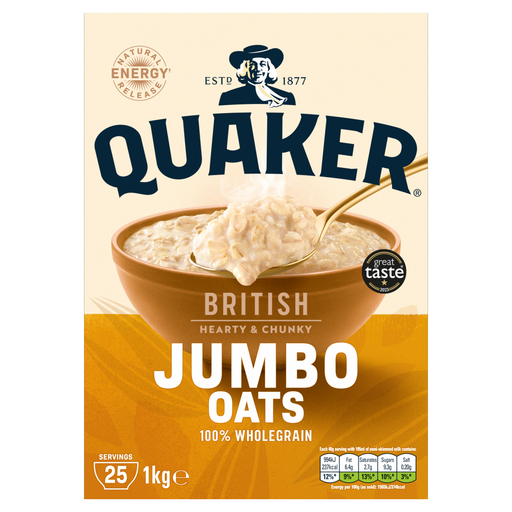
Quaker Jumbo Rolled Oats 1kg

Quaker Jumbo Rolled Oats 1kg

A loose oat option for bread recipes that specify larger flakes or a more visible oat texture.

1kg pack of 100% wholegrain oat flakes. It may contain traces of wheat and is not presented as gluten-free; jumbo flakes are not a confirmed one-for-one substitute for quick oats.

Joybuy
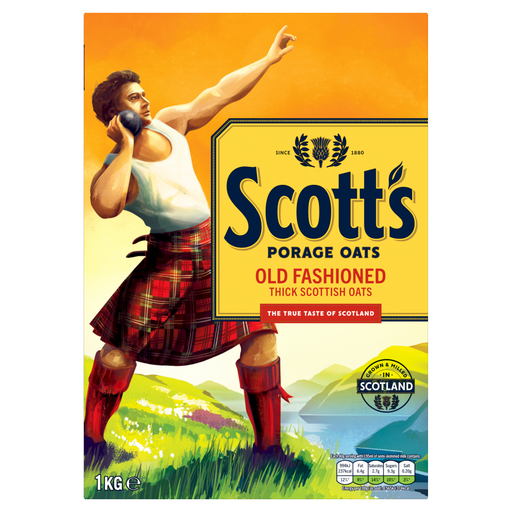
Scotts Porage Oats Old Fashioned Porridge Oats 1kg

Scotts Porage Oats Old Fashioned Porridge Oats 1kg

A plain rolled-oat choice for loaves where a thicker, more pronounced oat texture suits the recipe.

1kg loose pack with 100% rolled oats. The listing notes possible wheat and barley; use a recipe suited to thicker flakes rather than assuming it behaves like quick oats.

Joybuy

Flahavan's Organic Porridge Oats 1kg

Flahavan's Organic Porridge Oats 1kg

A loose wholegrain oat-flake option for recipes using standard flakes and measured quantities.

1kg pack; the catalogue lists 100% organic whole grain oat flakes. Check the recipe before substituting for quick oats, and do not use for coeliac-safe baking without a current gluten-free pack claim.

Joybuy
Morrisons Free From Gluten Free Oats 1kg

Morrisons Free From Gluten Free Oats 1kg

A gluten-free and wheat-free oat-flake option for baking where the recipe can use loose standard flakes.

1kg pack of gluten-free oat flakes, listed as 100% oats and suitable for baking. Confirm the flake format against the recipe and check current allergen information on the physical pack.

Joybuy

Frequently asked questions

Are all wholegrain instant oats suitable for bread baking?

No. Wholegrain describes the oat ingredient, not necessarily the entire formula. For a neutral bread recipe, check for oats or wholegrain rolled oats only: Tesco Instant Oats Original includes dried skimmed milk and sugar, while Sainsbury’s Ready Oats includes oat flour and added vitamins and minerals.

Should I use quick oats or regular rolled oats in oat bread?

Use the format named by your recipe where possible. Quick oats suit a lighter-milled, quicker-cooking oat addition, while standard rolled oats suit recipes calling for flakes or visible oat texture. In the cited wheat-oat bread study, higher oat additions changed hydration and reduced wet gluten.

Can I replace wheat flour entirely with instant oats in a yeast loaf?

Do not assume a direct full replacement will work. The available study tested wheat flour partly replaced with 5%, 10%, 15% and 20% oat products, and found that more oat product changed hydration and reduced wet gluten. Use a purpose-designed gluten-free oat-bread recipe when a wheat-free loaf is required.

Are plain oats automatically gluten-free in the UK?

No. Coeliac UK states that “100% oats”, “pure oats” and organic wording do not establish whether a product is gluten-free. For gluten-free bread, choose oats specifically labelled gluten-free; uncontaminated oats testing at 20 ppm gluten or less may carry that label.

What allergen checks should I make before using instant oats in bread?

Read the current pack for milk, gluten-containing cereals and precautionary warnings. Quaker Oat So Simple Original is listed as possibly containing wheat, barley and soya; Tesco Instant Oats Original contains dried skimmed milk; and M&S Traditional Porridge Pot contains dried whole milk.