
24/7 Customer Support

Free returns

Same-day & Next-day Delivery

Quality Guaranteed

Unlock Your Welcome Offers: FREE Delivery | Up to 80% OFF | Free 30-day JoyPlus trial
Download the APP
A warning light does not always mean an expensive repair, but guessing can quickly become costly. The right OBD2 car diagnostic scanner can help you read fault codes, view live data and check whether a repair has cleared the problem. However, the market includes everything from simple engine code readers to advanced tools with active tests, ECU coding and maintenance resets.
For UK DIY car owners, home mechanics, mobile mechanics and small garages, the important question is not simply “Which scanner has the most features?” It is whether those features work with your specific make, model, year and system.
Many low-cost devices only communicate with the engine ECU. They may read a check-engine fault but cannot access the ABS, SRS, transmission, body control or TPMS systems.
If you need to investigate an airbag warning, gearbox fault or electronic parking brake issue, look for a full-system car scanner or a model that clearly lists the systems it supports. “OBD2 compatible” alone does not confirm access to every module.
A product may advertise 15, 28 or 31 service functions, but availability depends on the vehicle’s software, year and equipment. An OBD2 scanner with reset functions may support oil reset, BMS registration, EPB reset, ABS bleeding, DPF regeneration or throttle relearn on some vehicles but not others.
Before ordering, check the product listing or contact the seller with your vehicle’s VIN. This is particularly important for injector coding, gearbox adaptation, immobiliser functions and high-voltage battery diagnostics.
Some devices include free updates for a stated period, while others list lifetime free updates for specified functions. Check exactly what is included. The LAUNCH CRP129X V2.0, for example, lists lifetime updates but charges separately for some optional functions and full-system software.
Newer FCA vehicles may also require FCA AutoAuth access. A scanner can support the gateway protocol, but the AutoAuth account and any manufacturer charges are separate. Treat “FCA supported” as a compatibility feature, not as a promise of free access.
For routine checks, standard OBD2 functions include:
A car diagnostic tool with four-system access normally covers engine, transmission, ABS and SRS. A true all-system model may also access air conditioning, body control, steering, TPMS and other available ECUs.
UK vehicle compatibility is often described by registration year, but this is only a starting point. Protocols, engine variants and regional software can change the available functions. Confirm the exact vehicle before purchase.
Modern vehicles increasingly use newer communication networks. CAN FD allows larger data frames and faster communication than traditional CAN, while DoIP uses automotive Ethernet for selected diagnostic tasks.
These protocols matter if you own a newer vehicle or intend to inspect a varied range of cars. A CAN FD scanner may be suitable for newer GM models, while FCA AutoAuth support can help with protected Fiat, Chrysler, Dodge, Jeep and Alfa Romeo systems when the required authorisation is available.
Reset functions are different from active tests. A reset may register a battery, initialise a throttle or clear a service reminder. A bi-directional OBD2 scanner can send commands to actuators, such as cooling fans, windows, fuel pumps or valves, and observe their response.
ECU coding diagnostic tools go further by matching or configuring modules after replacement, depending on the vehicle. These operations require stable battery voltage and careful adherence to the vehicle’s repair procedure. They should not be treated as general-purpose customisation features.
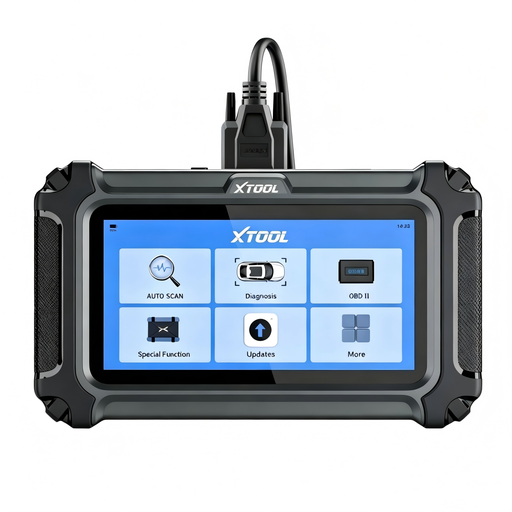
Why This Fits Their Persona: A practical handheld choice for UK drivers and weekend mechanics who want more than engine-code reading without moving immediately to workshop-scale equipment.
It lists four-system diagnostics, CAN FD and FCA support rather than only generic OBD2 engine access. Compatibility and function availability still require checking by vehicle.
16 listed reset functions, including EPB, BMS, TPMS, ABS bleeding and throttle relearn; 5.45-inch touchscreen and lifetime free updates listed by the manufacturer.
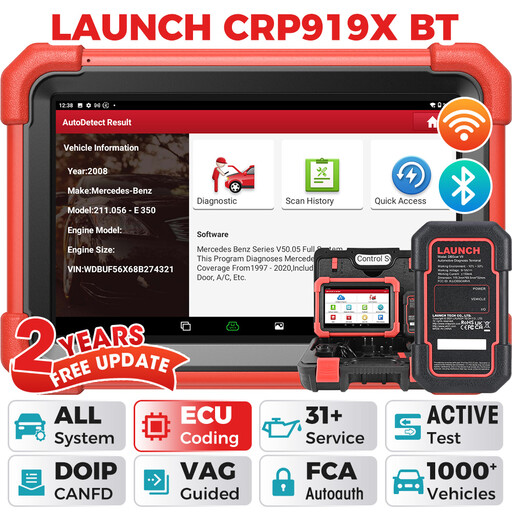
Why This Fits Their Persona: Suits users who want wireless operation, broad system coverage and additional diagnostic functions for a home workshop or independent garage.
The listing separates its two-year free update period from other ownership features and notes that FCA AutoAuth access is separate.
All-system diagnostics, 31 listed reset services, active tests, ECU coding, CAN FD and DoIP support, with a Bluetooth VCI.
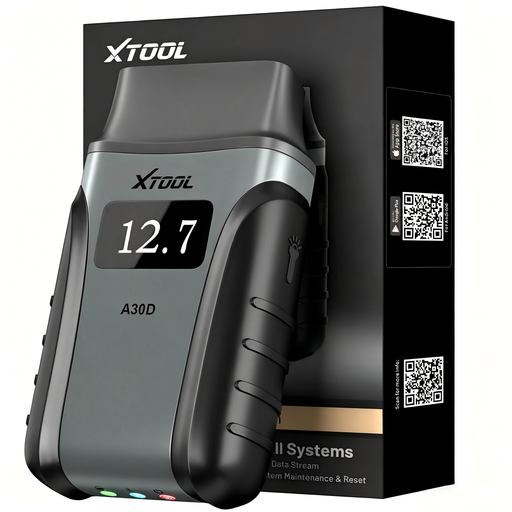
Why This Fits Their Persona: Designed for mobile mechanics, small repair businesses and DIY users who prefer a smartphone-based tool that can move around the vehicle.
It identifies wireless phone requirements, separate FCA AutoAuth costs and vehicle-dependent functions, reducing the risk of assuming universal coding or resets.
19 listed reset functions, all-system diagnostics, active tests, up to eight live-data graphs, CAN FD and iOS/Android compatibility.
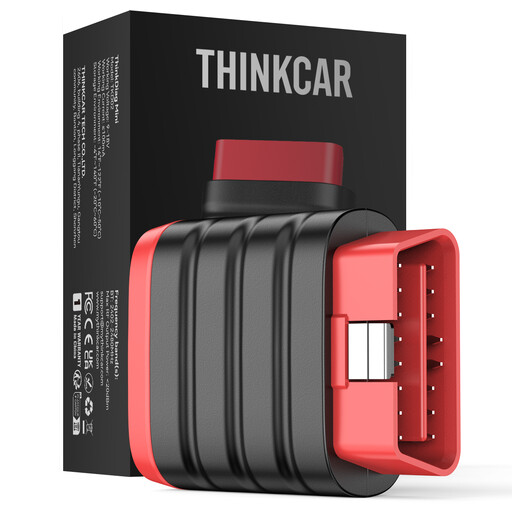
Why This Fits Their Persona: A compact option for used-car inspectors and drivers who want basic full-system diagnostics through an iOS or Android phone.
Its listed scope is clear: full-system scanning, codes and live data, but no maintenance resets or special functions.
Bluetooth 5.0, VIN auto-detection, battery voltage testing, 22 listed language options and lifetime free updates stated in the product information.
We have compiled a complete, real-time list of products that fully satisfy these strict selection criteria and UK safety regulations.
A scanner identifies information from the vehicle; it does not confirm that a particular component is defective. Use the code alongside symptoms, live data and appropriate repair procedures.
It can clear some stored fault codes and display emissions-readiness information, but clearing a code does not repair the underlying fault. If a warning returns or monitors remain incomplete, the vehicle may still require investigation before an MOT.
Not always. Some models offer lifetime free updates, while others include updates for one or two years and then charge for continued software access or optional functions. Always distinguish between basic OBD2 access, full-system software and service-function subscriptions.
The hardware can remain useful for several years if stored dry, protected from heat and updated as required. Its practical lifespan also depends on whether the manufacturer continues supporting your vehicle’s protocols, operating system and diagnostic software.