
24/7 Customer Support

Free returns

Same-day & Next-day Delivery

Quality Guaranteed

Unlock Your Welcome Offers: FREE Delivery | Up to 80% OFF | Free 30-day JoyPlus trial
Download the APP
A professional OBD2 car diagnostic scanner can do considerably more than switch off a dashboard warning light. Depending on the model and vehicle, it may access the engine, transmission, ABS, SRS, body electronics and other control modules, while also supporting service resets, live data and active tests.
However, the market is full of scanners using similar phrases such as “full system”, “OE-level” and “professional”. The practical difference can be significant. Before buying for a home garage, mobile service, independent workshop or fleet, check what the device can actually do for your vehicles and what ownership costs may apply.
A basic car code reader usually focuses on the engine ECU and standard emissions-related OBD2 functions. It may read and clear powertrain fault codes, display live data and show I/M readiness.
An all-system OBD2 scanner goes further by attempting to communicate with available modules such as:
“Full system” does not mean every function works on every vehicle. Coverage depends on the car’s make, model, year, fitted equipment and software version. Always check the VIN or manufacturer coverage list before purchase.
A scanner may advertise 15, 28 or 34 reset functions, but availability varies by vehicle. Functions such as DPF regeneration, injector coding, gearbox adaptation, EPB reset and high-voltage battery diagnostics require suitable vehicle support.
Likewise, a bidirectional scan tool or active test diagnostic tool can send commands to selected actuators, such as cooling fans, fuel pumps, windows or throttle systems. It does not automatically control every component on every car. Confirm the exact test required before relying on the tool for a repair job.
Some products include lifetime free updates, while others provide one or two years of software updates before renewal is optional or required for expanded functions. A scanner may remain usable after a subscription ends, but new vehicle coverage and newer features may not be available.
Modern vehicles can also use secure gateways. FCA AutoAuth access, for example, may require a separate account or payment. This is not necessarily included with the scanner. Read the product terms carefully rather than treating “FCA support” as unrestricted access.
For regular servicing, select a tool that clearly lists the systems you need rather than relying on a percentage coverage statement. A useful vehicle health scanner should provide:
Graphing several PIDs at once can make sensor changes easier to compare, particularly when investigating intermittent faults.
If you work on electrical faults or replaced modules, consider a bidirectional scan tool with active testing. This can help verify whether a component responds to a command before parts are removed.
ECU coding scanners may support module matching, adaptation, configuration or selected hidden-function changes. Coding is vehicle-specific and should be performed with a stable power supply and the correct repair information. It is not the same as universal ECU remapping or manufacturer software programming.
A CAN FD diagnostic scanner can communicate with newer vehicle networks that use Flexible Data-Rate CAN. DoIP diagnostic tools use Diagnostics over Internet Protocol, generally through Ethernet-based vehicle communication. These protocols can matter when servicing newer GM, BMW, Volvo, Jaguar or Land Rover vehicles, subject to model and year.
For connection, wired tablets offer a direct link, while a Bluetooth OBD2 scanner provides freedom to move around the vehicle or use a phone. Wireless devices depend on app compatibility, Bluetooth stability and the phone’s available storage.
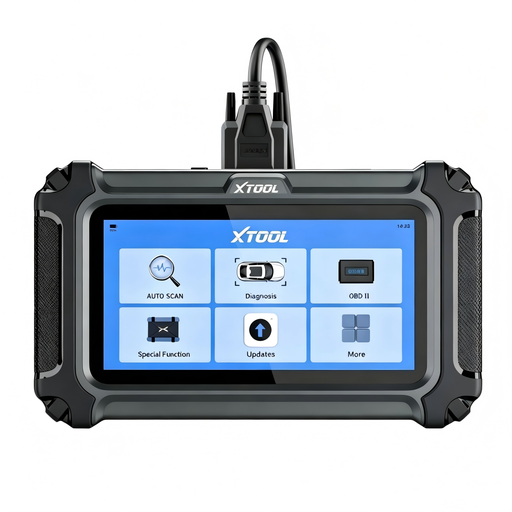
Why This Fits Their Persona: A practical option for UK DIY owners and weekend mechanics who want more than engine-code reading without moving straight to a large workshop tablet.
It specifies four-system diagnostics, CAN FD and FCA support, while clearly noting that functions vary by make, model and year.
Lists 16 reset functions, live-data graphing, AutoVIN and lifetime free updates on the product page.
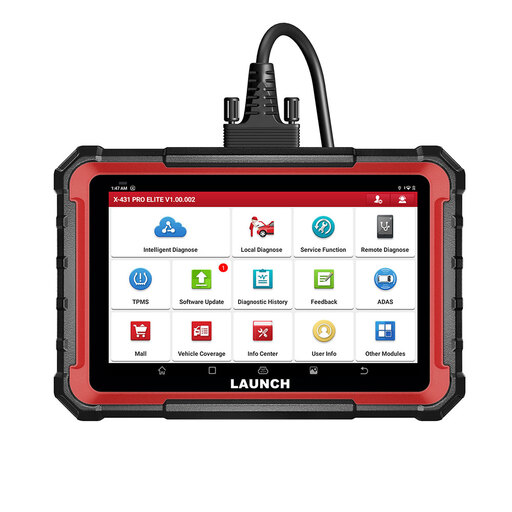
Why This Fits Their Persona: Suited to independent garages, workshop technicians and fleet users who need a larger display and broader service coverage.
The listing separates included updates from later renewal and states that ECU coding is not universal.
Features an 8-inch touchscreen, CAN FD, DoIP, active tests, ECU coding and more than 31 listed service functions.
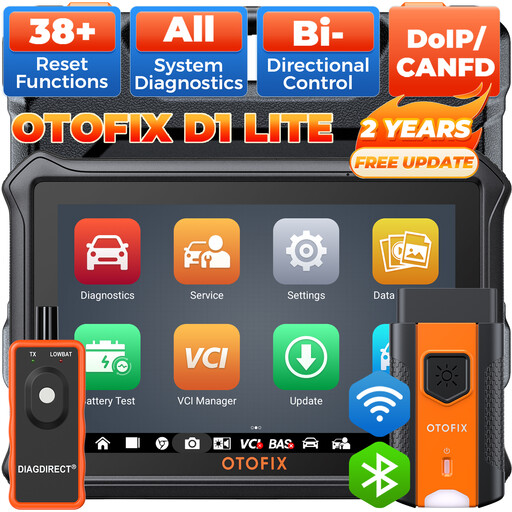
Why This Fits Their Persona: Its tablet format and cloud report features suit mobile mechanics, small repair shops and users handling several vehicles.
It states the two-year update period separately and confirms the device remains usable after that period, subject to losing new features.
The listing states support for CAN FD, DoIP, 38+ service functions, bidirectional active tests and cloud-based report sharing.
Before connecting any automotive diagnostic tool:
A scanner can assist with preparation for an MOT by showing certain diagnostic information, but it cannot guarantee an MOT pass. Brakes, tyres, emissions and other inspection items still require appropriate checks.
We have compiled a complete, real-time list of products that fully satisfy these strict selection criteria and UK safety regulations.
It can be worthwhile if you maintain several vehicles, perform service resets or need access beyond the engine ECU. For occasional check-engine diagnosis, a simpler code reader may be sufficient. Compare the purchase price with update fees, required accessories and the functions you will actually use.
The hardware may remain usable for several years, but software coverage changes as vehicles develop. A model with lifetime free updates can reduce ongoing software costs, although coverage and functions still depend on the manufacturer’s support. Protect the device from moisture, excessive heat and workshop impact.
Basic code reading may work offline on some devices. Updates, cloud reports, AI-assisted guidance, gateway authorisation, ECU coding and certain advanced functions may require Wi-Fi or mobile internet. Check the individual product requirements before starting a job.