
24/7 Customer Support

Free returns

Same-day & Next-day Delivery

Quality Guaranteed

Unlock Your Welcome Offers: FREE Delivery | Up to 80% OFF | Free 30-day JoyPlus trial
Download the APP
A professional OBD2 car diagnostic scanner can help identify fault codes, monitor live data and complete supported service procedures without relying on a garage for every warning light. However, buying the right automotive diagnostic tool requires more than choosing the model with the longest feature list.
Marketing descriptions often combine basic code reading with advanced functions such as ECU coding, active testing and full-system scanning. These capabilities are not always available for every vehicle, and some devices require paid software access. The following guide explains the practical checks that matter before you buy.
A basic car fault code reader usually focuses on the engine and emissions system. It may read or clear diagnostic trouble codes, display limited live data and check readiness monitors.
A full-system vehicle scanner, by contrast, may communicate with available modules such as:
If you need information beyond the engine ECU, confirm that the product specifically states “full system” or lists the modules it supports.
Functions such as ECU coding, injector coding, DPF regeneration and immobiliser-related operations are vehicle-dependent. A scanner may support a function in its menu, but that does not guarantee compatibility with your car’s make, model, engine, year or control module.
Before ordering, check the manufacturer’s coverage information and provide the vehicle identification number where the seller recommends it. This is particularly important for used-car inspections, fleet maintenance and independent workshops working across multiple brands.
Some tools include lifetime access to certain software, while others provide a limited update period or charge separately for advanced vehicle software and reset packages. A low purchase price may become less attractive if essential functions require recurring payments.
Check precisely whether “free updates” apply to:
Older vehicles may use common OBD2 communication standards, while newer vehicles can require CAN-FD and DoIP support. CAN-FD is designed for higher-speed vehicle communication, while DoIP uses Ethernet-based communication for supported diagnostic systems.
If you work with newer European, American or Asian vehicles, choosing a scanner with CAN-FD and DoIP can provide broader coverage. This does not mean every function will work on every compatible vehicle, so always verify coverage by VIN or model.
For fault-finding, a useful scanner should offer more than code descriptions. Look for:
A bi-directional control scanner sends approved commands to vehicle actuators, such as cooling fans, windows or pumps. This can help identify whether a component responds, but tests vary significantly by vehicle and should be performed according to the vehicle manufacturer’s procedures.
A vehicle maintenance reset tool may support oil service resets, battery registration, electronic parking brake procedures, steering-angle calibration, TPMS relearn and DPF-related functions.
During coding, programming or some reset procedures, stable vehicle voltage is important. A weak battery can interrupt communication and create additional faults. Use a suitable power supply when the scanner instructions or vehicle procedure require one, and do not disconnect the device during an active operation.
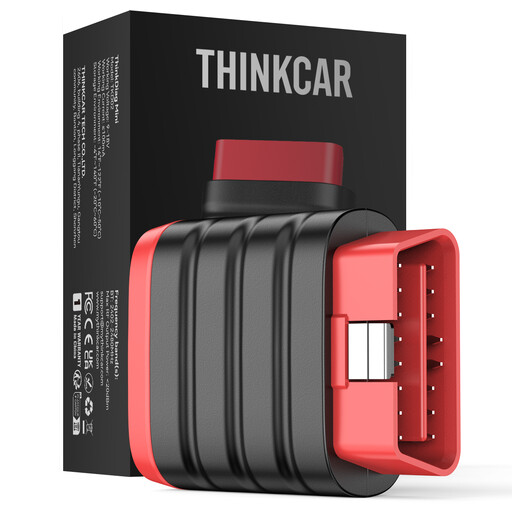
Why This Fits Their Persona: A compact Bluetooth OBD2 scanner for DIY owners, occasional checks and drivers who prefer using an iOS or Android phone.
Its stated functions include full-system diagnostics, DTC reading and clearing, live data, battery voltage testing and AutoVIN, rather than only engine-code reading.
Bluetooth 5.0 connection, iOS and Android support, multiple vehicle protocols and a compact 0.1 kg design.
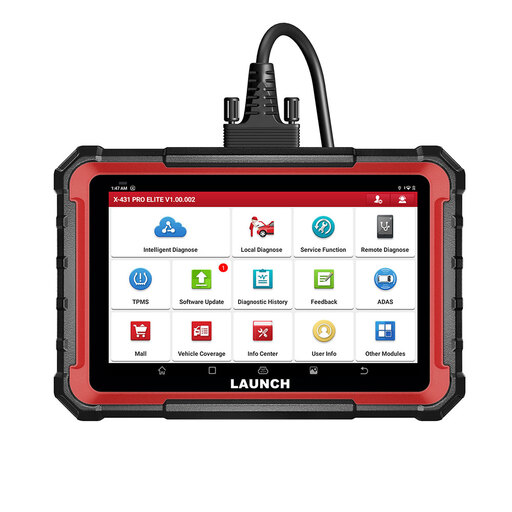
Why This Fits Their Persona: A tablet-style automotive diagnostic tool for independent garages and technicians who need reporting, advanced tests and broader workshop coverage.
It clearly separates full-system diagnosis, active tests, ECU coding and service functions, while noting that availability depends on the vehicle.
Supports CAN-FD and DoIP, 8-inch touchscreen operation, ECU coding, bi-directional tests and over 30 listed service functions.
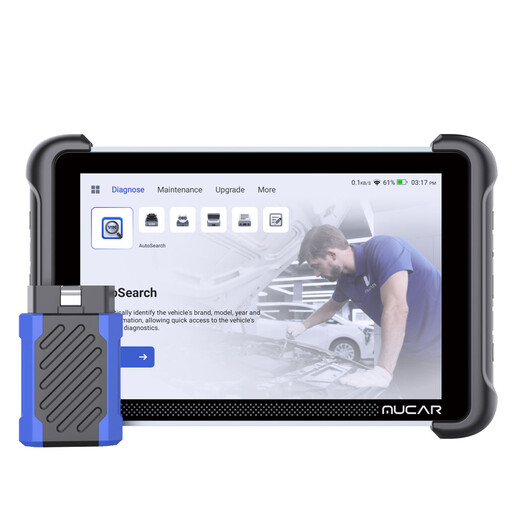
Why This Fits Their Persona: Suited to busy garages, fleet maintenance teams and users who want advanced diagnostic functions without annual software fees stated for the product.
Its listing identifies CAN-FD and DoIP support, ECU coding and bi-directional testing, while still requiring users to verify vehicle-specific compatibility.
8-inch touchscreen, magnetic VCI, 34-plus service functions, AI diagnostic assistance and lifetime free updates stated in the product information.
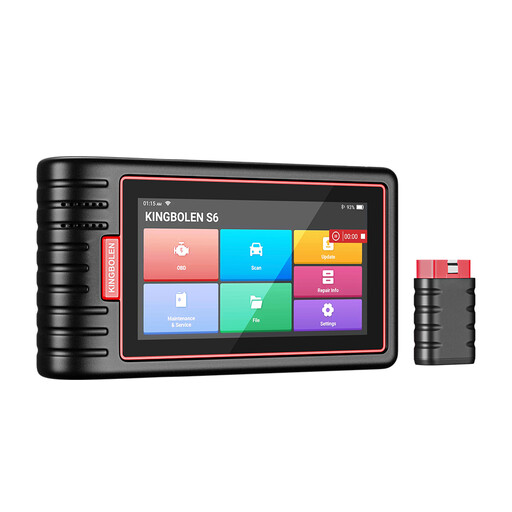
Why This Fits Their Persona: A portable wireless scanner for checking multiple systems during vehicle viewing, routine maintenance and fault-code comparisons.
It provides AutoVIN, health reports, full-system access, live-data graphs and freeze-frame information instead of relying solely on a dashboard warning-light check.
Bluetooth VCI, 28 listed maintenance functions, support for 93 vehicle brands and graphical live-data recording.
We have compiled a complete, real-time list of products that fully satisfy these strict selection criteria and UK safety regulations.
Yes, provided you follow the vehicle and scanner instructions. Basic scanning is generally straightforward, but ECU coding, immobiliser procedures, DPF operations and active tests require suitable knowledge and vehicle-specific compatibility. Keep the ignition and battery conditions stable during diagnosis.
Not always. Subscription arrangements differ by model and function. Some Bluetooth adapters provide free access to basic or full-system software, while advanced service functions may require payment. Check the individual product listing before purchase rather than relying on the Bluetooth description alone.
The hardware can remain usable for several years when stored away from moisture, excessive heat and physical impact. Its practical lifespan also depends on software support, operating-system compatibility, update access and vehicle coverage. A scanner with clearly stated update terms may be easier to maintain over time, but new vehicle functions can still vary by manufacturer.