
24/7 Customer Support

Free returns

Same-day & Next-day Delivery

Quality Guaranteed

Unlock Your Welcome Offers: FREE Delivery | Up to 80% OFF | Free 30-day JoyPlus trial
Download the APP
By Joybuy Product Recommendation Officer
A warning light can turn a routine journey into an expensive garage visit. An OBD2 scanner may help you read fault codes, understand live vehicle data and confirm whether a repair has addressed the original issue. However, choosing the right car diagnostic tool requires more than selecting the model with the longest feature list.
Many UK buyers encounter three common problems:
The following guide explains the specifications that matter and highlights suitable options for different users.
A basic OBD2 code reader generally focuses on emissions-related engine diagnostics. It can often read and clear diagnostic trouble codes, display freeze-frame information and show live data.
A full-system car scanner communicates with additional control units, which may include:
If your aim is to investigate an ABS warning, register a replacement battery or diagnose a transmission issue, engine-only coverage may not be sufficient. Look for clearly stated full-system support rather than relying on phrases such as “professional” or “advanced”.
A scanner can include a car reset tool function for oil service reminders, electronic parking brakes, steering-angle calibration or battery management systems. More advanced models may also offer injector coding, throttle relearn, ABS bleeding or gearbox adaptation.
These functions are not universal. A scanner may support a service across several manufacturers but not your exact vehicle. Before purchase, confirm:
Treat ECU coding and bi-directional testing separately. An ECU coding tool changes permitted configuration or adaptation values, while a bi-directional scan tool can send commands to compatible components for an active test. Neither replaces correct repair procedures or manufacturer information.
Newer vehicles may use communication standards such as CAN FD or DoIP. A CAN FD diagnostic scanner can be useful if your vehicle requires that protocol, but protocol support alone does not guarantee complete model coverage.
Also compare update terms carefully. “Lifetime free updates” should be checked against the product’s stated scope, internet requirements and supported functions. A one-off purchase with ongoing basic software updates may be more predictable for DIY owners than a low initial price followed by annual charges.
Wired scanners draw power from the vehicle and are straightforward to connect. Bluetooth models offer more freedom around the car, although they depend on a phone, tablet or dedicated display and a stable connection.
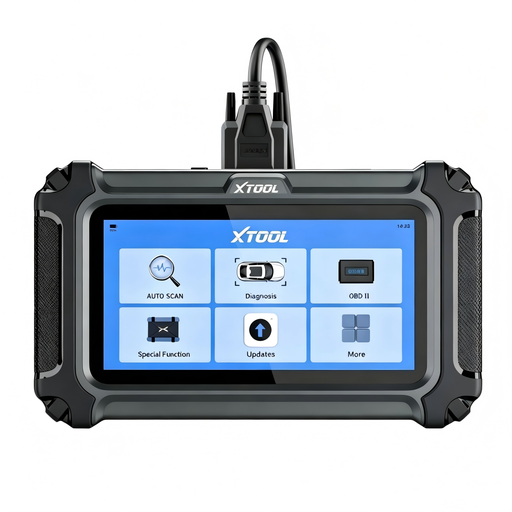
Why This Fits Their Persona: A practical handheld option for UK drivers, weekend mechanics and beginners who want more than an engine-only reader without moving straight to workshop-focused equipment.
It lists engine, transmission, ABS and SRS diagnostics, plus 16 reset functions and lifetime free updates. Availability still varies by vehicle, so compatibility should be checked before ordering.
5.45-inch touchscreen, live-data graphing for up to four PIDs, CAN FD support and battery-voltage display.
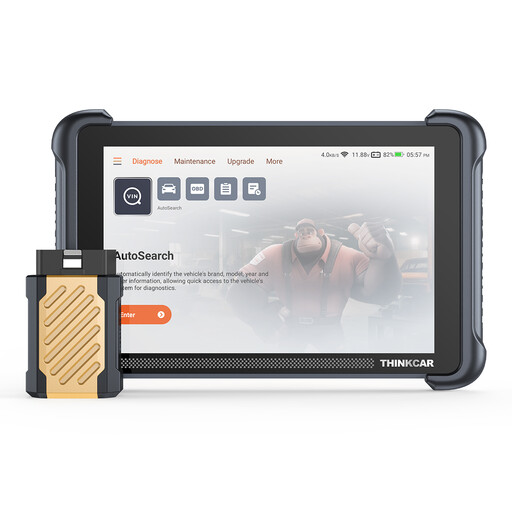
Why This Fits Their Persona: Its larger display and wider diagnostic feature set suit independent garages, mobile mechanics and vehicle enthusiasts working on varied cars.
The specification identifies full-system diagnostics, 34 maintenance functions, ECU coding and bi-directional testing rather than only generic engine-code reading.
8-inch display, Bluetooth connection, CAN FD and DoIP support, 4GB RAM with 64GB storage and lifetime free update service.
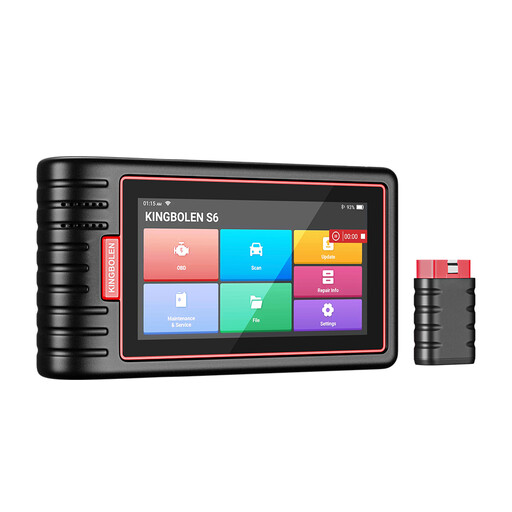
Why This Fits Their Persona: A suitable match for users managing multiple vehicles, used-car checks or regular maintenance across a broad range of European, Asian and other supported vehicles.
It combines full-system access with 28 listed maintenance functions and automatic VIN scanning, reducing reliance on a separate automotive code reader.
Bluetooth VCI, 5.99-inch touchscreen, 32GB storage, up to four live-data graphs and lifetime free updates for stated basic functions.
Locate the vehicle’s diagnostic socket using the handbook rather than forcing access behind trim panels. Connect the scanner with the ignition switched off unless the instructions state otherwise, then follow the on-screen procedure.
Reading a code does not identify a failed component in every case. A fault code indicates a monitored condition; further checks may be needed before replacing parts. Avoid clearing warning lights simply to conceal a problem, particularly where braking, steering, emissions or airbag systems are involved. An OBD2 scanner can support troubleshooting, but it does not replace an MOT inspection or qualified repair work.
We have compiled a complete, real-time list of products that fully satisfy these strict selection criteria and UK safety regulations.
No. A basic scanner may clear supported engine codes, while a full-system model can access additional modules where compatible. Some warnings require the underlying fault to be repaired before they can be cleared, and certain manufacturer security systems may need authorisation.
Not always. Some products list lifetime free updates, while others charge for ongoing software access or advanced services. Check whether the update policy covers all diagnostic software, which vehicle brands are included and whether online accounts or separate authorisation fees apply.
Compatibility depends on the vehicle’s diagnostic protocol, control modules and model-specific software. OBD2 and EOBD support is common, but advanced functions vary. Confirm the make, model, engine and required service function before purchase, particularly for ECU coding, DPF work, battery registration or bi-directional tests.