
24/7 Customer Support

Free returns

Same-day & Next-day Delivery

Quality Guaranteed

Unlock Your Welcome Offers: FREE Delivery | Up to 80% OFF | Free 30-day JoyPlus trial
Download the APP
A warning light can turn a routine journey into an expensive garage visit. An OBD2 diagnostic scanner may help you understand what your vehicle is reporting, check live data and complete certain maintenance procedures at home. However, the market includes everything from simple engine code readers to workshop-focused tools with bi-directional controls and ECU coding.
As the Joybuy Product Recommendation Officer, I focus on practical differences rather than impressive-sounding labels. Before buying, check these common traps and match the scanner to your vehicle, skill level and intended use.
Many low-cost scanners communicate only with the engine ECU. That can be sufficient for a check-engine warning, but it may not access ABS, SRS, transmission, TPMS or body control modules.
If you need to investigate airbag, braking or gearbox warnings, look for a full-system OBD2 scanner or professional car diagnostic scanner. Confirm that the required systems are supported for your exact make, model, engine and registration year. “All-system” does not mean every function works on every vehicle.
Oil resets, electronic parking brake procedures, battery registration, injector coding and steering-angle calibration depend on vehicle software. A scanner may list 15, 30 or 40-plus service functions, but availability can vary by manufacturer and model.
Treat the number of functions as a guide, not a guarantee. Check VIN compatibility before purchasing, particularly if you need an OBD2 scanner with reset functions for professional servicing.
A low purchase price may not represent the total running cost. Some automotive scan tools include lifetime updates, while others include updates for a limited period and then require renewal. Clarify what happens when an update period ends: basic functions may continue, but newer vehicle coverage or additional features may no longer be available.
Also check whether FCA AutoAuth access, Renault security access or other online services require separate registration.
Standard OBD2 and EOBD support is useful for emissions-related engine diagnostics, but newer vehicles may require additional communication standards. A CAN FD diagnostic scanner can communicate with certain newer vehicle networks, while a DoIP diagnostic scanner uses Ethernet-based communication found on selected vehicles from manufacturers such as BMW, Volvo, Jaguar and Land Rover.
For vehicles with security gateways, an FCA AutoAuth scanner may provide authorised access after account registration. These features are not interchangeable, so identify your car’s requirements first.
A basic car code reader generally reads and clears selected diagnostic trouble codes. A more capable vehicle fault code scanner may also offer:
Bi-directional control sends commands to selected vehicle actuators, such as a cooling fan, window motor or injector. It should be used carefully and only when the vehicle manufacturer’s procedure is understood.
A wired tablet can be practical in a garage, while a Bluetooth OBD2 scanner is convenient for driveway checks or mobile mechanics. Wireless tools depend on a compatible phone or tablet, an app account and reliable Bluetooth connectivity.
Check the supported operating system, app availability, screen size, battery capacity and cable length. For a workshop, a larger display and built-in storage may make reports easier to review. For occasional use, a compact wireless car diagnostic tool may be easier to store.
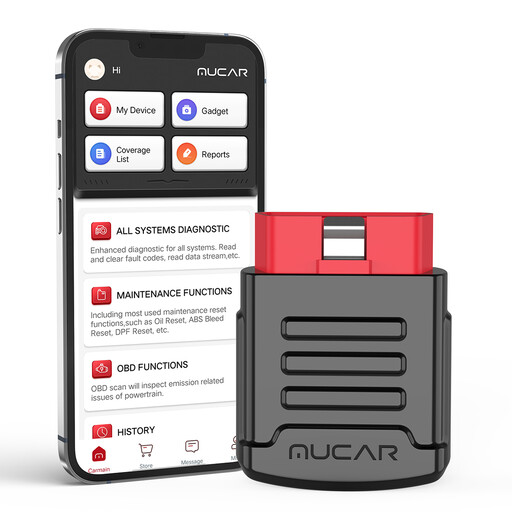
Why This Fits Their Persona: A practical choice for UK drivers and home mechanics who want phone-based diagnostics without carrying a tablet. It supports iOS and Android devices and covers 128+ listed vehicle brands.
It provides full-system access for available modules rather than limiting use to engine codes. Its listed 15 reset services are provided for one year, while standard OBD2 and full-system access are listed as lifetime free.
Bluetooth operation, live data, fault-code clearing and 12-language support in a portable format.
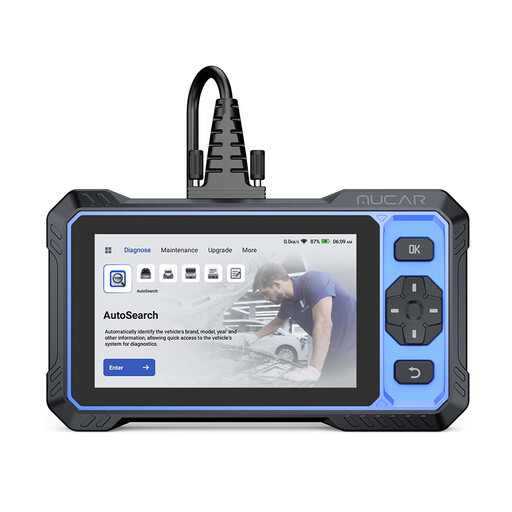
Why This Fits Their Persona: Suitable for independent garages, mobile mechanics and enthusiasts who need a dedicated touchscreen unit for repeated vehicle diagnosis.
The specification identifies CAN FD support, FCA AutoAuth access and bi-directional control instead of presenting ordinary code reading as full workshop functionality.
6-inch anti-glare touchscreen, 20+ listed reset functions, 2GB RAM and 32GB storage.
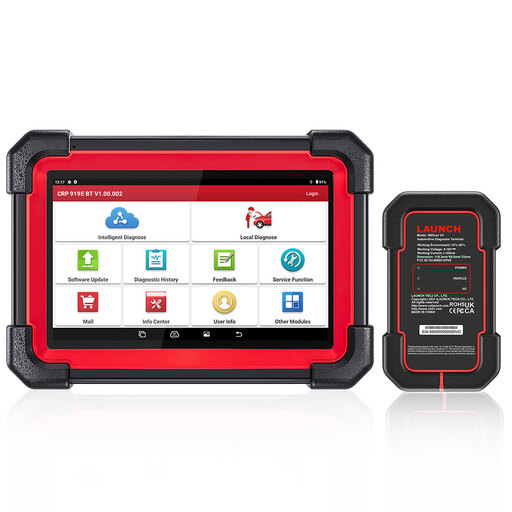
Why This Fits Their Persona: Designed for repair shops, fleet managers and technicians handling varied vehicles and more involved service procedures.
It clearly lists CAN FD, DoIP, ECU coding and active tests, while noting that functions vary by vehicle. Software renewal may be required after the included update period.
31+ listed service functions, wireless or wired VCI connection, AutoVIN and a 7-inch touchscreen.
An OBD2 scanner can display vehicle voltage, but it is not always a substitute for a dedicated battery and alternator tester. A separate tester may assess 6V, 12V or 24V batteries, state of charge, state of health, cranking performance and charging-system output.
The VDIAGTOOL BT500, for example, is listed for flooded, AGM, GEL and EFB batteries between 5 and 3,000 CCA. It does not support lithium or deep-cycle batteries, so read the limitations before buying. This type of tool can be useful for winter checks, fleet maintenance and investigating starting problems.
Not necessarily. Petrol vehicles generally adopted OBD2/EOBD earlier than diesel vehicles, and physical access does not guarantee access to every ECU. Confirm the scanner’s make, model, engine and protocol coverage before ordering.
Many scanners can read and clear fault codes, but clearing a code does not repair the underlying issue. The warning may return, and some safety-related or manufacturer-specific systems require a full-system diagnostic device or a service procedure.
Power behaviour varies by model. Avoid leaving an unknown device connected for long periods. Follow the manufacturer’s instructions, disconnect it after use where recommended and ensure your phone app has the required permissions and updates.