
24/7 Customer Support

Free returns

Same-day & Next-day Delivery

Quality Guaranteed

Unlock Your Welcome Offers: FREE Delivery | Up to 80% OFF | Free 30-day JoyPlus trial
Download the APP
A litter tray can start smelling unpleasant even when it is cleaned regularly. The issue is not always the amount you spend: the litter type, tray depth, household size and fragrance can all affect day-to-day results. Choosing suitable odour control cat litter means looking beyond phrases such as “long-lasting freshness” and checking how the product manages moisture, waste and dust.
A strong scent may make a room smell different without dealing with moisture or waste. Fragranced products can also be unsuitable for cats that avoid scented litter. If your cat is sensitive to smells, look for unscented cat litter or a product that controls odours through absorption, minerals or activated carbon rather than perfume alone.
A 12kg or 20L bag may appear economical, but non-clumping cat litter usually requires more frequent full changes than clumping varieties. Conversely, clumping cat litter can reduce the amount of clean litter removed during daily scooping, but it may cost more per bag. Compare the pack size, recommended depth and replacement routine, not just the shelf price.
Dust levels can vary according to granule size, manufacturing and how a bag is poured. A product described as low-dust may still produce particles during handling. Pour slowly in a ventilated area, avoid shaking the bag over the tray and follow the packaging instructions. If dust is a priority, compare products specifically labelled low-dust cat litter and observe whether your cat accepts the texture.
Fast-clumping cat litter forms a firm mass around liquid, allowing you to remove soiled areas while leaving more unused litter behind. This can make daily cleaning more targeted. Look for clear instructions on the required depth, usually around 5–10cm depending on the product.
Non-clumping cat litter absorbs liquid into the granules instead of forming a scoopable ball. It can be straightforward to use, particularly for owners who prefer a mineral litter without added fragrance, but solid waste should still be removed daily and the whole tray changed regularly.
Do not flush used litter unless the product label expressly permits it, and even then follow the stated quantity limits. Many clumps can contribute to blocked pipes, so disposing of waste in a sealed household bin is generally the safer approach.
Common choices include:
For multi-cat households, consider a larger pack, a sufficiently deep tray and a cleaning schedule that matches the number of cats. A multi-cat litter product cannot replace daily removal and regular tray washing.
Cats may reject a tray because of a sudden change in texture, scent or location. Introduce a new litter gradually by mixing a small amount with the existing product. For kittens, older cats or cats with known sensitivities, an unscented formula with manageable granules may be a practical starting point.
A cat litter deodoriser or cat litter freshener can support room freshness, but it should not conceal a tray that needs cleaning. Keep powders, gels and deodoriser blocks away from direct contact with your cat and follow the product warning. Never spray fabric freshener into the litter itself.
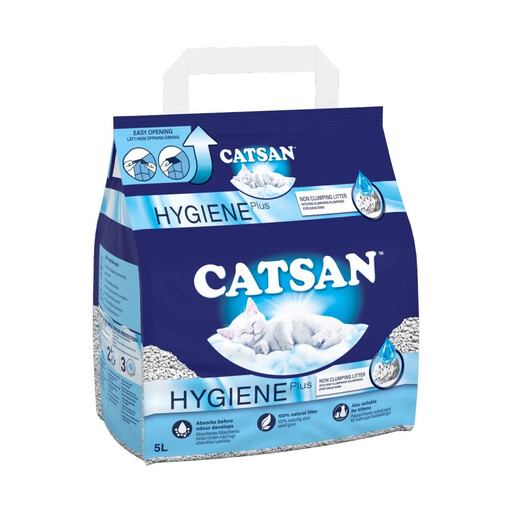
Why This Fits Their Persona: The 5L format is easier to store in a flat or smaller home, while the unscented, non-clumping mineral formulation offers a simple starting point for one adult cat or a kitten.
It does not rely on added fragrance. The product description states that quartz and limestone granules absorb moisture and that the tray should be changed regularly.
Non-clumping mineral granules; minimum recommended depth of 5cm; available in a manageable 5L bag.
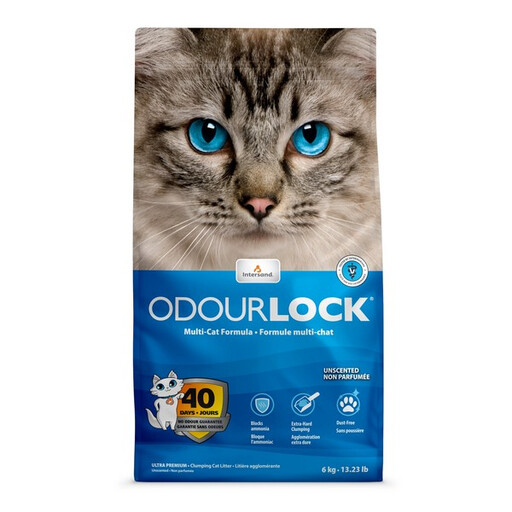
Why This Fits Their Persona: This 6kg bentonite option suits owners who want fast clumping and a medium-sized pack that is easier to carry and store than a bulk bag.
The listing specifies a 5–7cm depth, daily removal of clumps and regular complete changes, making the maintenance routine clear rather than relying only on scent.
Natural clay material; fast-clumping format; low-dust and minimal-tracking features listed by the manufacturer.
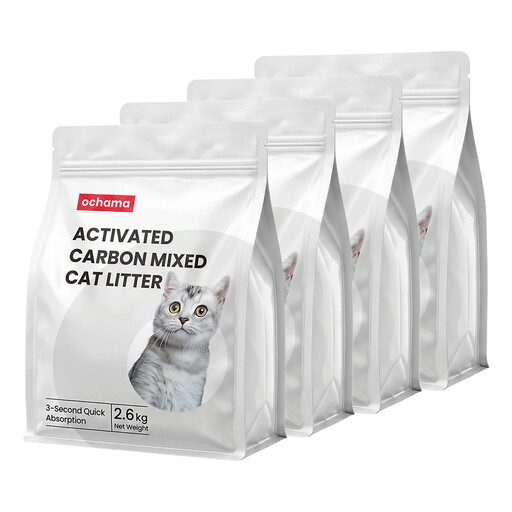
Why This Fits Their Persona: The total 10.4kg supply is practical for multi-cat homes or owners who prefer to keep spare bags available, while the tofu, bentonite and activated carbon blend targets several common odour-control requirements.
The ingredient percentages are stated: 67% tofu litter, 27% calcium bentonite, 3% deodorant and 3% activated carbon. This gives a clearer basis for comparison than an unspecified “natural” claim.
Unscented blend; activated carbon included; supplied as four 2.6kg bags for easier lifting and storage.
We have compiled a complete, real-time list of products that fully satisfy these strict selection criteria and UK safety regulations.
A larger pack of clumping or mixed litter can reduce how often you need to restock, but tray numbers and cleaning frequency remain important. Compare multi-cat litter by clumping strength, dust description, material and pack weight. A 12kg option such as Intersand Odourlock Cat Litter 12kg may suit owners who prefer a bulk supply.
There is no fixed lifespan. Usage depends on the number of cats, tray size, litter depth and how often waste is removed. A single cat may use a medium pack for longer than a multi-cat household. Follow the product’s change guidance and replace litter sooner if it becomes damp, strongly scented or poorly accepted by your cat.
Check the deodoriser label first. Powder fresheners are generally sprinkled over existing litter, while gel or passive-diffusion products are placed near the tray or in a compatible dispenser. Introduce scented products cautiously, as some cats may prefer unscented litter. A deodoriser should supplement—not replace—regular scooping and tray cleaning.