For a small shared office making affogato, an automatic bean-to-cup machine is a practical starting point when several colleagues need espresso without learning a manual preparation routine. Choose a manual machine if someone will take responsibility for adjusting and preparing the coffee; consider a professional automatic system when sustained daily demand warrants its capacity and maintenance arrangement. Whichever route you choose, establish where the machine will go and who will refill, clean and look after it.
Who is each route for?
The deciding question is not just how an espresso tastes over ice cream, but how reliably colleagues can make and clean up after it during a working day.
Colleagues who want few preparation steps
If several people will make their own affogato, a one-touch espresso programme avoids asking each person to grind, dose and tamp coffee. Agree on a refill and cleaning routine even if making the drink is straightforward.
Teams with a regular espresso enthusiast
A named user who wants to adjust the coffee poured over ice cream may prefer an integrated-grinder machine with manual-style preparation. That person also needs time to prepare drinks and clean the equipment.
Managers planning for frequent daily use
Where the machine will serve regular coffee orders as well as occasional affogato, assess daily demand, capacity and a defined maintenance routine before choosing a workplace-oriented system.
What matters when choosing?
Compact automatic bean-to-cup
Consider it when: Several colleagues need espresso for affogato without a designated coffee maker.
Trade-off: Preset preparation offers less hands-on control, and colleagues still have to manage refilling and cleaning.
Manual or assisted-tamping espresso
Consider it when: A regular user wants to adjust the espresso and will take charge of making it.
Trade-off: Grinding, preparation and close-down cleaning remain hands-on, even with assisted tamping.
Professional automatic system
Consider it when: The office expects sustained daily coffee demand, not just occasional affogato.
Trade-off: A workplace system needs a planned servicing and hygiene routine; its capacity may be unnecessary for light use.
Estimate all coffees made on a working day, then decide who will operate and maintain the machine. Those answers make capacity and espresso controls easier to assess.
| Concern |
What to check |
Who this matters to |
| Quick, repeatable espresso |
Check how users select espresso, plus water and used-grounds capacity against expected daily drinks. |
When colleagues make their own affogato between other tasks, I want a shot without a lengthy preparation routine or a queue. Around 42% of consumers put quick, repeatable service first. |
| Cleaning and shared ownership |
Assign responsibility for emptying, rinsing and descaling; check the instructions for any milk system the office will use. |
If no one takes charge after each shift, I worry that the machine will be left unclean or unavailable for the next user. For around 33% of consumers, an achievable shared-care routine is the primary concern. |
| Espresso adjustment |
Check which grind and brew settings users can change, and whether a regular operator will manage preparation. |
I want to adjust the espresso poured over ice cream and can accept more hands-on work to do it. That control comes first for around 25% of consumers. |
Mistakes to avoid
-
Choosing manual espresso without a regular operator
Assisted tamping does not turn a manual espresso setup into a push-button one. Someone still has to prepare the coffee and clean the portafilter and accessories.
Name the colleagues responsible for setup, adjustment and close-down before choosing this route.
Allow staff time for preparation, cleaning and troubleshooting.
-
Assuming every office needs a professional system
Workplace-oriented capacity matters when demand is sustained. JURA positions its professional automatic range for 10 to 200 coffees per day, which does not by itself establish what a lightly used office needs.
Count ordinary coffees as well as affogato shots on a typical working day, then compare that demand with the manufacturer’s stated usage range.
-
Treating an annual PAT test as the whole safety plan
For low-risk workplaces in Great Britain, the Health and Safety Executive says annual portable appliance testing is not a universal requirement. Electrical equipment must be maintained to prevent danger, with checks appropriate to its use and environment.
Ask the employer or facilities team how the espresso machine will fit into its electrical-equipment maintenance arrangements.
-
Transferring specifications between similar model codes
De’Longhi Magnifica Evo ECAM290.21.B and ECAM290.22.B are different model identifiers. Specifications for one should not be assumed to describe the other.
Check the complete model code, electrical requirements and included accessories for the exact variant you plan to order.
Relevant brands to consider
De’Longhi
Its compact automatic bean-to-cup models are relevant when colleagues want espresso without a manual portafilter routine.
- De’Longhi GB lists one-touch espresso, a 1.8 L water container and a 14-serving grounds container for the Magnifica Evo ECAM290.22.B.
- Those figures describe ECAM290.22.B, not every Magnifica Evo variant. Its steam wand also requires manual milk preparation and cleaning if used.
Sage
The Barista Express Impress offers a hands-on route for an office with a regular user who wants to adjust espresso.
- Sage Appliances UK lists an integrated grinder with 25 grind settings and assisted tamping for this model.
- A colleague still needs to prepare coffee and take responsibility for cleaning; assisted tamping does not make the workflow fully automatic.
JURA
Its professional automatic lines are relevant when an office has regular, higher-volume coffee demand.
- JURA describes its professional range for 10 to 200 coffees per day and presents W and X workplace lines for up to 50 or 100 speciality coffees daily, respectively.
- These are JURA’s stated usage ranges, not a reason to choose professional equipment for occasional affogato. Daily hygiene and maintenance still need an owner.
Joybuy product choices
These choices cover compact automatic machines for colleagues who want a simpler espresso routine and one manual machine for an office with a regular coffee maker. For each variant, check counter fit, electrical requirements and the cleaning routine before deciding.
 No image available
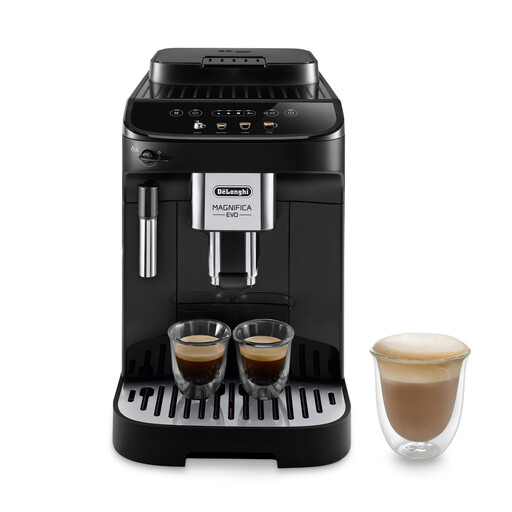
De’Longhi Magnifica Evo ECAM290.21.B, black, with milk frother
Consider this bean-to-cup model if colleagues want an automatic route rather than preparing each espresso with a portafilter.
If the office also makes milk drinks, allow for use and cleaning of the milk frother. Confirm the exact variant’s electrical requirements before installation; specifications for ECAM290.22.B should not be transferred to this model.
Joybuy
 No image available
De’Longhi Magnifica Start ECAM220.22.GB, black and grey, with milk nozzle
Its four one-touch recipes make this an option to examine when different colleagues will operate the machine; check that the espresso recipe suits the office’s affogato routine.
Agree who will clean the milk nozzle if it is used, and confirm counter fit and electrical requirements for this variant.
Joybuy
 No image available
De’Longhi Magnifica Evo ECAM290.83.TB, black, with automatic milk system
This automatic bean-to-cup variant is worth considering if colleagues also want milk drinks alongside affogato.
Affogato itself calls for espresso poured over ice cream; if the milk system will be used for other drinks, check its cleaning instructions and assign responsibility for that routine.
Joybuy
 No image available
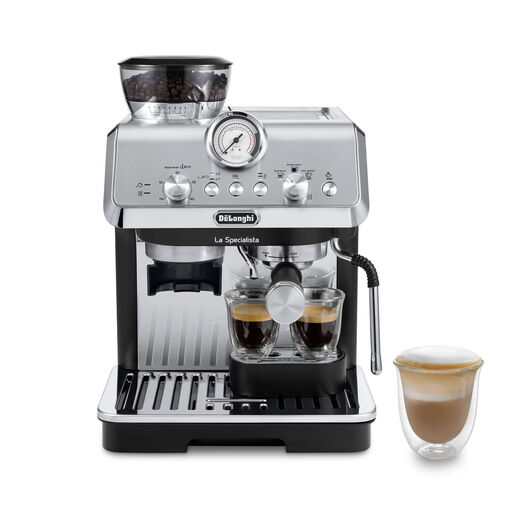
De’Longhi La Specialista Arte EC9155.MB, silver and black
Consider this manual espresso model when a regular colleague wants to take charge of preparing the shots for affogato.
Its hands-on routine needs time for preparation and close-down cleaning. Check the machine instructions, counter fit and electrical requirements before placing it in a shared workspace.
Joybuy
Frequently asked questions
Does an espresso machine need a PAT test every year in a UK office?
Not as a universal rule for low-risk workplaces in Great Britain. The Health and Safety Executive says electrical equipment must be maintained to prevent danger, while appropriate inspection and testing depend on the equipment and its environment. Ask the employer or facilities team what checks apply; offices in Northern Ireland should also consult the relevant local guidance.
What cleaning routine does a shared office machine need?
Assign someone to empty the drip tray and used grounds, follow the machine’s rinsing and cleaning instructions, and look after any milk system that is used. JURA notes that day-to-day hygiene remains important even on machines with integrated cleaning programmes.
Will manual espresso make a better affogato than automatic espresso?
Not automatically: a manual machine gives a regular operator more control over preparation, whereas an automatic machine reduces the steps colleagues must manage. Choose the manual route for that control only if someone will use it consistently and take responsibility for cleaning.
When is a professional office coffee machine worth considering?
Consider one when sustained daily demand calls for workplace-oriented capacity and a planned maintenance routine. Count ordinary coffees as well as affogato shots; JURA describes its professional automatic range for 10 to 200 coffees a day, but an office making only occasional drinks need not choose by that range alone.


