Office snack organisers
If you fill a communal tin, decide whether colleagues will take individual sweets or unopened rolls. That choice determines which pack format is useful before flavour or pack size enters the picture.


Choose a loose assortment if colleagues will take individual sweets from a communal tin and variety matters; choose multipack rolls if people will take an unopened roll. For either format, check the current pack for ingredients and allergens before sharing. If you want to stock fewer sugary sweets, look for a mint explicitly labelled sugar-free rather than relying on flavour descriptions.
If you fill a communal tin, decide whether colleagues will take individual sweets or unopened rolls. That choice determines which pack format is useful before flavour or pack size enters the picture.
If the office wants mints available without making standard sugary sweets the default, start with products explicitly labelled sugar-free and check the ingredients on the current pack.
Check each pack’s ingredients and allergen information before sharing it. Consider whether visiting young children could reach the tin, particularly if it contains small hard sweets.
Start with how people will take the mints, then check the sugar declaration, ingredients and location of the tin.
Choose when: Colleagues will take individual sweets from a communal tin and you want several mint styles in one pack.
Trade-off: A mixed pack can contain ingredients that do not suit everyone; M&S lists milk ingredients in its Mint Assortment.
Choose when: People can take an unopened roll from the tin or a nearby cupboard instead of picking loose sweets.
Trade-off: Rolls do not provide the same mixed assortment in one tin; check the particular product’s sugar and ingredients rather than assuming its format determines either.
| Priority | What to check | Your needs |
|---|---|---|
| Sharing format | Check whether the pack contains loose sweets or separate rolls, and whether its size suits the way the tin will be used. M&S lists a 225 g mixed assortment; Waitrose & Partners lists Polo Original as four 34 g rolls. | I want colleagues to take individual sweets from one tin, or to pick up an unopened roll without emptying the whole pack. |
| Sugar | Read the sugars figure per 100 g and check for an explicit sugar-free label. Waitrose & Partners lists 95.6 g sugars per 100 g for Polo Original; Sainsbury's lists 94 g per 100 g for its Trebor Extra Strong multipack. Extra-strong flavour does not establish sugar content. | Will these be available throughout the working day? If I want to stock fewer sugary sweets, I'll compare the current labels rather than judge by flavour. |
| Ingredients | Read the physical pack’s ingredients, allergen declaration and dietary information. M&S lists milk ingredients in its Mint Assortment, while Sainsbury's lists gelatine in its Trebor Extra Strong multipack. | Colleagues may have different dietary requirements, so I need to identify what is in this particular pack before putting it in a shared tin. |
| Access by children | Check the product’s age and choking warnings, and whether young visitors can reach the tin. Waitrose & Partners warns about small sweets for children under four on Polo Original; M&S says its Mint Assortment is unsuitable for children under 36 months because of a potential choking hazard. | If young children visit the office, I need somewhere to keep small sweets beyond their reach. |
M&S lists milk ingredients in its Mint Assortment, and Sainsbury's lists gelatine in its Trebor Extra Strong multipack. A mint’s flavour does not tell you whether it suits a colleague’s requirements.
Read the current physical pack’s ingredients and allergen declaration before stocking a shared tin, and identify any alternative clearly.
Sainsbury's lists 94 g sugars per 100 g for its Trebor Extra Strong multipack. The flavour description is not a sugar declaration.
If reducing sugary-sweet availability matters, compare current nutrition labels and look for a product explicitly labelled sugar-free.
Separate rolls work differently from an assortment that people pick from individually.
Decide how colleagues will use the tin before choosing the pack: individual sweets for a communal container, or rolls for people to take unopened.
Waitrose & Partners warns of a choking risk from small Polo sweets for children under four. M&S gives a choking warning for children under 36 months on its Mint Assortment.
If young children visit the workplace, keep the tin out of their reach and follow the warning on the pack you buy.
These examples show how specific mint ranges differ; check the particular pack rather than applying one product’s details to a whole brand.
Waitrose & Partners lists Polo Original as pressed peppermint mints in a 4 × 34 g multipack; Tesco also lists sugar-free Polo multipacks.
Sainsbury's lists an Extra Strong peppermint multipack containing four rolls.
Tesco lists 200 g Mint Assortment and Mint Imperials packs as loose-format alternatives to multipack rolls.
M&S lists a 225 g Mint Assortment containing mint toffees, butter mints, English mints, butter mintoes and mint humbugs.
These options include larger packs for a shared tin, a sugar-free tin and mint-roll multipacks for handing out separately. Check each pack’s format and label against the way your office will use it.
 No image available
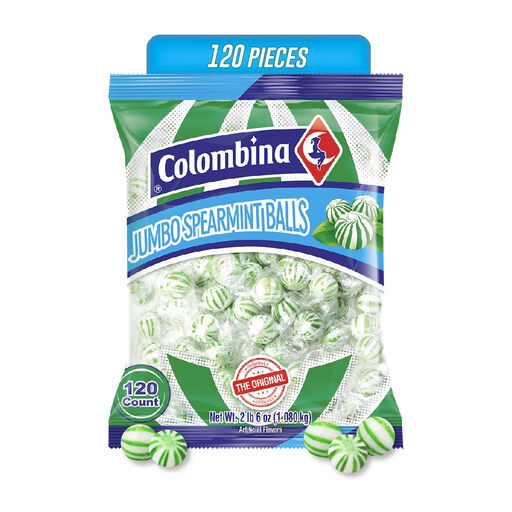
The 120s pack is an option to consider when planning how many mints to put out for colleagues. Check the current pack’s sugar, ingredient and child-safety information before adding the sweets to a shared tin.
 No image available
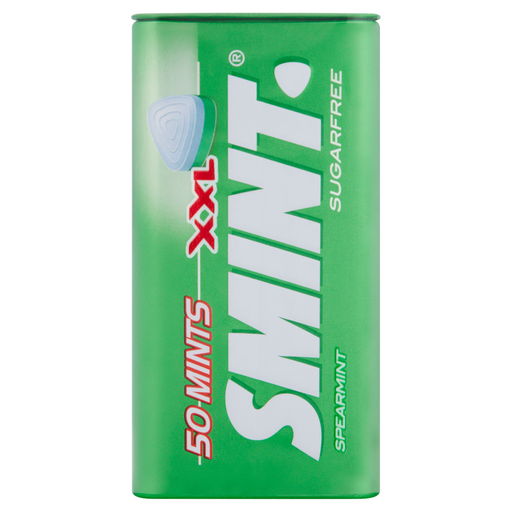
This labelled sugar-free spearmint tin suits a workplace that wants a different option from standard sugary mints. Check its sweeteners, ingredients and pack quantity, as well as whether young visitors could access it.
No image available
The 16 x 120s pack is worth checking if your office plans to distribute mints in separate units rather than fill a loose-sweet tin. Confirm the pack divisions, ingredients and sugar declaration before ordering.
 No image available
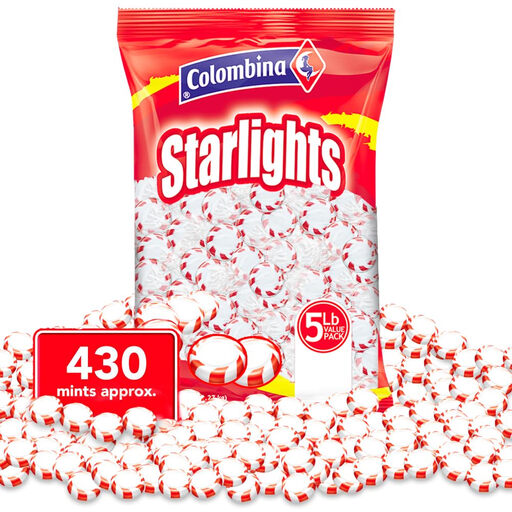
This 2.27 kg pack is a larger-format option for replenishing a communal mint container. Check how the sweets are packed, how the opened pack should be stored, and its current ingredient and allergen information.
 No image available
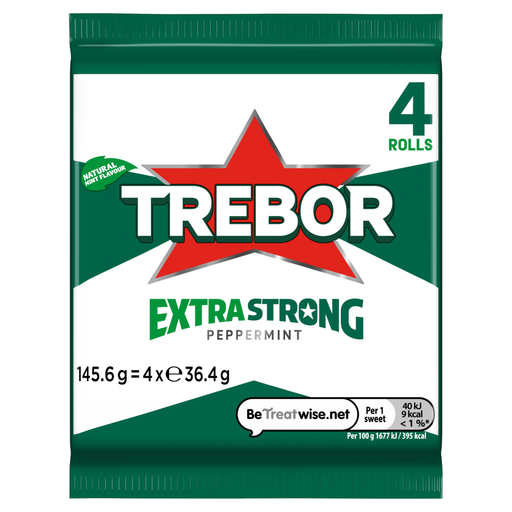
Four rolls suit an office that will hand out whole rolls rather than put individual sweets in the tin. Joybuy lists 94 g sugars per 100 g and gelatine in this 145.6 g product, so check the current pack if sugar or dietary suitability matters.
Choose a loose assortment if people will pick individual sweets from the tin and variety matters. Choose multipack rolls if colleagues can take an unopened roll from the tin or a nearby cupboard; the two formats support different ways of sharing.
No: flavour wording does not establish sugar content. Sainsbury's lists 94 g sugars per 100 g for its Trebor Extra Strong multipack, while Waitrose & Partners lists 95.6 g per 100 g for Polo Original. If sugar content is a deciding factor, compare the current nutrition labels or look for an explicitly sugar-free product.
Read the physical pack’s ingredients, allergen declaration and dietary information before sharing it. M&S lists milk ingredients in its Mint Assortment, and Sainsbury's lists gelatine in its Trebor Extra Strong multipack; do not assume another mint has the same formulation.
Keep small sweets out of young children’s reach and follow the warning on the specific pack. Waitrose & Partners warns that children under four could choke on small Polo sweets, while M&S says its Mint Assortment is unsuitable for children under 36 months because of a potential choking hazard.