Thick-shake regulars
If you often add ice, frozen fruit or ice cream, look for a blender whose instructions permit those ingredients. Check its maximum-fill marking as well as its stated cup capacity before settling on a recipe.


Choose a mains-powered personal blender if you regularly make thick shakes with ice or frozen ingredients, the maker permits those ingredients, and you have an approved socket where you blend. A cordless model makes more sense when you need to move between office areas or blend away from a socket, but its usable capacity and charging routine still need to suit your recipe. In either case, plan to clean drink-contact parts promptly after a dairy-based shake.
If you often add ice, frozen fruit or ice cream, look for a blender whose instructions permit those ingredients. Check its maximum-fill marking as well as its stated cup capacity before settling on a recipe.
If colleagues share the sink or equipment, choose parts you can clean and put away promptly. Milk and malted ingredients make it especially important not to leave residue on communal surfaces or equipment.
If you need to carry the blender between areas or blend away from a fixed socket, a rechargeable portable format may suit you better than a larger drink capacity. Check where and how you would charge it at work.
Start with where you are permitted to blend and charge an appliance. Then match the maker’s ingredient guidance, usable fill level and cleaning instructions to the shake you actually make.
| Concern | What to check | Who this matters to |
|---|---|---|
| Thick, cold ingredients | Check the exact model’s instructions for ice, frozen fruit and thick mixtures; do not use motor wattage alone as a texture comparison. | If I add ice or ice cream, I want to know the blender permits those ingredients before I make a thick shake. Around 27% of consumers put handling thick, cold ingredients first. |
| Prompt cleaning | Check which drink-contact parts can be removed and how the maker says to wash and dry them. | In a shared kitchen, I do not want milk or malted-drink residue left for colleagues to encounter; cleaning is the primary concern for around 33% of consumers. |
| One practical serving | Compare maximum-fill markings with your recipe, rather than relying on nominal cup capacity. | I want one drink without filling a cup beyond its usable limit or taking up much kitchen space. Around 27% of consumers prioritise single-serving practicality. |
| Freedom from a socket while blending | Check the charging arrangement and whether workplace rules permit use and charging in your intended locations. | If the kitchen socket is inconvenient, I would rather blend elsewhere than depend on it; roughly 13% of consumers place cordless mobility first. |
nutribullet lists an 840ml cup for its 600 starter kit but specifies a 570ml maximum-fill line. Planning a shake around the full cup size could leave too little blending headroom.
Allow for the milk, malt powder, ice cream and any ice together, and follow the maximum-fill marking on the model you buy.
Ninja describes its Blast as its most compact and quietest blender. That manufacturer comparison does not establish how disruptive it will sound in your workplace.
Check office rules and choose a time and place where blending will not disturb colleagues.
Milk and malted ingredients can remain on cups, blades and surfaces after use. Food Standards Agency guidance for shared food facilities highlights cleaning and allergen cross-contamination controls; an individual office kitchen is not automatically subject to food-business requirements.
Clean drink-contact parts promptly, keep your equipment separate where practical, and do not assume a quick rinse makes it free of allergen residue.
Electrical Safety First warns that overloaded sockets and daisy-chained extension leads can overheat and create a fire risk.
Confirm which sockets and appliances your workplace permits. If you choose cordless, arrange charging away from liquids rather than treating charging as exempt from office rules.
The nutribullet 600 starter kit illustrates a mains-powered, single-serve option: its UK listing specifies a 600W rating, an 840ml cup and a 570ml maximum-fill line.
Ninja lists both the mains-powered QB3001UKMRS smoothie maker, rated at 700W, and the cordless BC151UK Blast for portable use.
The magic bullet Blender offers a broader pitcher format rather than just a personal drink cup; its UK listing specifies a 1.5L pitcher and High, Low and Pulse controls.
These choices cover a cordless portable cup blender and a personal blender listed for cold ingredients. Check the usable fill and your office appliance rules for either one; confirm the power connection required by the Ultra before choosing it for your workspace.
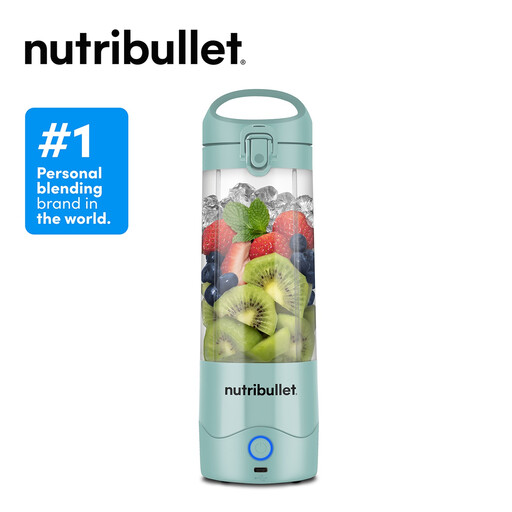 No image available
A cordless option to consider when you need to blend away from a mains socket.
The product name specifies a 475ml cup, USB-C charging cable and 15+ blending cycles. Check the maximum-fill marking against your shake recipe, and follow the cleaning instructions for each part.
Check whether blending in your intended office area is acceptable; the product details do not establish how it will sound there.
 No image available
A personal-cup option to assess if your malted shake includes ice or frozen fruit; the product name describes it as suitable for crushing those ingredients.
The stated rating is 1200W and the nominal cup capacity is 900ml. Confirm the maximum-fill line, permitted recipes and power connection before deciding whether it fits one office serving.
Follow the model’s care instructions when cleaning its drink-contact parts after a dairy-based shake.
Choose a model whose instructions permit the ingredients and thickness you plan to blend. nutribullet states that its 600 model can crush ice, while Ninja states that its QB3001UKMRS and Blast can handle ice or frozen drinks. Follow the model’s fill limit; a wattage rating alone does not establish how every thick recipe will turn out.
Wash and dry the drink-contact parts promptly according to the model’s instructions, rather than leaving residue in a communal sink. Food Standards Agency guidance on shared food facilities identifies cleaning and allergen cross-contamination as important considerations, although that food-business guidance does not by itself determine an office worker’s legal duties.
No: cordless use helps when portability or access to a suitable socket is the deciding concern, while a mains-powered model may suit frequent thick shakes at a fixed kitchen location if its instructions permit your ingredients. Check workplace appliance and charging rules either way. Electrical Safety First advises against overloading sockets or daisy-chaining extension leads.
Usually a personal cup is the more practical starting point for one drink, provided its maximum usable fill accommodates your recipe. For perspective, nutribullet specifies a 570ml maximum-fill line for its 600 kit’s 840ml cup, while Ninja lists a 530ml cup for the Blast. Consider a pitcher if you also need larger batches or other blending tasks and have room to wash and store it.