Juice-packed lunch planners
If the packing liquid matters to you, look for fruit in natural juice or water and check the ingredients rather than choosing by fruit name alone. The NHS recommends these packing media for tinned fruit.


For an office packed lunch, choose fruit in natural juice or water if you want the format recommended by the NHS, checking the ingredients of the particular product. Individually portioned pots avoid opening a larger tin at work; a standard tin suits lunches prepared at home when you can store and use the remainder as its label directs.
If the packing liquid matters to you, look for fruit in natural juice or water and check the ingredients rather than choosing by fruit name alone. The NHS recommends these packing media for tinned fruit.
A sealed individual pot is easier to pack when you cannot refrigerate the remainder of an opened tin at work. Sainsbury's lists smaller fruit pots alongside standard tins.
A standard tin can be divided into sealed containers at home for several lunches, provided you follow the exact product's instructions for refrigerating and using the opened fruit.
Decide how you will carry and use the fruit, then check both the packing liquid and the pack size. A fruit name alone does not tell you whether it comes in juice or syrup.
| Concern | What to check | Who this matters to |
|---|---|---|
| Packing liquid | Read the pack description and ingredients to distinguish natural juice or water from syrup. | If the same fruit comes in juice and syrup, I want to know which is in my lunch. About 40% of consumers put the packing liquid first. |
| Portable portions | Check whether packs are individually sealed and whether their size suits one lunch. | When I cannot refrigerate an opened tin at work, a sealed portion is easier to manage. About 30% of consumers put portable portions first. |
| Using the whole tin | Check the stated servings and the exact product's after-opening storage instructions. | Preparing several lunches at home means planning when I will use the remainder. About 30% of consumers put batch portioning first. |
Peaches and pears are sold in both juice and syrup. Only the individual product description tells you which packing liquid you are buying; the NHS recommends natural juice or water for tinned fruit.
Read the packing-medium description and ingredients before adding a tin to your lunch supplies.
Storage instructions differ by product. Sainsbury's directs shoppers to transfer its 298g mandarin segments to a non-metallic container, refrigerate them and use them within two days of opening.
Choose a smaller pack or portion the tin at home if you cannot follow the label's instructions for leftovers.
Fruit left over after lunch may go to waste if you cannot store and use it as directed.
Retailer ranges include both smaller fruit pots and standard tins. A tin you open at work may leave fruit to carry home or refrigerate.
Check the pack size and servings, and decide whether you will need a spoon, a container or a way to handle the packing liquid.
A prepared-fruit range that includes peaches, pears and other fruit in juice, alongside some syrup-packed variants.
A range with single-fruit and mixed-fruit products in juice. Princes lists its Peach Slices with Juice in 220g and 410g sizes.
An own-label range that includes peach slices and pears in juice, as well as syrup-packed alternatives.
An own-label range with juice-packed fruit and light-syrup alternatives, including mandarin segments in fruit juice.
These juice-packed fruit selections cover individual pots and tins that can be considered for an office lunch. Choose the pack format according to whether you intend to finish it at lunch or store the remainder.
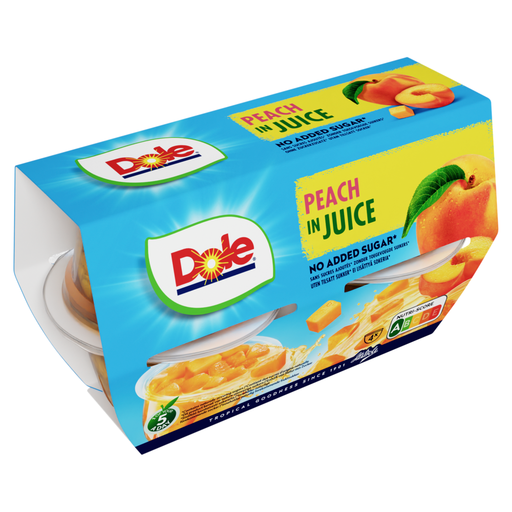 No image available
The four separate pots suit lunches packed one portion at a time without opening a larger tin. Check the current ingredients label if you avoid sweeteners, and follow its instructions if a pot is opened but not finished.
 No image available
This tin suits a lunch plan that allows you to portion pineapple before work or manage any remainder afterwards. Check the serving information and follow the pack's after-opening storage directions.
 No image available
The 220g tin is an option if you want peach slices without choosing a larger can. Plan for any uneaten fruit, and note the product information's caution that an occasional stone fragment may remain.
 No image available
Choose this if you want a fruit mixture rather than one type of fruit in your packed lunch. Check the current ingredients label if colours matter to you, and plan how to store any remainder after opening.
 No image available
This tin suits a lunch prepared at home when you want pear halves and can portion what you need. Check the serving information and follow the label's directions for any fruit left after opening.
Yes. The NHS says 80g of canned fruit or vegetables counts as one 5 A Day portion. For tinned fruit, it recommends choosing products in natural juice or water with no added sugar or salt.
Choose natural juice or water if you want the tinned-fruit format recommended by the NHS. Check the individual product's ingredients and nutrition panel rather than assuming every juice-packed product has the same recipe or portion size.
You can plan to save it only if you can follow that product's after-opening directions. For example, Sainsbury's says to transfer its mandarin segments to a non-metallic container, refrigerate them and use them within two days; check the label on the tin you buy.
Small sealed pots avoid the task of storing fruit left in an opened tin. A standard tin can work if you portion it at home for several lunches or share it, then store any remainder according to its label.