People stocking a shared tea point
An 80-bag carton can suit a workplace that regularly uses one flavour and wants to keep a reserve in the cupboard. Check how quickly the current supply is used before committing to another large box.


Choose an 80-bag box if colleagues already drink the same flavour regularly and the office wants to keep a single carton stocked. Twinings Lemon & Ginger provides that format, but it is one ginger-led herbal infusion, not a selection of fruit flavours. If tastes vary or the flavour is untested, smaller packs allow the team to try alternatives, with more cartons to manage.
An 80-bag carton can suit a workplace that regularly uses one flavour and wants to keep a reserve in the cupboard. Check how quickly the current supply is used before committing to another large box.
Smaller berry, citrus or ginger blends let colleagues try flavours before the office buys 80 servings of one of them. Keep track of which cartons are actually used.
Keep the current carton available so colleagues can check its ingredients and any precautionary allergen wording. A flavour name alone does not provide that information.
Choose this when: colleagues already drink lemon and ginger regularly and the office wants 80 bags in one carton.
Trade-off: Twinings Lemon & Ginger is ginger-led, so the whole box commits the tea point to that flavour.
Choose this when: colleagues have different tastes or the office has not tried the proposed flavour.
Trade-off: offering a choice means keeping track of several cartons and replacing individual flavours as they run out.
| Priority | What to check | Your needs |
|---|---|---|
| Servings and storage | Check the number of bags per carton and how many cartons you would need. Twinings lists 80 bags and gives a brewing measure of one bag per 200 ml of water; ASDA advises storing this product somewhere cool and dry. | We use a familiar flavour often enough to keep a larger carton in the office cupboard. |
| Caffeine statement | Read the statement for the exact infusion rather than relying on the words ‘fruit tea’. ASDA describes Twinings Lemon & Ginger 80 Tea Bags as naturally caffeine free. | If colleagues want a caffeine-free option, I need to identify it from the particular pack they will drink. |
| Flavour choice | Compare the ingredients and pack sizes, not just the fruit names. Sainsbury's lists ginger root at 37% in Twinings Lemon & Ginger; Clipper lists Blackcurrant & Blueberry in a 20-bag format. | Several flavours make more sense for our tea point until we know which ones colleagues use. |
| Ingredients and labelling | Check the current carton's ingredient list and any ‘may contain’ statement. The Food Standards Agency explains that precautionary allergen wording indicates possible unintended presence of a regulated allergen. | I want colleagues to be able to read the label themselves before choosing a drink. |
Twinings Lemon & Ginger contains 37% ginger root according to Sainsbury's ingredient listing. An 80-bag box of it will not offer the choice of a mixed-flavour selection.
Try a smaller pack if the flavour is unfamiliar, then use the tea point's actual demand to decide whether a larger single-flavour carton makes sense.
A caffeine statement and an ingredient list apply to a particular product. Colleagues who need allergen information must also be able to check any precautionary wording on its current pack.
Review the exact carton when restocking and leave its label accessible at the shared tea point.
These brand examples illustrate different pack formats and flavours; they are not a list of products in the Joybuy selection below.
Lemon & Ginger is available as an 80-bag, 120 g carton, according to Twinings.
Blackcurrant & Blueberry is a fruit-infusion option listed in a 20-bag pack by the Clipper Tea Shop.
Pukka offers Elderberry & Echinacea as a 20-bag organic fruit tea.
Super Fruit is a fruit-led infusion offered in 15-, 40- and 50-tea-temple options by teapigs.
This 80-bag lemon-and-ginger option is for an office that already wants to stock one established flavour, rather than offer a selection of fruit infusions.
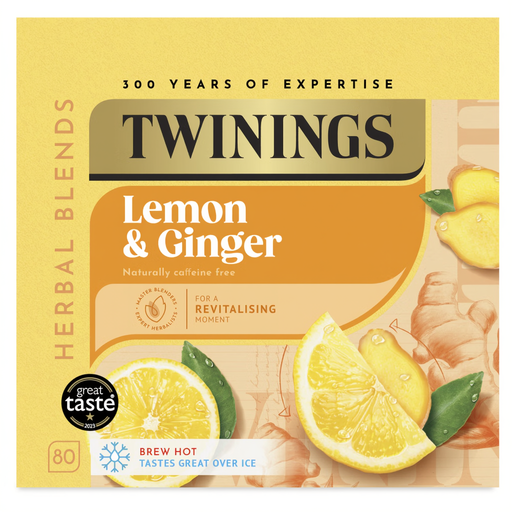 Image unavailable
The 80-bag single-flavour carton suits a shared tea point where colleagues already choose lemon and ginger regularly.
The Joybuy listing describes the infusion as caffeine free and lists ginger root at 37%. Twinings' preparation instruction for its 80-bag product is one bag in 200 ml of freshly boiled water for three minutes. Check the current carton's ingredients and any precautionary allergen wording before placing it in a shared kitchen.
Buy one 80-bag flavour when colleagues already use it regularly. If preferences are mixed or demand is uncertain, smaller packs let the office try alternatives before committing to a large single-flavour carton.
The Joybuy listing describes this specific infusion as caffeine free, and ASDA describes Twinings Lemon & Ginger 80 Tea Bags as naturally caffeine free. Check other fruit or herbal infusions individually rather than applying that statement to the category.
Twinings instructs users to infuse one bag in 200 ml of freshly boiled water for three minutes. Keeping that instruction with the carton makes preparation straightforward in a shared kitchen.
Keep the current ingredient list and any precautionary allergen wording available for colleagues to read. The Food Standards Agency explains that statements such as ‘may contain’ communicate the possible unintended presence of a regulated UK allergen; the words ‘fruit tea’ cannot answer that question.