Listeners distracted by office noise
If nearby conversations make quiet details in a recorded groove harder to follow, fit and adjustable noise control may matter more to you than a recording-oriented connection.


For listening to a recorded drum groove amid office chatter, start with well-fitting over-ear headphones with active noise cancelling (ANC); the World Health Organization recommends fit and noise cancelling to reduce the urge to raise the volume in noisy surroundings. If you need to play along, record or use an interactive drum app, favour a compatible wired connection because Bluetooth delay can affect timing. Check your source device’s connections and whether you need to hear colleagues or alerts before choosing.
If nearby conversations make quiet details in a recorded groove harder to follow, fit and adjustable noise control may matter more to you than a recording-oriented connection.
If you play along, record or use an interactive drum app, a connection that avoids Bluetooth delay matters more than moving around without a cable. Check the complete connection from your source or audio interface to the headphones.
If the same headphones need to handle groove study, calls and switching devices, consider fit, awareness controls and the connections your work devices support alongside noise control.
Decide whether you will only listen to recorded grooves or also respond to them in real time. That distinction determines whether office noise control or a dependable wired listening path should lead your choice.
Choose it when: Recorded-groove listening in a busy office is the main task, especially if you also need calls or device switching.
Trade-off: Bluetooth delay can interfere with playing along, and noise control must not prevent you from hearing essential workplace signals.
Choose it when: Playing, recording or monitoring through an audio interface makes timing the priority.
Trade-off: The cable needs a compatible connection and limits movement; passive isolation is not the same feature as ANC.
Choose it when: You want noise control for ordinary office listening and a wired route for occasional timing-sensitive study.
Trade-off: Analogue and USB audio modes have different source requirements; confirm the exact model and playback mode before relying on either.
| Concern | What to check | Who this matters to |
|---|---|---|
| Office distraction | Check over-ear fit and whether ANC can be adjusted. Consider an awareness mode if you need to hear people or alerts. | If conversations mask quieter parts of a recorded groove, I want to follow it without continually raising the volume. Around 45% of consumers put office-noise control first. |
| Timing | Confirm the source and headphone connections for wired playback. If you monitor a live input, check whether your audio interface offers direct monitoring. | When I play along or use an interactive drum app, a delayed sound makes it harder to judge my timing. Keeping the listening path responsive comes first for around 33% of consumers. |
| Desk-work use | Assess fit for longer sessions and check the device-switching, call and awareness controls you would actually use. | I need one pair for groove study and work calls, without losing track of what is happening around my desk. Around 22% of consumers prioritise that combined office workflow. |
In its Note guidance, Ableton cites Bluetooth latency of 34–200 ms, compared with an average of 5–10 ms for wired headphones in that context. A delay that is unimportant for simply hearing a recorded groove may matter when you respond to it.
For interactive study or recording, check a compatible wired audio path and, if applicable, the monitoring options on your audio interface.
Depending on your existing equipment, that setup may also call for an adaptor or a compatible audio interface.
Louder listening adds to sound exposure without addressing the surrounding distraction. The World Health Organization recommends well-fitted noise-cancelling headphones to reduce the need to raise volume in noisy places.
Check the fit and noise-control settings, then choose a comfortable listening level rather than repeatedly increasing it as the office gets louder.
Personal listening and workplace noise management serve different purposes. Health and Safety Executive guidance for Great Britain says hearing protection must not replace technical and organisational noise controls; awareness of communication and warning signals also matters.
Follow workplace policy in an ordinary office. In an assessed-noise area, follow your employer’s risk assessment and specified protective equipment rather than relying on personal headphones.
Wired listening arrangements differ between models. Sony specifies a stereo-mini input for the WH-1000XM6, while Bose describes USB-C audio from compatible sources and files for the QuietComfort Ultra Headphones (2nd Gen).
Before buying, match the exact headphone model and listening mode to the sockets and audio capabilities of your laptop, phone or interface.
A different connector may require an adaptor for your existing device.
Sony’s WH-1000XM6 is a wireless over-ear ANC option for listeners who also want device switching and an analogue connection.
Bose’s QuietComfort Ultra Headphones (2nd Gen) offer an over-ear ANC route with a USB-C digital listening option.
Sennheiser’s MOMENTUM 4 Wireless is an over-ear option to consider when cordless listening and a transparency mode matter during desk work.
Audio-Technica’s ATH-M50x represents the wired closed-back route for playing, recording or monitoring a groove.
These choices include ANC headphones for listening amid office noise and wired options for readers considering timing-sensitive study. Match any wired mode to your own source before relying on it for playing along.
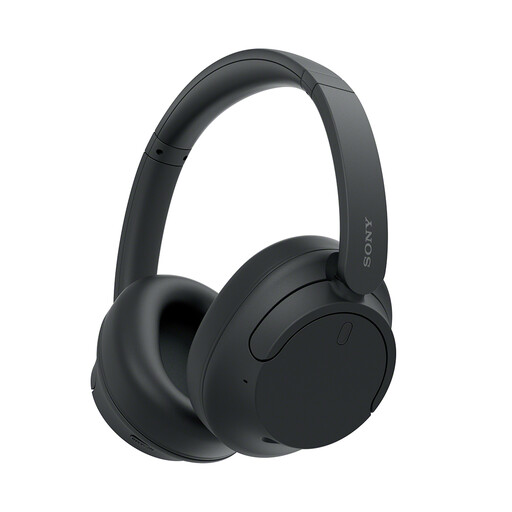 No image available
Consider this over-ear ANC model if office noise is the main obstacle to following a recorded groove.
For playing along, confirm that the wired playback mode and your source device work together; Bluetooth listening may introduce timing delay.
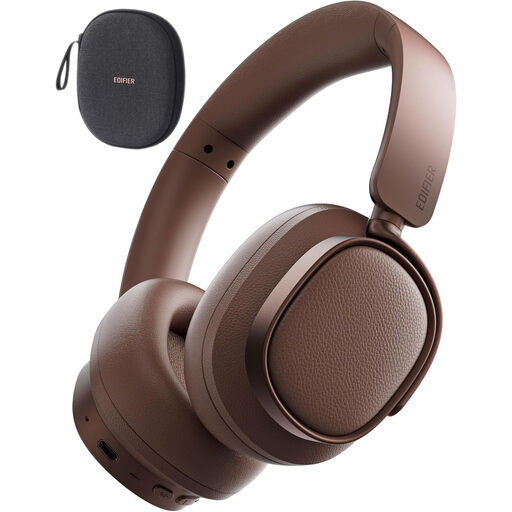 No image available
This model is relevant when you want over-ear noise control for recorded-groove listening at a busy desk.
If wired study is important, check the connector, compatible source devices and playback mode for this exact model before buying.
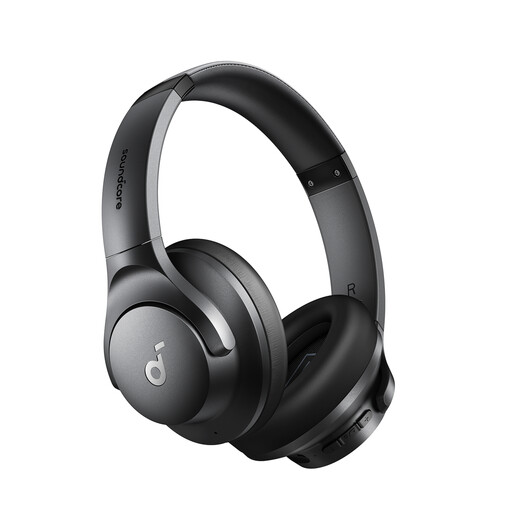 No image available
Consider these wireless over-ear headphones for listening to recorded grooves when office distraction, rather than live timing, is your main concern.
Check whether their wired playback arrangement suits your source before choosing them for playing along or an interactive app.
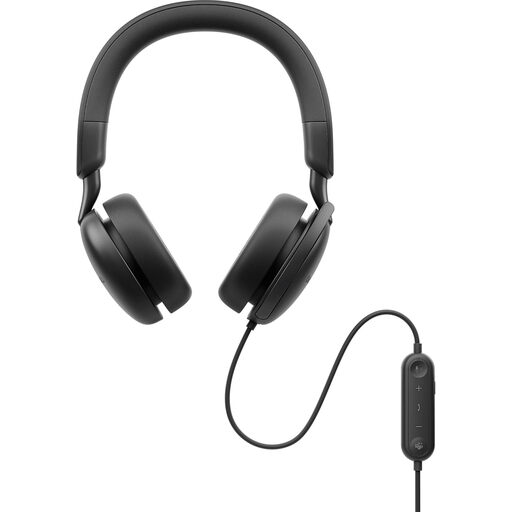 No image available
A wired ANC headset is worth considering if you study grooves at your desk and also need a headset for work calls.
Check its connection against your computer and assess whether a call-oriented headset’s fit and sound suit your music-study use.
 No image available
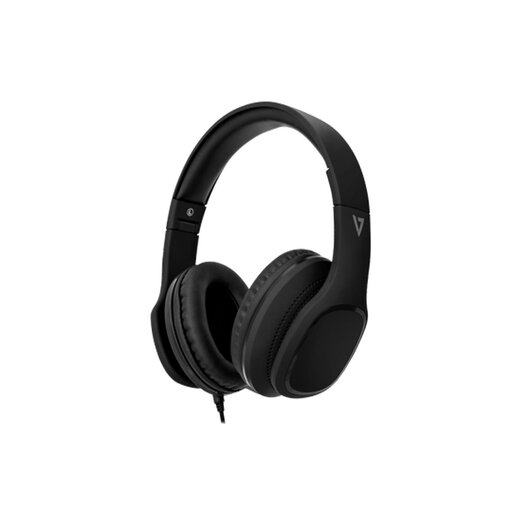
These wired over-ear headphones are relevant if avoiding a Bluetooth connection matters more than cordless movement while studying a groove.
The product name specifies 40 mm drivers and an inline MEMS microphone. Check source compatibility and fit; passive noise control should not be mistaken for ANC or for a confirmed closed-back monitoring design.
It can affect timing when you play or respond through an interactive app, even if it matters less when you only listen to a recording. Ableton cites 34–200 ms of Bluetooth latency in its Note guidance, versus an average of 5–10 ms for wired headphones in that context; check a compatible wired path for timing-sensitive work.
Do not treat personal ANC headphones as a substitute for protection specified by your employer’s risk assessment. Health and Safety Executive guidance for Great Britain says hearing protection does not replace technical and organisational noise controls; follow the measures set for your workplace and keep necessary communication and warning signals in mind.
Start with headphones that fit well and provide suitable noise control, rather than using volume alone to compete with the room. The World Health Organization recommends well-fitted noise-cancelling headphones to reduce the need to raise volume in noisy situations; keep listening at a comfortable level.
Match the exact model’s input and playback mode to your source device, not just the shape of a supplied cable. For example, Sony specifies a stereo-mini input and passive operation for the WH-1000XM6, while Bose specifies USB-C digital audio from compatible sources and files for the QuietComfort Ultra Headphones (2nd Gen); those arrangements are not interchangeable.