Buyers with only a kettle
If milk is not routinely available, look for instructions that specify hot-water preparation. Tesco Instant, Galaxy Instant and Options Belgian Choc are water-prepared examples listed by Tesco Groceries.


For an office with a kettle but no dependable milk supply, choose an instant hot chocolate prepared with water. If the kitchen regularly stocks milk, a milk-prepared drinking chocolate is another option. Compare sugars and energy for the drink as prepared, and check the current ingredient and allergen label before placing a jar in a shared kitchen.
If milk is not routinely available, look for instructions that specify hot-water preparation. Tesco Instant, Galaxy Instant and Options Belgian Choc are water-prepared examples listed by Tesco Groceries.
A drinking chocolate is an option when someone can stock and store milk. Cadbury and M&S describe their drinking chocolates as prepared with hot milk.
Compare nutrition for the prepared mug and keep the current ingredient panel available. A gluten-free or vegetarian label does not, on its own, answer whether a jar contains milk or sweeteners.
Start with the liquid the office can provide, then compare prepared servings and the labels colleagues need to check.
| Priority | What to check | Your needs |
|---|---|---|
| Preparation | Check whether the instructions call for hot water or hot milk. For a milk-made drink, consider how milk will be stored and replenished. | If our kitchen has only a kettle, I need a jar prepared with water. Where milk is reliably available, I can consider drinking chocolate too. |
| Nutrition per mug | Compare the stated portion size, preparation liquid, sugars and energy for the prepared drink. A milk-made serving and a water-made serving do not use the same basis. | I want to compare what ends up in the mug, not figures for powder alone. Tesco Groceries lists 5.7 g sugars and 40 kcal for an Options Belgian Choc serving made with water; Sainsbury’s lists 4.6 g sugars and 41 kcal per mug of its Low Calorie Instant product. |
| Ingredients and allergens | Read the current milk and soya declarations, sweetener ingredients and any dietary labels for the exact jar. | In a shared kitchen, I need colleagues to be able to check the pack for themselves. Tesco Groceries lists milk and soya for Galaxy Instant, while its Options Belgian Choc listing includes sweeteners. |
| Storage after opening | Check the pack’s storage instructions and any period given for use after opening. | If a jar may stay open for a while, I need a way to track its opening date. M&S says to keep its Drinking Chocolate and Instant Hot Chocolate cool and dry and consume each within four weeks of opening. |
Cadbury Drinking Chocolate is prepared with hot milk, whereas Tesco Instant, Galaxy Instant and Options Belgian Choc are prepared with hot water. A kettle alone will not provide the instructed preparation for the Cadbury jar.
Check the preparation instructions before ordering, particularly if milk is not consistently stocked.
A milk-prepared option also requires someone to store and replenish the milk.
Sainsbury’s displays 23 g sugars and 168 kcal for a prepared serving of Cadbury Drinking Chocolate made with semi-skimmed milk. Figures for water-prepared instant drinks use a different preparation basis.
Check the powder portion and liquid specified alongside each per-mug figure before comparing them.
Options Belgian Choc is labelled gluten free and suitable for vegetarians but also lists milk and sweeteners. Tesco Groceries lists milk and soya for Galaxy Instant.
Keep the current jar label accessible and check each relevant ingredient and allergen declaration separately.
England’s school-food regulations concern food and drink provided to pupils in relevant schools. The Department of Health and Social Care describes England’s HFSS rules cited here as restrictions on the promotion and placement of certain products in shops and their online equivalents; neither description establishes a general office-purchase ban on hot-chocolate jars.
For a school provision or retail promotion decision, assess the particular product and setting under the applicable rules rather than treating an office purchase as the same situation.
Cadbury Drinking Chocolate is a milk-prepared option for a kitchen that regularly supplies milk.
Galaxy Instant Hot Chocolate Drink 370g is a hot-water option listed by Tesco Groceries.
Options Belgian Choc 220g is another water-prepared jar, with nutrition stated for an 11 g powder serving made with 200 ml water.
Tesco Instant Hot Chocolate 400g is prepared with hot water.
M&S lists both a Drinking Chocolate for hot milk and an Instant Hot Chocolate, so check the exact product’s preparation instructions.
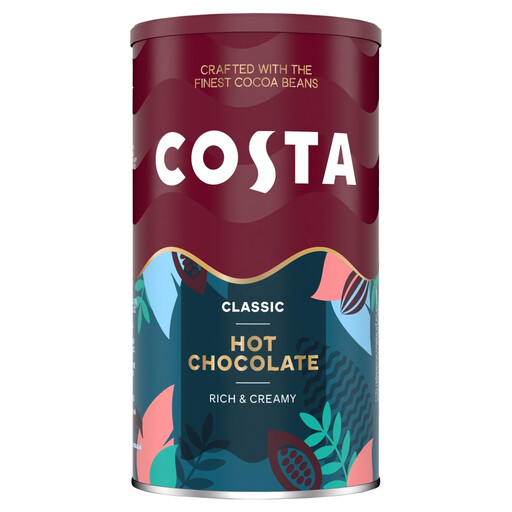
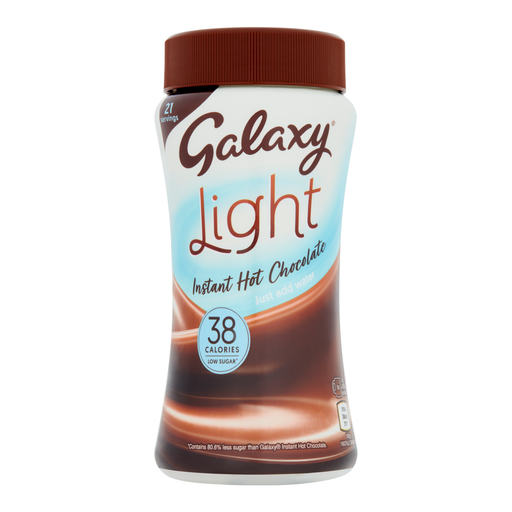
These two jars address different office setups: Costa Hot Chocolate for a kitchen that can supply milk or a plant-based alternative, and Galaxy Light Instant Hot Chocolate for hot-water preparation. The Galaxy Light 210g jar is a different product from the Galaxy Instant 370g jar discussed above.
 No image available
Consider this jar where the kitchen can provide milk or a plant-based alternative for preparation. Check the pack’s instructions and allergen statement before shared use; compare nutrition using the finished drink rather than powder figures alone.
 No image available
Hot-water preparation makes this an option for an office without a regular milk supply. Its ingredient information lists milk, soya, barley and sucralose; check the current pack against colleagues’ requirements. Use prepared-serving figures when comparing sugars or energy per mug.
Choose a hot-water instant jar if the office has a kettle but cannot reliably supply milk. A milk-prepared drinking chocolate is an option when milk is routinely available: Cadbury describes preparation with hot milk, while Tesco Instant, Galaxy Instant and Options Belgian Choc are prepared with hot water.
No. Tesco Groceries lists 40 kcal and 5.7 g sugars for a prepared serving of Options Belgian Choc, while Sainsbury’s lists 41 kcal and 4.6 g sugars per mug of its Low Calorie Instant product. Compare both figures for the stated prepared serving, and check the current ingredients separately.
Keep the current ingredient and allergen panel available so each person can check the exact product. Tesco Groceries lists milk and soya for Galaxy Instant and says Tesco Instant may contain soya; Sainsbury’s says its Low Calorie Instant product is not suitable for customers with a soya allergy because of manufacturing methods.
The Department of Health and Social Care describes these rules as restrictions on the promotion and placement of certain high-fat, high-sugar or high-salt products in shops and their online equivalents, not as a general ban on office consumption. That guidance alone does not establish whether any particular hot-chocolate jar falls within the retail rules.
No. The Requirements for School Food Regulations 2014 concern food and drink provided to pupils in relevant schools in England, not an ordinary workplace cupboard. Their definition of confectionery excludes hot chocolate, but that exception alone does not establish whether a particular product meets every requirement for school provision.