Office managers stocking a shared kitchen
Match the drink’s instructions to the kitchen’s hot-water and milk facilities, and keep the exact pack’s allergen information available to staff.


Choose an instant hot chocolate whose instructions specify water if the office has only a kettle. Drinking chocolate is an option when staff can reliably prepare it with hot milk; a dark variety gives colleagues another flavour choice. Check the exact pack’s preparation directions and ingredient and allergen information before stocking a shared kitchen.
The right format depends on how the office prepares drinks and who will use the shared supply.
Match the drink’s instructions to the kitchen’s hot-water and milk facilities, and keep the exact pack’s allergen information available to staff.
If milk is not routinely available, look for an instant product whose directions specify preparation with water.
Consider a separately labelled dark drinking chocolate rather than assuming a standard instant drink will match that preference.
Start with the liquid the office can provide, then check flavour preferences, pack information and the quantity you expect to use.
| Priority | What to check | Your needs |
|---|---|---|
| Preparation | Read the exact pack’s directions for water or hot milk and its serving quantities. Tesco Groceries lists a Cadbury drinking chocolate prepared with hot milk; Joybuy lists an Options mint variant with an 11 g serving in 200 ml water. | With only a kettle in the kitchen, I want a drink whose instructions specify water. If hot milk is reliably available, I can consider drinking chocolate too. |
| Flavour | Check the stated variety and ingredients rather than assuming every dark or instant product tastes alike. Marks & Spencer lists a dark drinking chocolate with at least 72% cocoa solids in its dark chocolate. | For colleagues who prefer a darker chocolate flavour, I would keep that choice distinct from an everyday instant option. |
| Ingredients and allergens | Read the current declaration for each variant. Marks & Spencer states that its cited dark drinking chocolate is unsuitable for people with milk or soya allergies; Joybuy’s Options Belgian Choc Mint listing identifies milk and a source of phenylalanine. | In a communal kitchen, I need staff to be able to check the information for the exact product before making a drink. |
| Pack size | Compare pack quantities with expected use and check the preparation directions for the chosen product. Tesco Groceries lists a 2 kg Cadbury drinking chocolate that requires hot milk. | I want a pack size that fits how often the office makes hot chocolate, without choosing a bulk pack that the kitchen cannot prepare as directed. |
The Cadbury and Marks & Spencer drinking chocolates cited by Tesco Groceries and Marks & Spencer instruct users to add hot milk.
Check the kitchen’s milk supply and heating facilities before choosing one of these formats.
Providing hot milk can also mean arranging milk storage and preparation in the shared kitchen.
Marks & Spencer states that its 72% Dark Drinking Chocolate is unsuitable for people with a milk allergy or a soya allergy.
Use the current allergen declaration for the exact product when deciding what to put in a communal area.
These product and retailer examples illustrate different formats; their details apply to the named products or listings, not every item from a brand.
Tesco Groceries lists a 2 kg Cadbury Drinking Chocolate prepared with hot milk.
Tesco Groceries lists several Galaxy instant and flavoured hot chocolates, including Light Instant Hot Chocolate.
Joybuy lists Options Belgian Choc Mint 220g with an 11 g serving prepared in 200 ml water.
Tesco Groceries lists its own-label Instant Hot Chocolate 400 g and Lighter Hot Chocolate 270 g.
Marks & Spencer lists standard drinking chocolate prepared with hot milk and a separate 72% Dark Drinking Chocolate.
These hot chocolates offer pack sizes and named varieties to consider for a shared office kitchen. Check each product’s current directions against the way staff will prepare drinks.
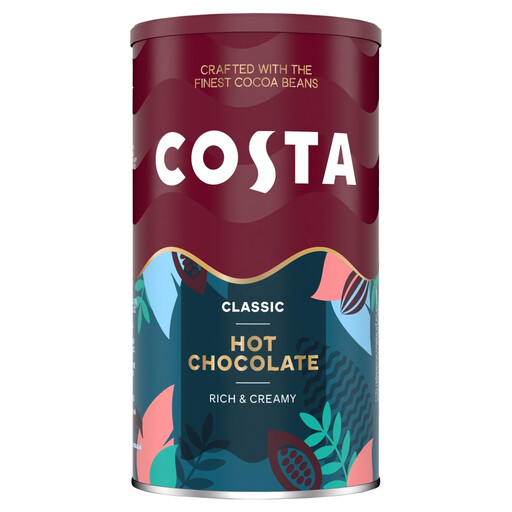 No image available
Consider this 300 g pack where the office can provide hot milk; check the current preparation directions and ingredient declaration before stocking it.
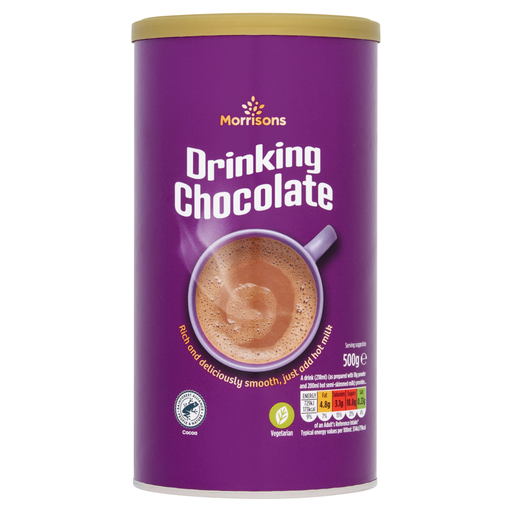 No image available
This 500 g drinking chocolate is an option for a shared cupboard if its current preparation directions suit the office kitchen. Check the pack’s allergen declaration before communal use.
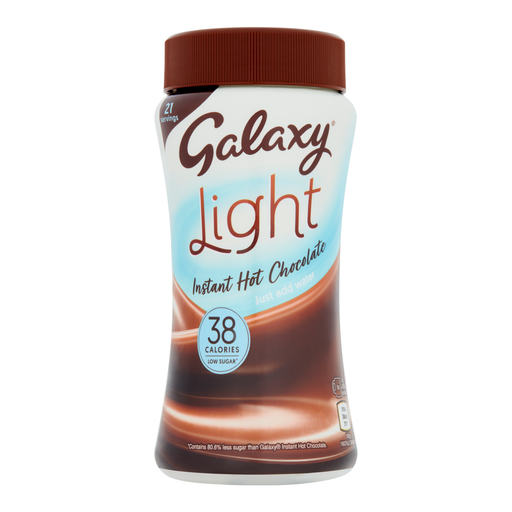 No image available
For a kettle-only kitchen, check whether this 210 g instant product’s current directions specify water and read its ingredient and allergen information.
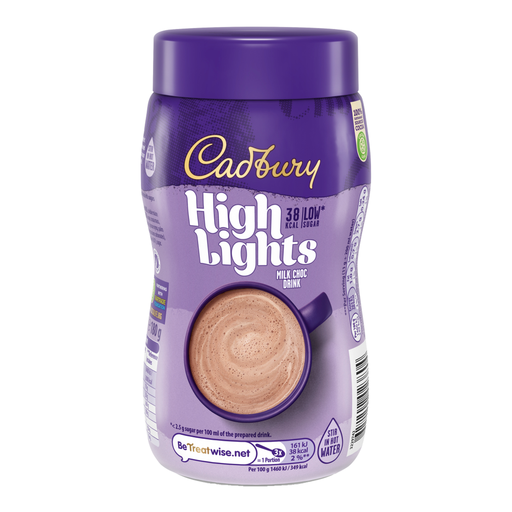 No image available
If the office prepares drinks with water, check this 180 g milk-chocolate drink’s current mixing directions. Water preparation does not establish that a product is milk-free; read its ingredient declaration.
 No image available
Consider this 500 g drinking chocolate where staff can prepare it according to the pack’s directions. Check the current milk-allergen statement before placing it in a shared kitchen.
Choose a product whose exact instructions specify preparation with water. For example, Joybuy lists an Options Belgian Choc Mint serving of 11 g in 200 ml water; that instruction does not apply to every hot-chocolate powder.
Drinking chocolate is an option when the kitchen can consistently provide hot milk. The Cadbury product cited by Tesco Groceries and the standard drinking chocolate cited by Marks & Spencer both instruct users to add hot milk.
No. Marks & Spencer states that its 72% Dark Drinking Chocolate is unsuitable for people with a milk allergy or a soya allergy. Check the current declaration on the exact product.
Keep the current pack and its ingredient and allergen information accessible to staff. Check each variety separately: the cited Cadbury drinking chocolate says it may contain milk, while Joybuy’s Options Belgian Choc Mint listing identifies milk and a source of phenylalanine.