Desktop workers replacing one screen
If documents, email, spreadsheets and business applications are your main tasks, identify your computer’s video output before selecting a monitor input. Check the cable as well as the ports.


For a straightforward desktop replacement, start with a monitor that has an input matching your computer and a stand that lets you position the screen at your desk. Built-in speakers make sense if you want simple audio for calls or video; a USB hub is worth considering when its connections will serve peripherals you actually use. Assess screen position as part of the whole workstation, not as a feature of the monitor alone.
The right replacement depends on how the desktop connects, how the screen fits the workstation and whether audio needs its own equipment.
If documents, email, spreadsheets and business applications are your main tasks, identify your computer’s video output before selecting a monitor input. Check the cable as well as the ports.
A stand with height, tilt, swivel or pivot adjustment gives you more ways to place the display when the desk and chair have limited adjustment. The UK Health and Safety Executive advises considering the whole workstation, including furniture and working conditions.
Built-in speakers can keep a setup simpler for calls and occasional video. If speaker placement or sound quality is a separate priority, consider how external speakers would connect to the desktop and fit on the desk.
Check the computer and desk before comparing optional monitor features. These decisions also help distinguish a standard screen from one with a USB hub or built-in speakers.
| Priority | What to check | Your needs |
|---|---|---|
| Video connection | Identify the desktop’s video output and a matching monitor input, such as HDMI, DisplayPort or VGA. Check the connector at each end of the cable you intend to use. | I want to connect the replacement directly to my desktop without discovering that the ports or cable do not match. |
| Screen position | Measure the available desk space and check the stand’s stated height, tilt, swivel and pivot adjustments. Consider the chair, desk and viewing position together: the UK Health and Safety Executive advises assessing the whole workstation. | If my current screen sits awkwardly, I need enough adjustment to position the new one for regular work—not just a different display panel. |
| Audio | For a monitor with speakers, confirm how audio will reach it through the chosen connection. For separate speakers, check the desktop’s audio output, desk space and power connection. | Calls and occasional video may be enough reason for built-in speakers; if audio placement matters to me, I would rather choose speakers separately. |
| USB hub | List the peripherals you would connect at the monitor, then check its upstream connection and the desktop’s capabilities. If charging compatible equipment matters, check the stated power-delivery conditions. | I would use a hub to simplify peripheral connections at my desk, rather than choosing one solely because the monitor has extra ports. |
| Display extras | Check screen size and resolution against your workspace and tasks. Treat refresh-rate and branded comfort features as additional considerations, not substitutes for compatible connections and suitable positioning. | For everyday documents and business applications, I want the screen to fit my work area before I focus on gaming-oriented features. |
Monitor connection sets differ. Dell UK lists HDMI, DisplayPort and VGA on the E2425HSM, but that does not establish which output your own computer has.
Inspect the desktop’s video outputs, match one to the intended monitor input and check whether you have the right cable.
A mismatch may mean arranging an additional cable or adapter before you can connect the display.
A refresh-rate specification or branded comfort mode cannot, by itself, resolve an awkward screen position or unsuitable desk arrangement. The UK Health and Safety Executive advises looking at the whole workstation.
Set your connection and positioning requirements first, then decide which display extras matter for your work.
A hub’s peripheral, network or charging functions are useful only when they fit the equipment you plan to connect. Dell UK, for example, specifies up to 90 W power delivery for the P2425HE; that figure alone does not establish compatibility with a particular desktop.
Identify the peripherals and connections you would route through the monitor, and check the computer’s documentation before choosing a hub model.
Integrated speakers avoid a separate speaker installation, but audio still needs a suitable route from the computer to the monitor. Separately positioned speakers remain an option when audio is a distinct priority.
Check the intended audio connection and decide whether calls and occasional video cover your needs before ruling out separate speakers.
These model examples illustrate different connection and convenience features; a brand name alone does not tell you which features a particular monitor has.
Dell UK lists both a directly connected office monitor, the E2425HSM, and a USB-C hub model, the P2425HE.
LG UK presents the 24BA550-B as a Full HD IPS monitor with built-in speakers, while the 24MS550-B specification lists a height- and tilt-adjustable stand.
BenQ lists the GW2490 with a 23.8-inch IPS Full HD display and 2 W × 2 audio.
These Joybuy options include desktop-office replacements and monitors with features that may suit peripheral or audio needs. Check each model against your computer’s connections and available desk space.
 No image available
Consider this for an office desk where screen positioning and connections for peripherals matter. The named variant is an IPS WUXGA monitor; check that its video input matches your desktop and that the UK version has the hub functions you intend to use.
 No image available
The 22-inch Full HD size is worth considering where desk fit is a priority. Check the desktop connection and cable, and confirm the model’s audio arrangement if you want sound from the monitor.
 No image available
Consider the 27-inch size only if it fits your desk and viewing arrangement. Its name specifies USB-C, HDR, P3 and a height-adjustable stand; check video and cable compatibility, and do not assume MacBook-specific controls will work with another desktop.
 No image available
This 24-inch FHD model is an option for a general office replacement. Confirm a matching video connection and cable; if changing screen height is important, check the stand’s adjustments before choosing it.
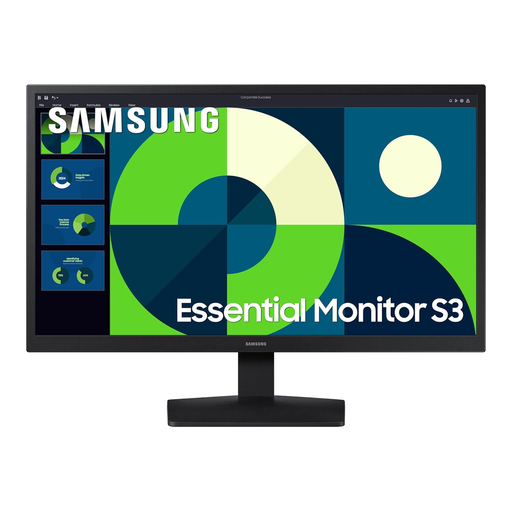 No image available
For a straightforward desktop replacement, check whether this model’s inputs match your computer and whether the required cable is available. Confirm the stand’s adjustments if you need to raise or lower the screen.
Height adjustment is particularly useful if your desk and chair cannot place the screen suitably without another support. The UK Health and Safety Executive advises assessing the whole workstation, so check the monitor position alongside your furniture and working conditions.
Identify the video output on your actual desktop, then find a matching input on the monitor and check the cable. Dell UK lists HDMI, DisplayPort and VGA on the E2425HSM as one example of a model with several inputs; other models need checking individually.
Choose one when its upstream connection and peripheral ports fit a specific need at your desk. Check what the desktop’s relevant port supports before relying on the monitor for video or connected devices; a charging specification is not, by itself, a reason to choose a hub for a desktop tower.
Built-in speakers are a simpler arrangement for calls and occasional video if your chosen connection delivers audio to the monitor. Choose separate speakers when their placement or sound is a distinct requirement, and check the desktop audio output, desk space and power connection.