Office managers offering 100% juice
A measured juice serving is easier to plan when the office has refrigerated space and a way to portion larger bottles. NHS guidance limits fruit juice and smoothies to a combined 150ml a day.


Choose 100% orange juice if the office wants a fruit-juice option and can provide measured servings; no added sugar does not mean the juice contains no naturally occurring sugars. If a ready-to-drink juice drink or dilutable squash better suits the kitchen, compare its sugar content as consumed and check the ingredients, sweeteners and storage directions. NHS guidance limits fruit juice and smoothies to a combined 150ml a day.
A measured juice serving is easier to plan when the office has refrigerated space and a way to portion larger bottles. NHS guidance limits fruit juice and smoothies to a combined 150ml a day.
A dilutable orange drink may suit a kitchen where staff make their own drinks. Compare the nutrition information for the drink after dilution and check whether its sweeteners and ingredients suit the people using the kitchen.
Check whether a juice drink or squash can be stored without refrigeration while unopened, then match its after-opening instructions and pack size to the office’s fridge space and expected use.
Decide whether the office wants 100% juice, a ready-to-drink juice drink or a squash, then compare labels on the basis of what staff will actually pour or prepare.
| Priority | What to check | Your needs |
|---|---|---|
| Drink format | Check whether the description says 100% orange juice, juice drink or squash. Read the ingredients for sweeteners; no added sugar does not mean sugar-free. | I want to know whether staff are getting fruit juice or a different orange drink before comparing the labels. |
| Sugar comparison | Compare sugars per 100ml and per serving. For squash, use the figures for the diluted drink and follow the pack’s preparation directions. | If sugars per prepared glass matter more to me than choosing 100% juice, I need figures for the drink staff will consume. |
| Juice portions | Plan a measured serving rather than treating a large bottle as one portion. NHS guidance limits fruit juice and smoothies to a combined 150ml a day. | I want to offer juice without leaving portion size to guesswork at a shared snack station. |
| Storage | Check unopened storage, refrigeration after opening and the product’s stated time for use after opening. Match pack size to likely demand. | A bottle that stays open in our kitchen needs to fit both the available fridge space and how quickly staff will finish it. |
| Ingredients | Read the current sweetener and allergen declarations. Check the label of each flavour and variant rather than assuming all orange drinks have the same ingredients. | For a communal drink, I need staff to be able to identify ingredients they avoid. |
Sainsbury’s describes its Tropicana Pure Smooth orange juice as 100% pressed juice with no added sugar. That description does not remove the sugars naturally present in the fruit.
Decide whether the office wants 100% juice or accepts a drink with sweeteners, then compare the nutrition panels on the same serving basis.
NHS guidance limits fruit juice and smoothies to a combined 150ml a day and notes that juicing releases sugars that can damage teeth.
If providing 100% juice, use measured cups or another clear way to serve 150ml portions.
An orange squash is not necessarily equivalent to 100% juice. Sainsbury’s describes its Fruit & Barley Orange squash as containing fruit from concentrate and sweeteners.
Keep the current pack available for staff to read and check its full ingredient and allergen declarations before buying for a shared kitchen.
Storage instructions differ by product. Sainsbury’s lists four days after opening for the cited Innocent juice, while Marks & Spencer lists 24 hours for its cited smooth orange juice.
Choose a pack size the office can use within its own label’s instructions, and check those instructions again when the pack arrives.
These labelled examples show how orange-drink formats differ; a brand name alone does not establish the ingredients or storage instructions of another product.
A reference for offices considering 100% orange juice in individual or larger packs.
A chilled 100% orange-juice reference for offices able to store and portion an opened bottle.
A reference for a concentrated orange drink rather than a 100% juice serving.
A reference for both ready-to-drink orange juice drinks and dilutable squash.
A reference for comparing a high-juice orange drink with a separate smooth orange-juice product.
These options cover a dilutable orange squash and a pack of individual ready-to-drink orange drinks. Check the current pack label before relying on either for a particular sugar or ingredient requirement.
 No image available
A dilutable option for a shared office kitchen. Follow the pack’s dilution directions and check its current sweetener and allergen declarations before providing it for staff.
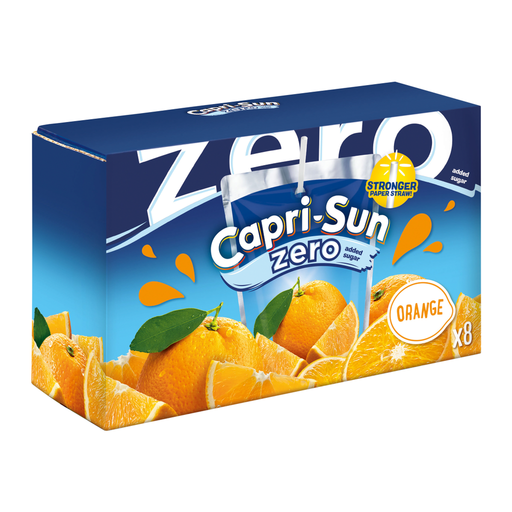 No image available
Eight individual drinks offer a different serving format from a shared bottle. Check the current pack’s no-added-sugar wording and sugar figure before choosing it to meet that requirement; the product name alone does not establish either.
No. Tesco describes the cited Innocent orange juice as 100% juice with no added sugar while noting that it contains naturally occurring sugars. Read the nutrition panel if sugar content affects the office’s choice.
NHS guidance limits fruit juice and smoothies to a combined 150ml a day. If the office provides juice from a larger bottle, measured 150ml cups make the intended portion clear.
The cited Tropicana and Innocent products are 100% orange juice. Sainsbury’s describes its cited orange juice drink as a drink from concentrate with a sweetener, while Tesco describes its cited high-juice orange drink as a concentrate to dilute. Compare ingredients and nutrition for the prepared drink rather than treating the formats as interchangeable.
Check the dilution directions, sweeteners, full ingredient and allergen declarations, and after-opening storage instructions. A no-added-sugar statement does not answer those questions for a particular pack.
No single storage period applies to every product. Sainsbury’s lists four days after opening for its cited Innocent juice, whereas Marks & Spencer lists 24 hours for its cited smooth orange juice. Follow the instructions on the pack the office buys.