
24/7 Customer Support

Free returns

Same-day & Next-day Delivery

Quality Guaranteed

Unlock Your Welcome Offers: FREE Delivery | Up to 80% OFF | Free 30-day JoyPlus trial
Download the APP
A cluttered desk can often lead to a cluttered mind. When pens, papers and cables compete for space, finding what you need becomes a challenge, and focusing on the task at hand can feel impossible. Effective office organisation is more than just tidying up; it’s about creating a functional environment that supports your productivity and reduces daily friction.
As the Joybuy Product Recommendation Officer, my role is to help you find practical and reliable solutions for your workspace. This guide offers straightforward advice and highlights a few products designed to help you achieve a more organised and efficient desk, whether you're in a corporate office, a home study or a student dorm.
Before buying any storage, it’s helpful to consider a few key points. A thoughtful approach ensures you invest in items that genuinely solve your organisational challenges.
Take a moment to look at your desk. What are the main sources of clutter? Is it loose stationery, piles of documents or a tangle of charging cables? Understanding your specific pain points is the first step. Measure your available desk space to ensure any new organisers fit comfortably without making the area feel cramped. This will help you find effective home office storage that works for you, not against you.
Look for products made from materials suited for daily use. Sturdy plastics and metals often provide longevity for desktop items. Consider functionality: do you need something modular and adaptable, or is a fixed layout sufficient? For document filing solutions, look for features like colour-coded tabs and expandable sections that make it easy to categorise and retrieve papers quickly.
A tidy desk is only half the battle. Managing your time and tasks is also a core part of workplace efficiency. Integrating productivity accessories like a physical planner can provide a clear, at-a-glance overview of your week, helping to keep your schedule as organised as your physical space.
Here are a few items selected for their practical design and ability to address common organisational needs.
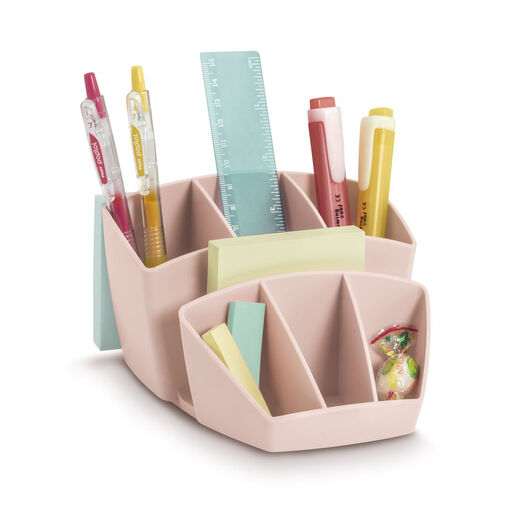
Why It Stands Out: This organiser tackles the common problem of small stationery items creating chaos on your desk. Its main strength lies in its customisable compartments, allowing you to create a layout that perfectly fits your collection of pens, paperclips, sticky notes and other essentials. It’s a practical tool for effective stationery organisation.
Pros:
Who is it for? This is a great fit for students, creatives or office professionals who use a variety of small stationery items and want a flexible system to keep them in order.
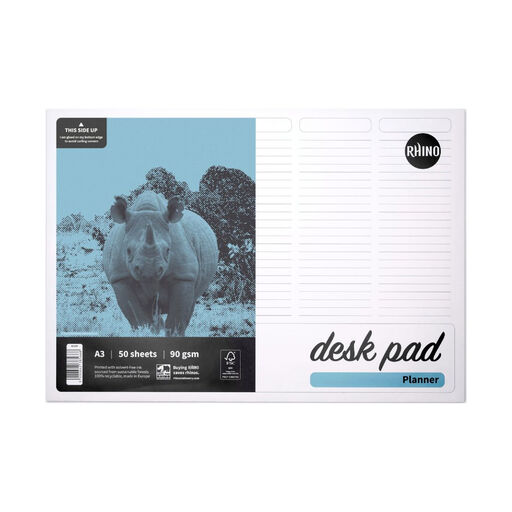
Why It Stands Out: This A3 desk pad moves beyond simple note-taking to become a central hub for your weekly planning. Its fully customisable 5-column layout can be adapted for daily schedules, project tracking or lesson planning. The use of premium 90gsm paper provides a quality writing surface, and the glued bottom edge is a thoughtful touch that prevents corners from curling.
Pros:
Who is it for? Ideal for project managers, teachers, students or anyone who prefers a visual, analogue system for managing their time and tasks. It’s one of the most useful desk organisation ideas for clarifying your schedule.
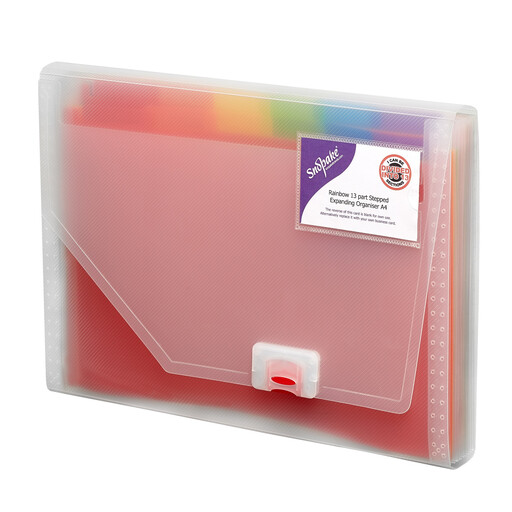
Why It Stands Out: Paperwork can quickly become overwhelming, but this expanding file offers a simple and effective solution. With 13 sections and colour-coded tabs, it makes categorising bills, reports and personal documents straightforward. Its durable construction is suitable for both stationary desktop use and for carrying documents to meetings, making it a versatile tool for anyone needing to manage physical papers.
Pros:
Who is it for? This is an essential for anyone who handles a moderate amount of paperwork, such as home administrators, remote workers or professionals who need to keep important documents organised and accessible.
Proper office organisation starts with a solid foundation. If your current desk is too small or lacks the features you need, no amount of organisers will fully solve the problem. Creating an efficient workspace might mean starting with the central piece of furniture itself.
If you're ready to build your ideal setup from the ground up, explore our range of functional and stylish school and home office desks.
Start with a thorough office declutter. Remove everything that doesn't belong on your desk. Then, assign a specific home for every item using tools like desk organisers for stationery and filing systems for papers. A weekly reset to put everything back in its place can help maintain order.
A systematic approach is key. First, decide what needs to be kept in physical form and what can be digitised. For the papers you need to keep, use document filing solutions like an expanding file or a set of labelled folders. Categorise documents by topic (e.g., "Invoices," "Contracts," "Meeting Notes") to ensure you can find what you need without searching through a large pile.