
24/7 全天候客户支持

免费退货

当日/次日达

品质保障

开启新人专享福利: 全场免邮 | 低至 2 折 | 免费试用 30 天 JoyPlus 会员
下载 Joybuy
As a Joybuy Product Recommendation Officer, my role is to help you navigate the crowded market of office supplies. When it comes to something as fundamental as office paper, making the wrong choice can lead to more than just a bad printout; it can mean wasted budgets, frustrating equipment jams and a poor impression on clients. Many businesses fall into common traps, but with a little guidance, you can select the right paper for your needs and budget.
This guide cuts through the marketing jargon to focus on what truly matters, helping you avoid the three most common pitfalls when purchasing bulk copier paper.
To make an informed decision, it’s essential to understand a few key parameters. These aren't just technical jargon; they are the factors that directly impact cost, performance and the final appearance of your documents.
GSM stands for 'Grams per Square Metre' and is the single most important indicator of a paper's quality and feel. Matching the GSM to the job is crucial for efficiency.
Often measured as CIE Whiteness, brightness affects the contrast of your print. A higher number means a whiter sheet, which makes black text appear sharper and colours more vibrant. Opacity refers to how much light passes through the paper. High opacity is vital for double-sided printing to prevent text from the other side showing through.
While A4 printer paper is the standard for almost all office documents, some tasks require different formats. For posters, detailed spreadsheets, or architectural plans, an A3 paper ream is the appropriate choice. For internal notices or document sorting, using coloured office paper can be a simple yet effective organisational tool.
To help you choose, we've matched some reliable options to common business profiles. These selections are based on their specifications and suitability for specific tasks, helping you avoid the pitfalls mentioned earlier.
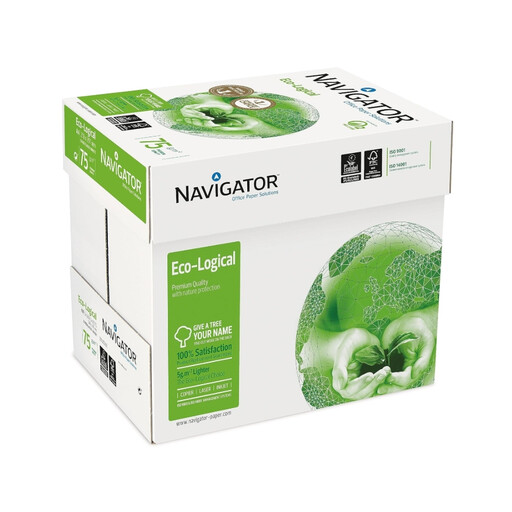
Why This Fits Their Persona: An excellent choice for businesses needing reliable, high-volume printing while managing costs and environmental impact. Its 75gsm paper weight is perfect for daily internal documents.
It carries the EU Ecolabel, a verifiable certification that cuts through vague "green" claims. The 75gsm weight is cost-effective for daily use, preventing overspending on heavier paper.
A strong balance of sustainability (produced with fewer resources) and performance, with high opacity (93%) suitable for double-sided printing.
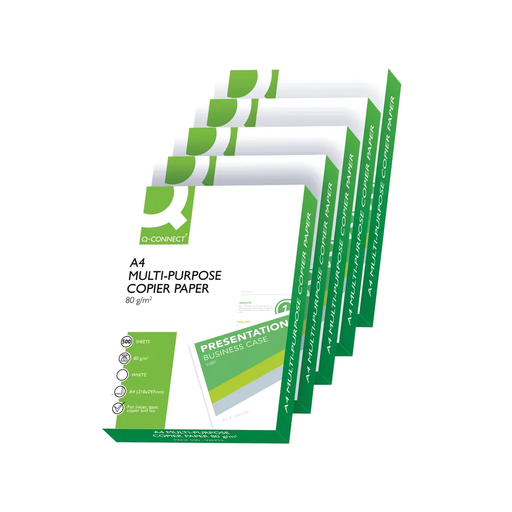
Why This Fits Their Persona: Ideal for offices that need a dependable, all-round paper for reports, letters and general copying. This 80gsm paper is the workhorse for any professional environment.
It avoids the "one-size-fits-all" trap by being the correct, versatile choice for most standard office tasks. Its quality ensures reliable performance, preventing the hidden costs of paper jams.
Features an ultra-smooth finish for high runnability and a highly opaque composition for crisp, clean printing. The 2500-sheet bulk pack offers excellent value.
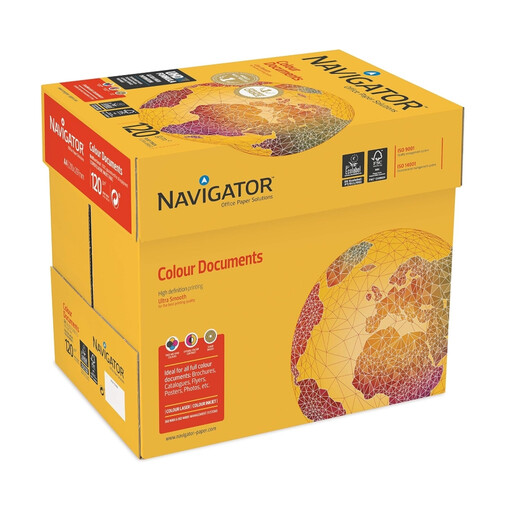
Why This Fits Their Persona: For when first impressions count. This heavyweight 120gsm presentation paper is perfect for marketing agencies or sales teams producing high-impact brochures and proposals.
It avoids the trap of overpaying by being used intentionally for tasks where its premium feel adds tangible value, rather than for everyday printing. It is a specific tool for a specific job.
The heavyweight 120gsm construction and high 169 CIE whiteness deliver exceptionally vibrant colours, sharp images and a professional, substantial feel to any document.
We have compiled a complete, real-time list of products that fully satisfy these strict selection criteria and UK safety regulations.
The main difference is thickness and weight. 80gsm paper is the traditional UK office standard, offering a solid, professional feel and good opacity. 75gsm paper is slightly thinner and lighter. For high-volume, internal printing, 75gsm is an excellent choice as it's often more cost-effective and uses fewer resources. For external letters or important reports, the extra weight of 80gsm paper can provide a more premium impression.
It can contribute to long-term wear. Very low-quality paper often has a rougher surface and can release more paper dust. This dust can accumulate on rollers and internal components, potentially leading to more frequent paper jams and a need for servicing. Investing in paper with a smooth finish and a reputation for reliability can reduce printer downtime and maintenance costs.
Most modern multi-purpose office paper is engineered to work well in both inkjet and laser printers. However, for the very best results, especially with high-resolution images, specialised papers are available. Inkjet photo paper, for instance, has a coating that absorbs ink, while laser paper is designed to have heat fuse toner to its surface. For general office documents containing text and graphics, a quality multi-functional paper will perform reliably across all your devices.