
24/7 全天候客户支持

免费退货

当日/次日达

品质保障

开启新人专享福利: 全场免邮 | 低至 2 折 | 免费试用 30 天 JoyPlus 会员
下载 Joybuy
As a Joybuy Product Recommendation Officer, my role is to help you navigate the crowded market of everyday items. When it comes to office stationery, the choices can feel overwhelming. A fresh notebook or a new set of pens promises a fresh start to productivity, but not all stationery is created equal. Many of us have been let down by products that look good on the shelf but fail in practice.
Before you fill your basket, it's worth knowing about the common traps that lead to wasted money and frustration. These are the subtle flaws that marketing materials often gloss over.
By understanding a few key features, you can easily sidestep these issues and select reliable home office essentials and stationery for students that genuinely support your work.
To make an informed choice, you don't need to be an expert. You just need to know what to look for. Here are the three most important factors to check before you buy.
Paper thickness is measured in Grams per Square Metre (GSM). This number is a reliable indicator of quality and durability.
The way a notebook is held together determines how it handles daily use.
For items like memo pads and planners, the small details make all the difference.
Based on these practical criteria, we've matched some standout products to different user needs.
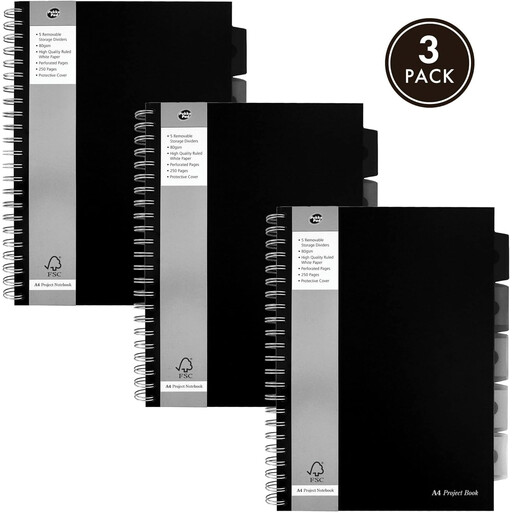
Why This Fits Their Persona: Ideal for students or professionals juggling multiple modules or clients. The A4 size provides ample space for detailed notes, while the dividers make it easy to switch between subjects without carrying multiple books.
The robust polypropylene cover and twin-wire binding directly counter the weak binding trap. Its five repositionable dividers with storage pockets offer built-in organisation from the start.
Features 250 pages of quality 80 gsm paper to minimise ink bleed. The pages are also perforated for clean and easy removal, perfect for filing or submitting work.
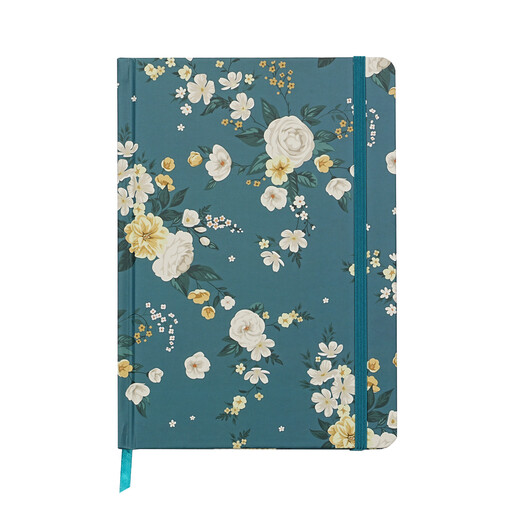
Why This Fits Their Persona: For those who appreciate both function and form in their daily writing. The A5 size is portable yet spacious, and the elegant design makes it a pleasure to use for journaling, planning or creative writing.
This notebook tackles the paper bleed-through pitfall head-on with its high-quality 100g offset paper. The durable case-bound hardcover protects the pages and ensures the spine remains intact with daily use.
Includes thoughtful features like a bookmark ribbon to hold your place and an elastic closure band to keep the notebook securely shut when in a bag.
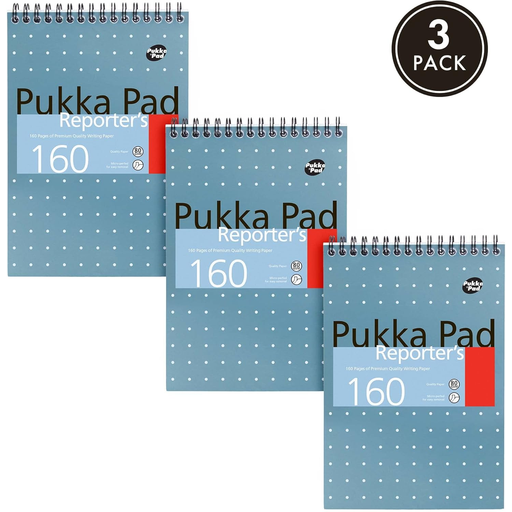
Why This Fits Their Persona: Perfect for those who need to capture thoughts, lists or meeting notes quickly, whether they're on a train, in a lecture or walking between appointments. Its compact size fits easily into a coat pocket or small bag.
The head-bound wire binding is designed for portability, allowing the pad to lay flat and provide a sturdy writing surface without a desk. The 80 GSM paper ensures notes are clear and legible without significant bleed-through.
Each page is perforated for clean and simple removal, which is ideal for sharing notes or organising them later. The front cover also includes a handy list of 250 commonly misspelled words.
We have compiled a complete, real-time list of products that fully satisfy these strict selection criteria and UK safety regulations.
The main difference is size. An A4 notebook (210 x 297 mm) is the size of standard printer paper, making it ideal for in-depth notes at a desk for school or work. An A5 notebook (148 x 210 mm) is half that size, making it much more portable and a popular choice for journaling, daily planning and carrying in a bag.
The most effective way is to choose a notebook with a higher paper weight. Look for paper that is at least 80 GSM for general use with ballpoint or gel pens. If you prefer using fountain pens or heavy markers, opting for 100 GSM or thicker paper will provide a much better experience and prevent almost all bleed-through.
Neither is inherently better; it depends on your needs. A spiral notebook is practical because it can lie perfectly flat, which many people find more comfortable for writing. However, the spirals can sometimes get bent or snag. A bound lined journal, especially a hardcover notebook, is often more durable for archiving and has a more traditional, professional appearance, but it may not always stay open flat on its own.