Choose a cup-by-cup hot-water dispenser if guests usually make tea with bags or prepare other individual hot drinks. An automatic tea maker makes more sense when small groups regularly want brewed loose-leaf tea; consider a larger water boiler when guest rounds repeatedly exceed a domestic dispenser’s capacity. Before choosing a boiler, check the available space, filling or water-connection arrangements, electrical suitability and who will maintain it.
Who each option suits
Hosts serving small rounds of loose-leaf tea
If guests regularly choose different types of loose-leaf tea, programmed brewing and control over strength may matter more than a large hot-water tank. Sage Appliances describes these functions for its BTM800UK automatic tea maker.
Organisers making individual drinks
If most guests use tea bags or make other hot drinks in their own cups, a dispenser lets you serve hot water without repeatedly lifting and pouring a kettle. Check its capacity against the actual cups and mugs used in the office.
Managers of busy meeting spaces
For frequent or larger guest rounds, the available volume of hot water, refill method and cleaning arrangements become more important. Buffalo Appliances offers 10-litre manual-fill and auto-fill examples, but the right format depends on the site’s space and water connection.
What matters when choosing
Automatic tea maker
Choose it when: Small guest groups regularly want brewed loose-leaf tea with settings for different tea types.
Trade-off: It prepares tea rather than simply supplying hot water for a queue of separate drinks.
Cup-by-cup dispenser
Choose it when: Guests mostly use tea bags and need hot water for individual cups.
Trade-off: A domestic tank may need refilling during a larger meeting and does not brew loose-leaf tea automatically.
Manual-fill water boiler
Choose it when: Larger rounds recur but a fixed water connection is not the chosen arrangement.
Trade-off: Allow space and time for filling, heating and cleaning; Buffalo Appliances states a 22-minute heat-up time from full for its 10-litre GL346 example.
Plumbed-in water boiler
Choose it when: Hot-water demand is frequent and the office has a suitable water connection and installation plan.
Trade-off: Installation and ongoing servicing need planning, and hot water still needs a separate tea bag or brewing step.
For a shared-office guest round, start with the need most likely to decide the purchase, then check the appliance against the office’s cups, space and routine.
| Concern |
What to check |
Who this matters to |
| Enough hot water |
Compare the largest usual guest round and actual mug volumes with tank capacity; decide whether a refill during service is acceptable. |
If a meeting round cannot pause for refilling, having enough hot water ready is my main concern. Roughly 31% of consumers may put uninterrupted service first. |
| Simple cup-by-cup serving |
Check portion controls and whether the office’s cups fit beneath the outlet and drip tray. |
When I am greeting guests as well as making drinks, I want to fill individual cups without repeatedly lifting a kettle. Around 25% of consumers may prioritise easier serving. |
| Loose-leaf brewing |
Check the tea settings, strength choices and keep-warm duration against the teas guests will actually be served. |
If guests regularly ask for different loose-leaf teas, I want the brewing settings to suit those teas rather than just a supply of hot water. Roughly 19% of consumers may make tea-specific brewing their priority. |
| Safe shared use and upkeep |
Confirm electrical and workplace suitability, a safe position, and responsibility for checks, cleaning and descaling. |
With several people using the appliance, I need a clear plan for keeping it in good condition. Around 25% of consumers may place shared-use safety and upkeep first. |
Mistakes to avoid
-
Buying an automatic tea maker for mostly tea-bag drinks
Programmed tea brewing helps when the office serves loose-leaf tea. It adds little to the task of supplying separate cups of hot water for guests using tea bags.
Choose the specialist brewing route only if loose-leaf tea is a regular part of guest service; otherwise compare a cup-by-cup dispenser.
-
Treating a stated cup count as a meeting-round guarantee
Breville UK describes its 1.7-litre HotCup VKT124 as holding up to eight cups, but larger office mugs can change how many drinks a tank covers.
Measure the mugs in use and compare their combined volume with the appliance’s capacity.
-
Assuming a new appliance needs no upkeep
A filter or easy-clean design does not replace routine care. The Health and Safety Executive advises that workplace electrical equipment should be suitable for its use and maintained to prevent danger.
Agree who will check the appliance’s condition and follow its cleaning and descaling instructions.
Cleaning, descaling and checks take staff or facilities time.
-
Choosing auto-fill before checking the site
An auto-fill boiler needs more than a suitable spot on the counter: the water supply and installation arrangements must also work for that location.
Confirm the connection, electrical supply and facilities approval before choosing a plumbed-in model. If a fixed installation is unsuitable, consider a manual-fill boiler or dispenser.
Relevant brands to consider
Sage
An automatic tea-maker option for small rounds where brewing loose-leaf tea is the main task.
- Sage Appliances describes five programmed tea types, an automatically moving basket, adjustable strength and up to 60 minutes of keep-warm for the BTM800UK.
- This is a specialist tea appliance, not a substitute for a higher-capacity office hot-water boiler.
Breville
A domestic dispenser option for modest rounds of tea bags and other individual hot drinks.
- Breville UK specifies a 1.7-litre tank, mid-cycle stop and adjustable drip-tray height for the HotCup VKT124.
- Check whether the tank covers the office’s actual mug sizes; the appliance dispenses water rather than brewing loose-leaf tea.
Buffalo
Commercial water-boiler options for recurring larger rounds.
- Buffalo Appliances lists a 10-litre manual-fill boiler and a 10-litre Slimline auto-fill model, the latter with stated output of up to 30 litres per hour.
- Manual filling and heating need planning; the auto-fill model depends on a suitable water connection.
Bravilor Bonamat
Fixed-site hot-water equipment to consider where installation and ongoing demand justify it.
- Bravilor Bonamat describes the HWA 3 for small locations with low hot-water needs; its HWA 8 has an 8-litre holding capacity and stated hourly capacity of 25 litres.
- These supply hot water rather than automatically brewing a pot of loose-leaf tea.
Hot-water dispensers on Joybuy
These dispensers are options for serving hot water by the cup when guests make individual drinks. Compare their fit with the office’s mugs and intended shared use before choosing; an automatic loose-leaf tea maker or larger boiler serves a different need.
 No image available
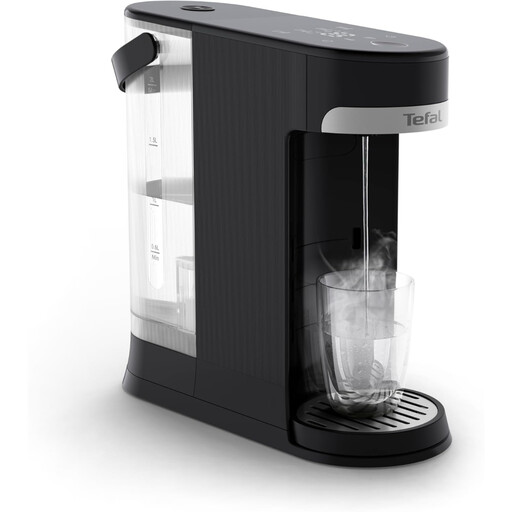
Tefal BR3508G0 Instant Brew Hot Water Dispenser, Black
For serving individual cups of hot water to guests using tea bags or preparing other drinks.
Check that the office’s usual mugs fit beneath the outlet and confirm suitability for the electrical supply and intended workplace use.
View on Joybuy
 No image available
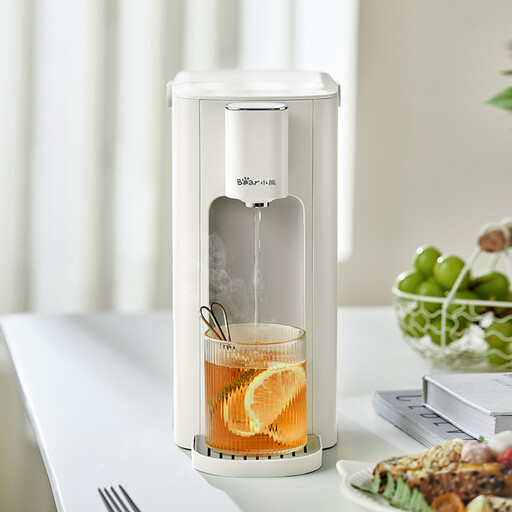
Bear YSJ-E40T2 Hot Water Dispenser, 3 L
For guest rounds where people prepare separate hot drinks. Its product name specifies a 3 L capacity and six temperature settings.
The description frames this model for home use. Confirm shared-office suitability with the manufacturer, as well as its actual footprint and compatibility with the office electrical supply.
View on Joybuy
Common questions
Does an office tea maker or dispenser need a PAT test every year?
Not automatically. The Health and Safety Executive says annual portable appliance testing is not universally required in low-risk workplaces such as offices. Electrical equipment still needs to be maintained to prevent danger, with checks appropriate to its use and condition.
What should I check before putting a tea appliance in shared-office use?
Check that the appliance suits its intended use and electrical supply, has a safe location and is in good condition. The Health and Safety Executive advises checking for visible problems with parts such as the plug, cable and casing, and having damage dealt with appropriately.
Who should handle cleaning and scale in a shared office?
Assign the task to an office user or facilities team and follow the specific model’s instructions. Features such as the permanent limescale filter Breville UK lists for its HotCup VKT124 or the cleaning-oriented design Buffalo Appliances describes for its manual-fill boiler do not remove the need for upkeep.
Can a plumbed-in boiler replace a countertop tea maker?
It can supply hot water for frequent rounds if the site has a suitable water connection and installation arrangement, but it does not automatically brew loose-leaf tea. Check those site requirements before choosing an auto-fill model such as the Buffalo Slimline, and plan how guests’ tea will be prepared.


