Seeded-loaf regulars
If you bring long or thick-cut seeded bread, compare your usual slices with the stated slot length and width rather than relying on a long-slot label.


Check the length and width of the office’s usual seeded slices against a toaster’s stated slot dimensions before choosing by slice count. A two-slice long-slot model may suit staggered use; if several colleagues toast at once, consider four-slice capacity in two long slots. Whichever format you choose, check crumb-tray access, worktop placement and the employer’s appliance rules.
If you bring long or thick-cut seeded bread, compare your usual slices with the stated slot length and width rather than relying on a long-slot label.
If several colleagues want toast during the same break, simultaneous slice capacity matters alongside the space the appliance occupies.
If you arrange shared-kitchen appliances, check where the toaster can be placed and how its plug, cable and crumb tray will be inspected and maintained.
For a shared office using seeded bread, establish slice fit first, then weigh break-time capacity against worktop space and the practicalities of cleaning.
| Concern | What to check | Who this matters to |
|---|---|---|
| Seeded-bread fit | Measure a usual slice at its longest and thickest points; compare both measurements with the exact model’s slot dimensions. | Long or thick slices need room without being forced into the toaster. Around 29% of consumers would put bread fit first. |
| Break-time capacity | Check simultaneous slice capacity and whether four slices use two long slots. | When colleagues take breaks together, waiting for another batch is the main frustration; around 24% of consumers would prioritise capacity. |
| Crumbs and seeds | Look for an accessible removable crumb tray and agree who will empty it. | In a kitchen used by several people, I need seed and crumb removal to be a routine task. Roughly 29% of consumers would make cleaning their primary concern. |
| Space and controls | Compare appliance dimensions with the available worktop and check the browning controls on the exact model. | A constrained kitchenette needs room for the appliance, while occasional users may want straightforward controls; around 18% of consumers would put these practicalities first. |
Slot descriptions do not establish whether a particular seeded slice will fit. Dualit states dimensions of 260 mm by 36 mm for its Long Slot Lite, but those measurements do not apply to other models.
Measure a typical slice and check both dimensions and the instructions for the exact toaster before ordering.
A long-slot toaster can still toast only two slices at once. Morphy Richards describes a Signature format that takes four slices in two extra-long slots.
Consider how many colleagues are likely to toast at the same time, then weigh the extra capacity against the worktop space required.
Electrical Safety First advises frequent crumb-tray cleaning to help prevent fire. A University of York safety alert also identifies crumb and seed build-up as a toaster risk.
Choose a tray that staff can access easily and establish a cleaning routine. Unplug the toaster and let it cool before cleaning it.
The Health and Safety Executive says employers must maintain electrical equipment to prevent danger; it does not prescribe an annual test for every office toaster. Individual workplaces may have additional appliance rules.
Ask facilities about approval, placement, inspection and cleaning arrangements before bringing a toaster into the kitchen.
Its Long Slot Lite offers published slot dimensions for comparing with larger slices.
The Luna 24310 is a two-slice long-slot option to examine where use is usually staggered.
Its Signature four-slice format provides two extra-long slots for shared-kitchen capacity.
The IGT0420W is another four-slice, two-long-slot format to compare.
These four-slice choices include long-slot models for shared break times and a wide-slot model to assess separately. Check the internal slot dimensions against your seeded bread, as well as plug suitability and workplace approval, before buying.
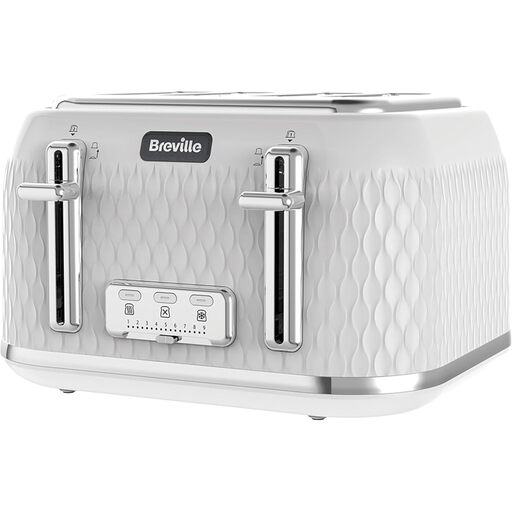 No image available
Consider this four-slice model if several colleagues toast at once. Its title specifies wide slots and a high-lift feature; check the internal slot length and width against your usual seeded slices rather than assuming it has the long-slot layout you need. Confirm plug suitability and workplace approval before use.
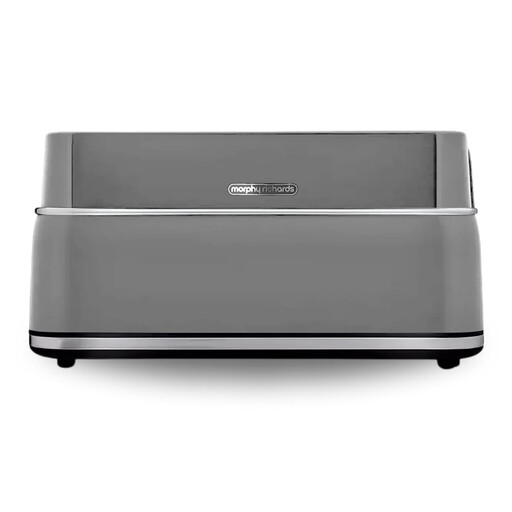 No image available
This four-slice long-slot format is worth considering when colleagues toast together and use longer bread. The title specifies variable browning control; compare the exact slot dimensions with your seeded slices and confirm plug suitability and workplace approval before use.
 No image available
Consider this four-slice model if you want long, extra-wide slots and digital controls in a shared kitchen. The title also specifies 1450 W; that rating does not establish whether your bread will fit. Check internal slot dimensions, plug suitability and workplace approval before use.
Not solely because it is used in an office. The Health and Safety Executive says employers must maintain electrical equipment to prevent danger, but the law does not prescribe what must be done or how often. Check whether your employer has its own testing or appliance-registration procedure.
No. Compare the length and thickness of a typical slice with the exact model’s slot dimensions and instructions; do not force bread that is too large or difficult to remove into the appliance.
Confirm that the employer permits the appliance, identify an appropriate location and agree who will inspect and clean it. The University of York’s designated-kitchen requirements illustrate a site-specific policy, not a rule for every UK workplace.
Unplug it, let it cool and empty the crumb tray regularly, following the manufacturer’s instructions. Electrical Safety First advises frequent tray cleaning to help prevent fire, and the University of York specifically warns about crumb and seed build-up.