Hosts serving mixed preferences
For a shared snack table, a familiar tonic can sit alongside one or two different styles. Individual portions are worth considering when attendance is uncertain or drinks will be taken at different times.


For a mixed office group, start with a familiar tonic in individual portions, then add a smaller quantity of light or botanical varieties if colleagues want more choice. Compare the exact packs for flavour, sugars, ingredients and serving size; if anyone plans to add alcohol, check the workplace policy rather than assuming an office event permits it.
For a shared snack table, a familiar tonic can sit alongside one or two different styles. Individual portions are worth considering when attendance is uncertain or drinks will be taken at different times.
Herbal and citrus ingredients give some tonics a more distinctive flavour. Check the particular variety against the drinks you intend to serve, rather than choosing on the brand name alone.
A light variety may suit colleagues who prefer that option, but the name does not establish its sugar content. Compare the nutrition information on the exact packs before placing a mixed order.
Decide how the mixers will be served, then choose a flavour mix and pack sizes that fit the group. Check each variety separately: a regular tonic and a light tonic from the same brand need not have the same ingredients or nutrition values.
| Priority | What to check | Your needs |
|---|---|---|
| Flavour | Compare a classic quinine-led tonic with any citrus or herbal varieties. Check whether a more distinctive flavour suits the intended serve. | I am buying for several colleagues, so I would keep a familiar option available and add a botanical variety if there is interest in one. |
| Nutrition | Read calories and sugars per 100ml on each exact pack. Do not treat a light description as meaning sugar-free. | Some colleagues may prefer a light tonic; I want to compare its label with the regular option before choosing quantities. |
| Portions | Compare the volume per can or bottle with likely servings. For larger bottles, check the storage instructions after opening. | Drinks may be taken throughout a meeting, so individual portions could be easier to serve than one opened bottle. |
| Ingredients | Read the ingredient and allergen information for every selected variety, including any substituted pack. Do not apply one product's label to the whole range. | Before sharing drinks with colleagues, I need to be able to check the labels of the products actually served. |
| Workplace rules | Distinguish serving a mixer on its own from adding spirits. Check the organisation's alcohol policy before planning alcoholic drinks. | I want mixer-only choices available, whether or not alcohol is permitted at the event. |
Citrus and herbal ingredients distinguish a tonic, but that flavour may not suit everyone at a shared table.
Keep a classic option in the order and choose the botanical variety in a smaller quantity unless colleagues have asked for it.
Light describes a particular formulation or comparison; it does not, by itself, tell you the sugar content of the pack in your hand.
Compare sugars and calories per 100ml on the exact regular and light varieties you are considering.
If only a few drinks are poured at a time, an opened bottle may need to be stored and used within the period stated on its label.
Estimate likely servings and consider smaller portions for meetings or snack tables used over time.
Unfinished opened bottles can add waste if they cannot be used as directed.
A tonic can be served without alcohol, but adding spirits changes what is being offered to colleagues.
Check the employer's policy before planning alcoholic serves, and retain mixer-only choices.
These ranges illustrate different tonic styles and label checks; a brand reference does not describe every product it makes.
Fever-Tree describes its Premium Indian Tonic Water as containing quinine and botanical ingredients. Its listed 8 × 150ml Indian tonic provides an individually portioned format for a shared drinks table.
Fentimans lists herbal infusions, Sicilian lemon oil and lemongrass in its Premium Indian Tonic Water. Its Naturally Light variety offers a separate light-tonic choice.
Schweppes is a reference point for comparing familiar tonic styles with more botanical choices. Tesco Groceries lists its tonic, slimline tonic and other mixer varieties.
Tesco Groceries lists own-label Indian tonic alongside Finest Indian, Botanical and Light Indian varieties. These provide further styles to compare with branded mixers.
These tonic options cover individual portions in classic, light and more distinctive flavour styles. For a shared office table, compare the pack sizes and exact labels before deciding how many of each style to buy.
 No image available
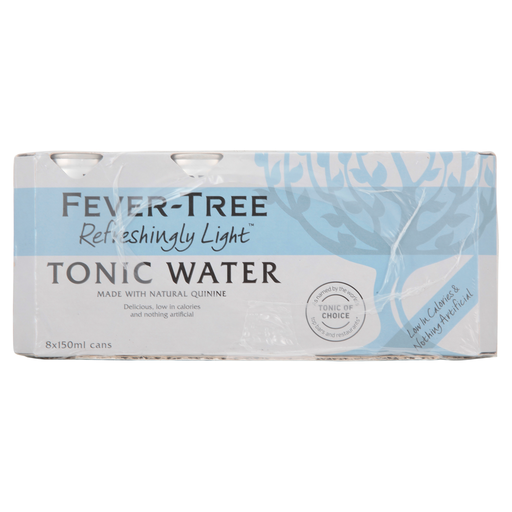
Eight 150ml portions offer a classic tonic option for serving colleagues individually. The product information lists sugar and natural flavours including quinine; the regular tonic listing states 8.0g sugars per 100ml. Check the pack label before serving, particularly if a product is substituted.
 No image available
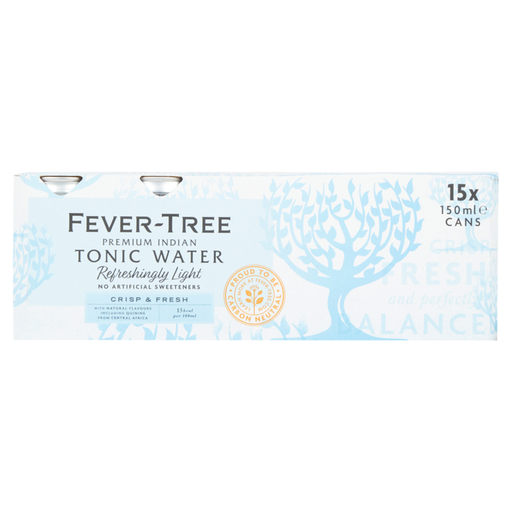
This eight-portion pack gives an office group a light-tonic choice alongside a regular variety. “Light” does not establish that a drink is sugar-free: compare the exact pack's sugars and calories per 100ml before ordering.
 No image available
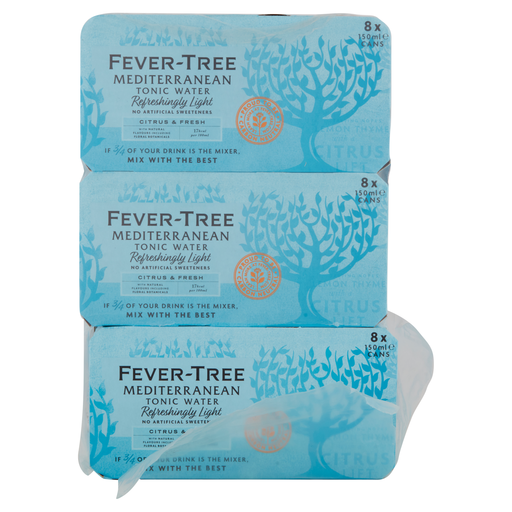
The 15 × 150ml pack is another individually portioned light-tonic option when more servings are planned. Check its own nutrition and ingredient label rather than assuming it matches a different Fever-Tree light variety.
 No image available
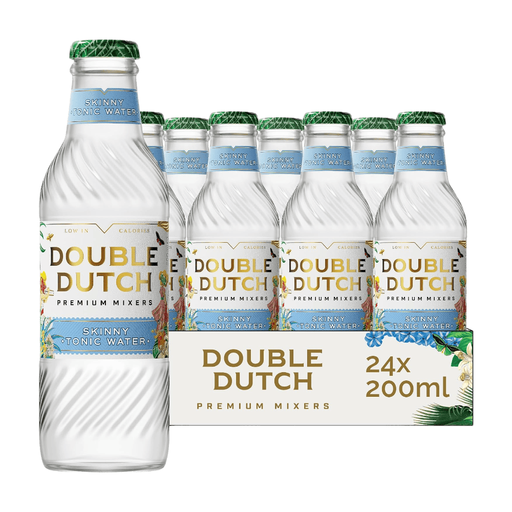
This eight-portion Mediterranean tonic offers a botanical alternative to classic Indian tonic. Its more distinctive flavour is worth choosing deliberately for a mixed group; check the exact label for ingredients and nutrition.
 No image available
The 24 × 200ml format offers individual servings with a stated grapefruit-and-juniper flavour profile. Consider it as a distinct option rather than the only tonic for a mixed group, and check the energy and sugar information on the exact pack when comparing light varieties.
Yes. Tonic can be served on its own; adding spirits is a separate decision. Check each selected drink's label and the workplace policy before planning any alcoholic serves.
Ordering both can give a group a choice if colleagues have different preferences. Start with quantities that reflect the likely servings, and compare the exact labels: a light tonic should not be described as sugar-free without checking its sugar content.
Read the label on each exact product before serving, including any replacement for an item you originally ordered. Ingredient and allergen information for one tonic cannot be assumed to apply to another variety or brand.
Check the particular product rather than assuming every drink labelled tonic has the same ingredients. Fever-Tree lists quinine in its Premium Indian Tonic Water, and Fentimans lists it in the tonic varieties described here; the exact pack label is the check for what you serve.
Check the organisation's alcohol policy and the rules for the event before buying or serving spirits. Drinkaware has highlighted the importance of workplace policies concerning alcohol; offering a mixer without alcohol remains a separate choice.