For an occasional single-serving malted milkshake in a shared office, start with a cordless portable blender if carrying it, saving space and avoiding a socket matter most. Consider a mains-powered mini blender for frequent use or tougher additions only if your workplace permits it and has a suitable place to plug it in. A manufacturer’s quiet-use claim can help narrow the choice, but it does not guarantee that blending will go unnoticed by colleagues.
Who is this for?
People trying to keep disruption low
If you make one shake during the workday near colleagues, a compact blender with a stated quiet-use feature is worth considering. Check where and when blending is acceptable rather than assuming a quiet claim means silence.
People carrying a blender to work
If you take your blender between home and office, a cordless model with a covered drinking cup lets you blend without standing beside a mains socket. Its usable fill limit and charging needs still have to suit your routine.
People making frequent or ingredient-heavy shakes
If you regularly add ice or frozen fruit, compare what the exact model is specified to handle. A mains-powered mini blender may be an option if workplace use is approved, but a higher motor rating alone does not establish how your recipe will blend.
What matters when choosing?
For a shared-office milkshake, check where blending is permitted before settling on a cordless or plug-in model. Then weigh disturbance, washing up and the amount you can actually blend.
Cordless personal blender
Choose it when: You want one drink at a time and need to carry the blender or use it away from a socket.
Allow for: Charging and the model’s usable fill limit; cordless operation does not establish that it is quieter.
Mains-powered mini blender
Choose it when: You expect frequent use or tougher additions and your workplace approves a suitable plug-in arrangement.
Allow for: A mains lead and an approved place to blend; even a dedicated quiet setting is not a guarantee of low disturbance in your office.
| Concern | What to check | Who this matters to |
|---|
| Disturbance |
Look for a stated quiet-use feature, and check where and when the office allows blending. |
I want to make a shake without interrupting nearby work; around 42% of consumers put low disturbance first. |
| Cleaning and shared use |
Check whether food-contact parts separate for thorough washing and whether the office facilities make prompt cleaning practical. |
After a milk-based shake, I need to clear residue before the equipment is shared; roughly 33% of consumers make clean-up and cross-contact their primary concern. |
| Portability and portion size |
Compare maximum fill lines, charging needs and the exact model’s stated suitability for your ingredients. |
I need a blender I can carry to work, with enough usable room for my drink; about 25% of consumers prioritise portability, portion size and stated blending capability. |
Buying pitfalls
-
Assuming a quiet claim means silent blending
Tefal describes its Lightmix as quiet and gives Blend Up a Silence mode, but those manufacturer claims do not tell you how either will sound beside your colleagues.
Ask where and when blending is acceptable. If disturbance drives your choice, consider a stated quiet-use feature without treating it as a guarantee.
-
Choosing by cup size alone
The nutribullet Portable Blender has a stated 475 ml cup but a 350 ml maximum fill line, so the full cup volume is not the amount to blend.
Compare the maximum fill line with your intended milkshake portion and follow the model’s filling instructions.
-
Assuming a personal appliance needs no workplace approval
Office rules may determine whether you can use or charge a blender and where it can be placed. The Health and Safety Executive advises that electrical equipment should be suitable for its intended use and kept in good condition.
Check workplace policy before buying, particularly for a plug-in model, and do not use equipment with a damaged lead, plug or casing.
-
Leaving milk or other ingredient residue in shared equipment
Residue on cups, lids and blades matters when other people may use the blender. The Food Standards Agency’s food-business guidance stresses hygiene practices that prevent allergen cross-contact.
Choose parts you can wash thoroughly after each drink, and follow your workplace’s shared-kitchen rules rather than relying on a quick rinse.
Relevant blender brands
Tefal
Tefal offers two different routes here: the cordless Lightmix BL1C0430 and the mains-powered Blend Up BL19H4G0.
- Tefal specifies a 300 ml cup for Lightmix and describes its operation as quiet. Blend Up has a stated 1000 W motor, automatic programmes and a Silence mode.
- These quiet-use descriptions come from Tefal, not a comparison of noise in an office. Blend Up also requires an approved mains-power arrangement at work.
nutribullet
Its Portable Blender is a cordless option for people who want a larger stated cup than a 300 ml personal model.
- nutribullet specifies a 475 ml cup, a 350 ml maximum fill line, USB-C charging and a handled leakproof lid.
- The maximum fill line, rather than cup volume, limits a blend. Do not assume cordless operation makes it quiet enough for nearby colleagues.
Ninja
Ninja’s rechargeable Blast range offers another portable route for an individual drink away from a fixed socket.
- For the BC151UK model, Ninja states that the cup and lid are dishwasher-safe and describes a short water-and-washing-up-liquid self-cleaning cycle.
- A self-cleaning cycle does not replace thorough washing when milk or other allergens could remain; it also does not establish how noisy the model will be at work.
Joybuy portable blender options
This cordless personal blender is an option for carrying a single drink between home and office. Check its fill line and your workplace’s appliance rules before choosing it for a shared kitchen.
 No image available
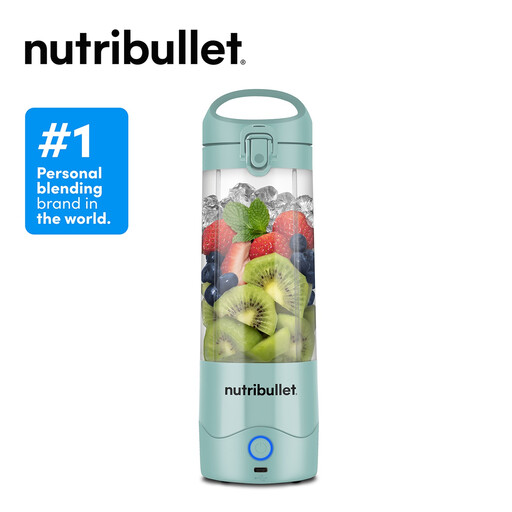
nutribullet Portable Blender, Light Blue, 475 ml
Its cordless design and to-go lid suit a single drink carried between home and work.
The cup is 475 ml, while nutribullet specifies a 350 ml maximum fill line for this model. It charges by USB-C; nutribullet states 15 or more blending cycles per 90-minute charge.
Check whether its operating noise and your workplace’s rules make blending practical in the space you intend to use.
Joybuy
Office milkshake blender questions
Can I use a personal blender at my office desk or in the kitchen?
Check your employer’s rules before using it at either location. The Health and Safety Executive advises that electrical equipment should be suitable for its intended use and kept in good condition; your workplace can also set rules about where personal appliances are used or charged.
Does an office blender need an electrical test every year?
Do not assume an annual portable appliance test is required in every office. Health and Safety Executive guidance for low-risk settings says electrical equipment must be maintained, but does not require an elaborate or frequent testing system; workplace inspection and maintenance arrangements should reflect the risks.
How should I clean a blender after a milk-based shake?
Wash removable food-contact parts promptly, following the model’s instructions. If others share the blender, clean the cup, lid and blades thoroughly: the Food Standards Agency’s food-business guidance highlights good hygiene practices to prevent allergen cross-contact.
What cup size do I need for one office milkshake?
Choose by the model’s maximum fill line and your intended drink volume, not cup capacity alone. The nutribullet Portable Blender has a 475 ml cup with a stated 350 ml maximum fill line, while Tefal specifies a 300 ml cup for Lightmix BL1C0430.


