Small-bedroom desk workers
If the bedroom is compact and you mainly want supplementary warmth while working, a lower-output unit is worth considering. Check the model’s stated room capacity rather than assuming it will heat a larger space.


Choose an oil-filled radiator by the bedroom’s size and insulation, then check its controls and whether you can position it safely beside the desk. A compact, lower-output model may suit a small enclosed room; a 1.5–2kW model offers more heating capacity for a larger or colder bedroom but has a higher maximum electrical input. Whichever you choose, switch a portable heater off and unplug it before leaving the room or going to bed, as Electrical Safety First advises.
If the bedroom is compact and you mainly want supplementary warmth while working, a lower-output unit is worth considering. Check the model’s stated room capacity rather than assuming it will heat a larger space.
A larger or draughtier bedroom may call for more heating capacity and adjustable output during long desk sessions. Insulation and room size matter alongside the radiator’s wattage.
Placement deserves particular attention where bedding, curtains, furniture or desk papers are nearby. Electrical Safety First advises keeping portable heaters away from flammable materials and turning them off before leaving the room or going to bed.
Start by finding a clear, safe floor position, then match output to the room and decide which controls you would actually use at your desk.
| Concern | What to check | Who this matters to |
|---|---|---|
| Safe placement | Check the exact manual’s clearances and whether the model lists overheat protection or a tip-over cut-out. Leave space around it and use a wall socket. | If bedding, curtains or desk papers are close by, I need a position where the heater can operate unobstructed and be switched off when I leave. Around 36% of consumers put safe bedroom use first. |
| Room heating capacity | Compare the model’s wattage and stated room guidance with the bedroom’s size, insulation and draughts; treat capacity claims as model-specific. | When I work for hours in a larger or colder bedroom, I need enough output for the room rather than just a small warm spot. For around 29% of consumers, sufficient heating capacity is the main concern. |
| Controls and electricity use | Look for a thermostat and useful power settings; check whether a timer is fitted if you want one. Electricity use depends on setting and run time. | If my desk hours vary, I want to adjust the heat without leaving the radiator at maximum input throughout. That makes controllability the first concern for around 21% of consumers. |
| Footprint and movement | Check dimensions, weight and any handle or castors against the available floor space, while allowing the required clearance. | With limited room beside my desk, I need a heater I can position and put away without obstructing the area. Compactness or ease of movement comes first for around 14% of consumers. |
A thermostat or timer controls operation; it does not make unattended bedroom use safe. Electrical Safety First advises turning portable heaters off and unplugging them when leaving the room or going to bed.
Use the controls while you are present, then switch off and unplug the heater before sleep or when you leave.
The number of fins does not tell you whether a radiator’s output, controls or footprint suit your bedroom. Manufacturer room-capacity figures also apply to particular models, not every radiator in a range.
Compare the exact model’s wattage settings, thermostat, dimensions and room guidance against the space you need to warm.
Papers, furniture and curtains can sit too close to a portable heater. Electrical Safety First’s bedroom advice calls for separation from flammable materials, and a covered radiator presents an additional risk.
Follow the model’s clearance instructions, keep it unobstructed and plug it directly into a wall socket rather than an extension lead or power strip.
Room restrictions vary by model. Dimplex’s OFX instructions prohibit bathroom use, while Dimplex describes its OFX075E panel radiator as suitable only for well-insulated spaces or occasional use.
Read the exact model’s manual and room guidance before choosing where to use it.
Its UK oil-filled range includes compact and higher-output models, so compare the exact variant with your bedroom rather than choosing by range name.
Dimplex offers oil-filled panel radiators, including models with scheduling features, but their format needs checking for use beside a desk.
VonHaus lists compact and higher-output oil-filled radiators, including models with selectable heat settings.
These oil-filled radiators offer 1.5kW or 2kW maximum input for comparing adjustable warmth around a bedroom desk. Check each model’s footprint and placement instructions before deciding whether it suits your available floor space.
 Image unavailable
Consider its adjustable controls if you want to change the heat during desk hours. The product title lists a thermostat, 24-hour timer, tip-over protection and overheat protection; check the manual for a safe position clear of bedding and papers.
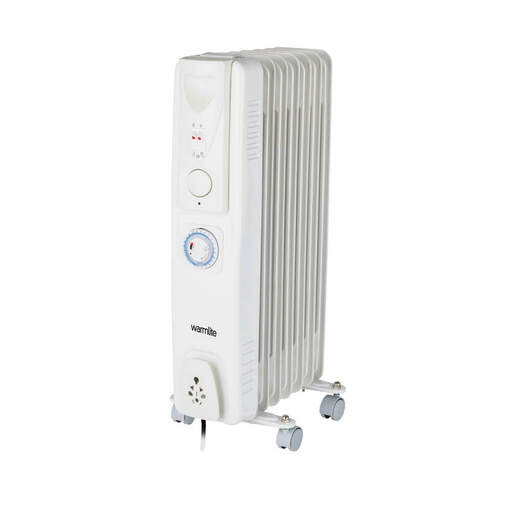 Image unavailable
This is another option when adjustable desk-time warmth matters. Its title lists three heat settings, a thermostat, 24-hour timer and castors; the timer does not replace switching the heater off before leaving or sleeping.
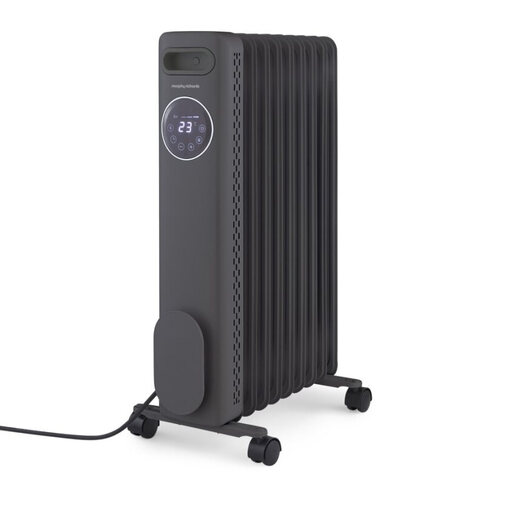 Image unavailable
Consider the higher maximum input if your bedroom needs more heating capacity, but check whether its footprint suits the desk area. The title identifies digital controls and a remote; those conveniences do not permit unattended use.
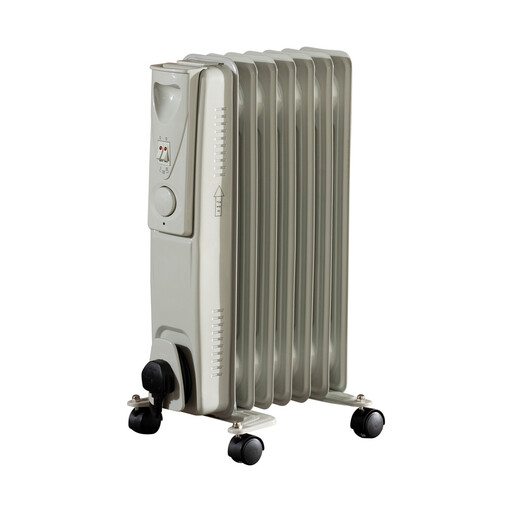 Image unavailable
Its adjustable thermostat and wheeled base may suit a desk setup where the heater needs repositioning. The title also lists a tip-over cut-out; check the exact controls if a timer matters to you, and measure the clear floor space before buying.
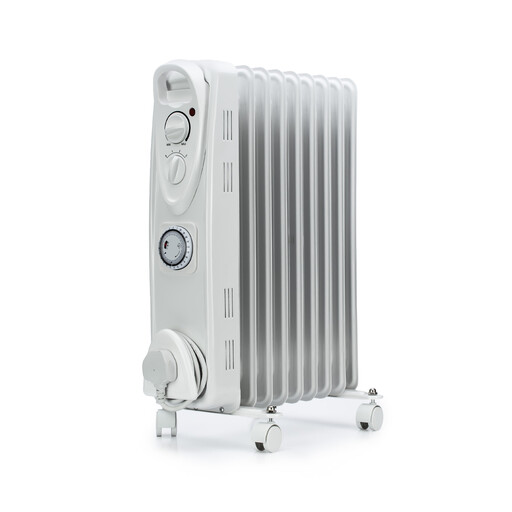 Image unavailable
The 2,000W maximum is worth considering for a colder room, rather than assuming it is needed beside every desk. Its title lists three heat settings, an adjustable thermostat and a timer; check its dimensions and manual clearances for your intended position.
Switch a portable radiator off and unplug it before going to bed. Electrical Safety First advises against leaving portable heaters unattended; a thermostat or timer does not override that advice.
Use a stable, unobstructed floor position that meets the exact model’s clearance instructions. Keep it away from curtains, furniture and papers, do not cover it, and use a wall socket rather than an extension lead or power strip.
No: 2kW and 1.5kW describe their respective maximum inputs, not how long each heater draws power in your room. Compare the settings you expect to use and remember that thermostat cycling, heat loss and run time affect actual consumption.
Do not assume a portable oil-filled radiator is suitable for bathroom use. Dimplex’s OFX instructions specifically prohibit using those models in a bathroom or close to a bath, shower or swimming pool; check the manual for the exact radiator you are considering.