Choose an oil-filled radiator for gradual, supplementary heat during home-office hours, with output and controls suited to how you use the room. Compare room-size claims cautiously when cold walls or draughts increase heat loss; if the wall also has persistent condensation, damp or mould, a portable heater is not a substitute for addressing the underlying problem.
Who this choice affects
People working in a chilly office most days
If you spend regular working hours in the same cold-walled room, consider adjustable output and a thermostat for supplementary heat. A radiator's stated room capacity is only a starting point when the room loses heat.
Workers with predictable hours
If you use the office on a set schedule, a timer can let you plan when heating starts and stops. A remote may also make adjustments from the desk more convenient.
People concerned about damp around a cold wall
Persistent condensation, staining or mould changes the decision: extra room heat does not remove an underlying damp cause. In a rented home in England, government guidance says landlords should investigate and tackle underlying damp and mould issues promptly.
What to check before buying
Start with the office's size and any signs of heat loss, then choose the output and controls that fit your working hours. Leave enough space for the radiator to stand safely before settling on a model.
| Concern | What to check | Who this matters to |
|---|
| Sustained warmth |
Compare adjustable wattage and any model-specific room claim with the office's area, ceiling height and heat loss. |
When I work in a chilly room for hours, I need supplementary heat that fits its dimensions rather than a room-size claim alone. Around 36% of consumers would put sustained warmth first. |
| Electricity use |
Check the power settings, thermostat and any timer against the hours you expect to use the heater. |
If the radiator will run through recurring work sessions, I want control over when it heats and which setting it uses. Roughly 29% of consumers would make electricity-use control their primary concern. |
| Desk-side control |
Choose between physical dials and digital controls; consider whether a remote or timer would help your routine. |
When I am concentrating at my desk, I want controls that fit my routine without interrupting work. About 21% of consumers would prioritise day-to-day operation. |
| Placement and safety |
Check the required clearance, stable-floor position and electrical connection; compare safeguards stated for the exact model. |
If I move the heater between rooms, I need a safe place to set it up each time without blocking airflow or creating a cable hazard. Around 14% of consumers would put placement and portability first. |
Buying pitfalls
-
Treating the radiator as a fix for damp or mould
Supplementary heat may improve comfort, but it cannot repair water ingress or another underlying cause of damp.
If you see persistent condensation, staining or mould, record and report the condition. In a rented home in England, ask the landlord to investigate the underlying issue.
-
Ignoring wattage and running time
Electricity use depends on the power setting and time spent heating. A thermostat or timer helps you control operation, but neither stops heat escaping through a cold wall.
Compare the stated wattage settings and controls with your likely work schedule before choosing between models.
-
Taking room-size claims as guarantees
Manufacturers describe capacity in different ways: De'Longhi states 60 m³ for the TRRS0920, while Russell Hobbs states up to 20 m² for the RHOFR2009B-D. Neither figure accounts for the particular heat loss in your office.
Check both floor area and ceiling height, and consider draughts and cold walls before relying on a model's stated suitability.
-
Overlooking where the heater will stand
An oil-filled radiator remains hot after switch-off. An unstable position, obstructed airflow or overloaded electrical equipment can create a safety risk.
Follow the model's clearance instructions, keep it uncovered and on a stable, level floor, and check the rating of any electrical equipment used with it.
Relevant brands for reference
De'Longhi
The TRRS0920 is a reference point for buyers considering physical controls on a 2 kW, nine-fin oil-filled radiator.
- De'Longhi lists three power settings from 900 W to 2,000 W, a room thermostat and castors for this model.
- Its stated 60 m³ working capacity is a manufacturer claim, not a guarantee for an office with cold walls or draughts.
Russell Hobbs
The RHOFR2009B-D illustrates the option of scheduled, digital control for regular office hours.
- Russell Hobbs lists 800 W, 1,200 W and 2,000 W modes, a thermostat, remote and 24-hour auto-on/off timer for this model.
- Its up-to-20 m² suitability statement comes from the manufacturer; scheduling cannot correct heat loss through a cold wall.
Dimplex
The OFX200E offers a different, plug-in oil-filled panel format to consider for occasional office use.
- Dimplex describes the OFX200E as portable and providing both convected and radiant heat.
- Dimplex says the OFX200E is suitable only for well-insulated spaces or occasional use. That condition matters if the cold-walled office is used daily.
Oil-filled radiators on Joybuy
These portable oil-filled radiators offer different stated outputs and controls for supplementary home-office heating. Match the model to your working routine and available placement space; the radiator itself will not resolve damp or heat loss through the room.
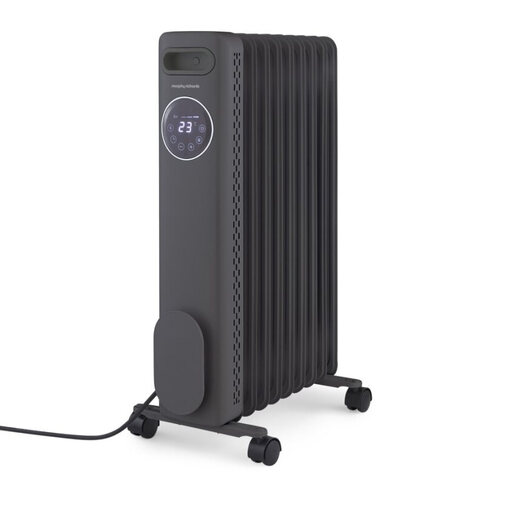 Image unavailable
Morphy Richards HeatFlux 827752 2 kW digital oil-filled radiator, grey
Consider this model if you want supplementary office heat with a remote for desk-side adjustment.
The stated output is 2 kW. Check its required clearance and whether its room suitability fits your office's dimensions and heat loss.
View on Joybuy
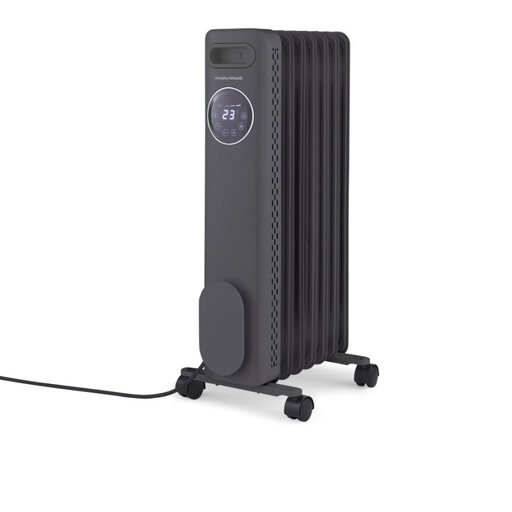 Image unavailable
Morphy Richards HeatFlux 827502 1.5 kW digital oil-filled radiator, grey
This is another remote-controlled choice for adjusting supplementary heat from a home-office desk.
Its stated output is 1.5 kW. Check the office's heat loss and the placement space needed before deciding whether it fits the room.
View on Joybuy
 Image unavailable
DAEWOO HEA1976GE 1,500 W seven-fin oil-filled radiator, black
Consider this model if a thermostat and 24-hour timer fit your planned office hours.
The title also specifies tip-over and overheat protection. Check its room suitability against your office's heat loss, and do not treat the radiator as a remedy for damp.
View on Joybuy
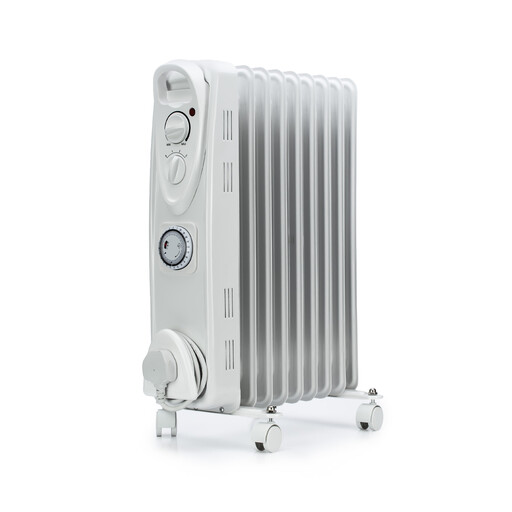 Image unavailable
Status 2,000 W nine-fin oil-filled radiator, white
Consider this radiator if you want adjustable supplementary heat and a timer for your office routine.
Its title specifies three heat settings and an adjustable thermostat. Check the operating instructions and allow suitable placement space.
View on Joybuy
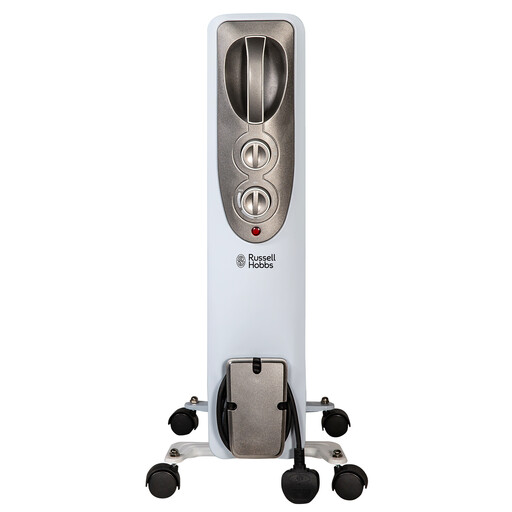 Image unavailable
Russell Hobbs RHOFR5002 2 kW nine-fin oil-filled radiator, white
This model is worth considering if you want a 2 kW maximum output for supplementary office heat.
Check the exact lower power settings before comparing how you would run it, and assess the room's heat loss rather than relying on an area claim alone.
View on Joybuy
Common questions
Will an oil-filled radiator fix a cold wall or damp problem?
No. An oil-filled radiator can add supplementary room heat, but it cannot repair an underlying cause of damp. For rented homes in England, government guidance says landlords should investigate reported damp and mould and tackle the underlying issue promptly.
Can I leave a portable radiator running overnight in my home office?
Do not plan on unattended overnight use as the answer to a persistently cold room. Follow the exact model's operating instructions, and consider whether the room needs attention to its heating or heat loss instead.
Where should I put an oil-filled radiator?
Put it on a stable, level floor where you can meet the model's clearance instructions and keep airflow unobstructed. Keep the lead out of walkways and remember that the radiator can remain hot after switch-off.
Can I use an extension lead with a radiator?
Check the radiator's instructions and the electrical arrangement before using one. Electrical Safety First advises that the combined load of appliances connected to an extension lead or cable reel must not exceed its maximum current rating.


