What to check before buying
Check the wall and moisture conditions first, then measure the room and find a safe position for the heater. Compare controls and electricity use only after those basics are clear.
| Concern |
What to check |
Who this matters to |
| Condensation and damp |
Look for recurring mould, wet patches or a tide mark, and check ventilation and possible moisture sources. Treat the radiator as comfort heating, not a repair. |
If the wall repeatedly feels damp, I need to understand why before relying on more heat; around 31% of consumers put the wall or moisture cause first. |
| Room capacity |
Measure floor area and ceiling height. Compare the correct unit—m² or m³—with the model’s stated capacity, allowing for cold walls and draughts. |
When the room loses heat easily, I need a heater whose stated room range is relevant to my measurements; roughly 31% of consumers prioritise capacity and comfort. |
| Electricity use |
Compare maximum and lower power settings, thermostat control and any timer with the hours you expect to use the heater. |
For regular evening use, I want to avoid leaving the heater drawing power unnecessarily; about 23% of consumers place control of electricity use first. |
| Safe placement |
Check the manual’s clearance instructions and available floor space. Keep airflow unobstructed and avoid overloading sockets or extension leads. |
If furniture or household activity could put the heater in the way, I need a clear, safe operating position; around 15% of consumers make placement and safety their primary concern. |
Oil-filled radiators on Joybuy
These oil-filled radiators offer different stated outputs and controls for supplementary room heating. Measure your room and check placement requirements before using a room-size claim to narrow the choice.
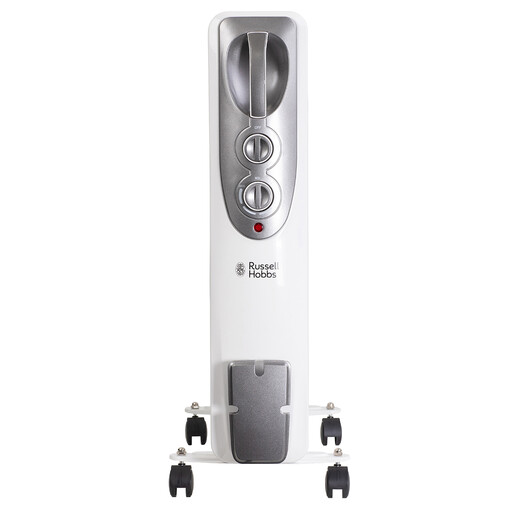 Image unavailable
Russell Hobbs RHOFR1106 2.5 kW oil-filled radiator, white
Consider this model if you are comparing its 2.5 kW stated output with the needs of a measured room; cold walls mean output alone cannot establish suitability.
View on Joybuy
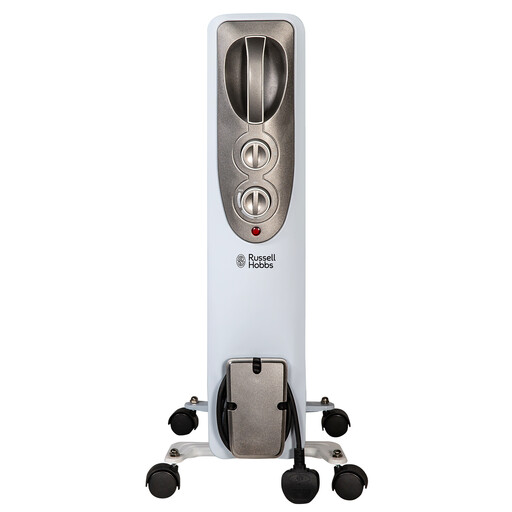 Image unavailable
Russell Hobbs RHOFR5002 2 kW nine-fin oil-filled radiator, white
Consider this model if you want manual control and a published room-area figure to compare with your measurements.
Russell Hobbs lists 800 W, 1.2 kW and 2 kW settings, a variable thermostat and suitability for up to 20 m². That room-size claim may not reflect the heat loss of cold walls or draughts; confirm the required clearance in the product manual before use.
View on Joybuy
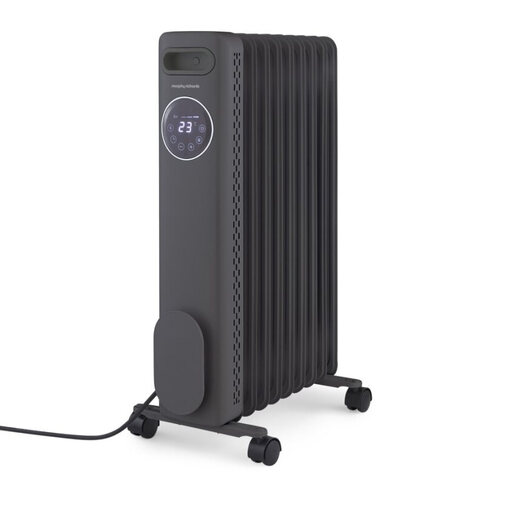 Image unavailable
Morphy Richards HeatFlux 827752 2 kW digital oil-filled radiator, grey
Consider this model if digital controls and the remote control named for this variant matter to you. Check its stated room-size suitability against your measurements and cold-wall conditions before deciding.
View on Joybuy
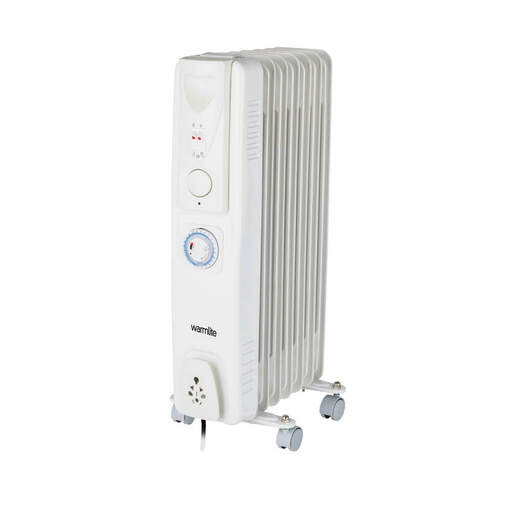 Image unavailable
Warmlite WL43003YTW 1,500 W seven-fin oil-filled radiator, white
Consider this variant if you want a 24-hour timer and an adjustable thermostat for planned supplementary heating. Its title also specifies three heat settings; check room-size suitability and allow clear space around the heater.
View on Joybuy
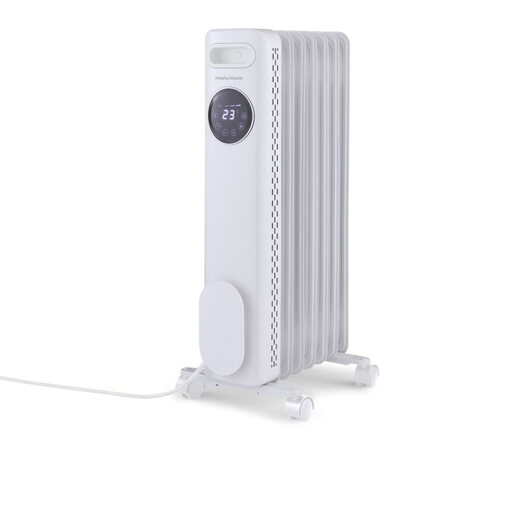 Image unavailable
Morphy Richards HeatFlux 827501 1.5 kW oil-filled radiator, white
Consider this 1.5 kW variant if remote adjustment matters to you. Compare its stated room suitability with the measured space, particularly if cold walls increase heat loss.
View on Joybuy
Frequently asked questions
Will an oil-filled radiator fix cold walls or recurring mould?
No. It can provide supplementary warmth, but it cannot repair an insulation gap, leak or other building defect. London Borough of Hammersmith & Fulham explains that moisture can condense when it meets a cold outside wall; investigate recurring mould or wet patches rather than masking them with more heat.
How do I choose a radiator size for a cold-walled room?
Measure the room and compare it with the particular model’s stated capacity, while allowing for draughts and cold external walls. De’Longhi states a 60 m³ working capacity for its TRRS0920, whereas Russell Hobbs states up to 20 m² for its RHOFR5002; you need the ceiling height before comparing volume with floor area.
Does an oil-filled radiator use electricity after it is switched off?
It can continue releasing stored warmth after switch-off without continuing to draw power for heating. While running continuously at full 2 kW output, however, a 2 kW heater uses 2 kWh in an hour; thermostat cycling and your chosen setting affect actual consumption.
Can I put a portable radiator near a bath or behind furniture?
No: do not use a portable heater in the immediate surroundings of a bath or shower, and do not obstruct airflow with furniture or curtains. Follow the model’s manual for placement and clearance, and heed Electrical Safety First’s advice not to overload sockets or extension leads with high-powered heaters.


