Who an oil-filled radiator may suit

Home-office workers who prefer quieter warmth

For a sustained desk session, gradual room warmth may matter more than immediate hot airflow. Electrical Safety First notes that oil-filled heaters take longer to warm up and continue giving off heat after switch-off.

Consumers heating one occupied room

If you mainly want warmth in the room where you work, look for selectable output and a thermostat. Check whether the chosen setting keeps that room comfortable rather than assuming the lowest setting will always be enough.

Consumers with a crowded desk area

Nearby furniture, cables, children, pets or a busy walkway make the floor position an early decision. London Fire Brigade advises sitting at least one metre from a heater; the exact model’s instructions govern its other clearances and positioning.

What matters when choosing

Oil-filled radiator

Choose when: You can wait for gradual warmth and expect to spend longer at the desk.

Trade-off: Warm-up takes longer, and the heater needs a stable floor position with the clearances required by its manual.

Fan heater

Choose when: Immediate warmth for a short spell matters more than gradual room heating.

Trade-off: Electrical Safety First notes that fan heaters can be noisy; their airflow and vents also need to remain unobstructed.

Concern What to check Who this matters to
Steady warmth Look for an adjustable thermostat and heat settings suited to the room; allow for gradual warm-up. If I work at my desk for hours, I would rather let the room warm gradually than have a blast of air beside me. Around 50% of consumers put quiet, steady warmth first.
Electricity use Compare selectable wattages and thermostat controls. Estimate energy use from the selected power in kW and the time it runs. When I heat only my work room, I want a setting that maintains comfort without running at maximum output unnecessarily. For around 30% of consumers, controlling electricity use is the primary concern.
Safe placement Check the manual’s floor, clearance and socket restrictions, and whether the lead can stay out of foot traffic. With a chair, furniture and cables near my desk, I need a place where the heater will stand securely without crowding anyone. Safe placement comes first for around 20% of consumers.

Placement and buying pitfalls

  • Expecting instant heat from an oil-filled radiator

    Electrical Safety First says oil-filled heaters take longer to warm up than fan heaters. That delay matters if you only sit down for a brief task.

    Choose one for a longer session when gradual warmth suits your routine. If prompt warmth is the priority, weigh a fan heater’s noise and placement requirements instead.

  • Squeezing a heater beneath the desk

    A chair, papers and cables can leave too little safe space around a floor-standing heater. London Fire Brigade advises sitting at least one metre away; Dimplex’s OFXE instructions also prohibit positioning that model immediately below a socket.

    Identify a stable floor position before buying. Keep the heater uncovered, follow its manual’s clearances and route the lead away from feet and chair movement.

  • Judging electricity use by maximum output alone

    Maximum wattage describes what a heater can draw at that setting, not how long it will operate there. A lower setting is useful only if it provides enough warmth for the room.

    Compare the selectable outputs and thermostat behaviour, then assess the power setting and likely runtime for your own desk routine.

  • Relying on a safety switch instead of safe use

    Tip-over and overheat protection do not make covered fins, blocked airflow or an unsuitable position safe.

    Read the exact model’s instructions before use. Stop using a heater that is damaged, has been dropped or develops an oil leak.

Relevant brands to consider

Dimplex

Dimplex offers oil-filled models including the OFXE range. Its OFX075E product guidance describes that model as suitable only for well-insulated spaces or occasional use.

  • The OFXE instructions give specific guidance for positioning the heater on a horizontal, stable surface.
  • Those instructions prohibit covering or obstructing the heater, positioning it immediately below a socket, and using it in a bathroom. Check the instructions for the particular model you choose.

De'Longhi

The De'Longhi Radia S TRRS0715E.G is an option for consumers considering electronic temperature control and scheduling.

  • De'Longhi lists three power settings spanning 700W to 1500W, a room thermostat and a 0.5- to 24-hour automatic start/off timer for this model.
  • Its stated weight is 9.66kg. Castors help with moving it, but it remains a floor-standing appliance rather than a desktop heater.

VonHaus

VonHaus lists a manually controlled, seven-fin 1500W radiator with selectable outputs for room heating.

  • The brand specifies 600W, 900W and 1500W settings, an adjustable thermostat and castors for that model.
  • VonHaus describes it as suitable for rooms up to 20m². Consider your room’s insulation, ceiling height and draughts rather than treating that figure as a guarantee.

Pro Breeze

Pro Breeze offers oil-filled radiators with different controls across its range.

  • The brand lists adjustable thermostats, heat settings and timers on relevant models, with remote or smart controls on some variants.
  • Controls vary by model. Confirm the exact radiator’s features and instructions rather than assuming a range-level feature is included.

Oil-filled radiators for desk-room warmth

These floor-standing oil-filled radiators are options for adding warmth to the room where you work. Compare their stated output and controls with your routine, then check that the exact model can be positioned safely in your space.
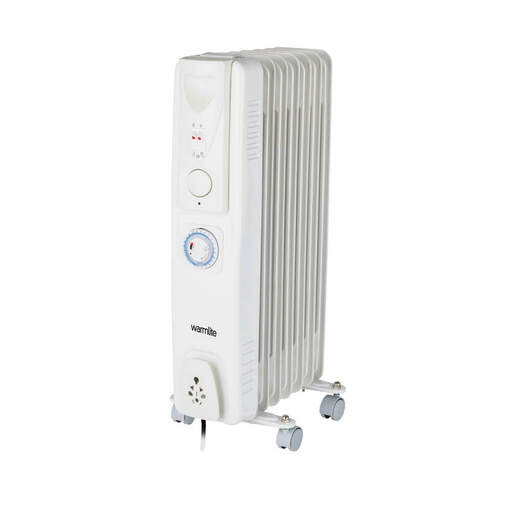
White Warmlite WL43003YTW oil-filled radiator

Warmlite WL43003YTW 1500W seven-fin oil-filled radiator, white

For a longer desk session, its selectable heat settings and adjustable thermostat give you controls to consider alongside the room’s warmth needs.

The product title specifies a 24-hour timer, overheat and tip-over protection, and castors. Position it on a stable, flat floor with space around it; its stated room-use guidance should be weighed against your room’s insulation and draughts.

View on Joybuy
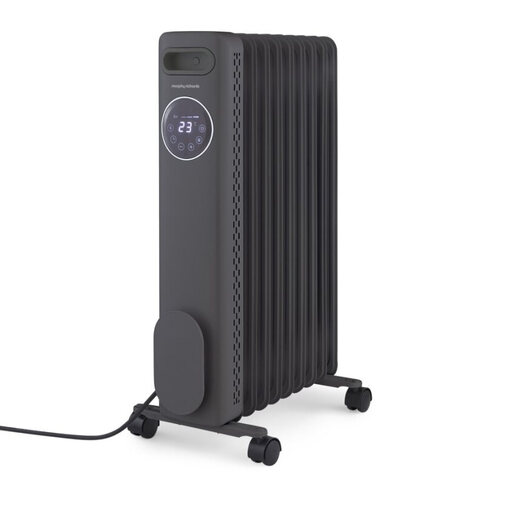
Grey Morphy Richards HeatFlux 827752 oil-filled radiator

Morphy Richards HeatFlux 827752 2kW digital oil-filled radiator, grey

Consider this model if remote adjustment would be useful from your desk and its 2kW maximum output suits the room you need to warm.

Its title identifies a remote control. If a particular lower-power setting matters to you, check the wattage assigned to each setting before choosing. Allow the specified one metre of clearance and connect it directly to a wall socket as instructed for this model.

View on Joybuy
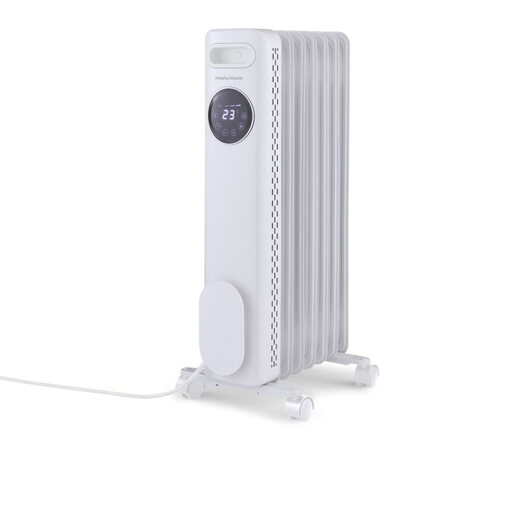
White Morphy Richards HeatFlux 827501 oil-filled radiator

Morphy Richards HeatFlux 827501 1.5kW oil-filled radiator, white

This 1.5kW variant is worth considering when remote adjustment fits your desk routine; compare its maximum output with the room’s heating needs rather than desk size alone.

The product title specifies a remote control. Check the individual heat-setting wattages if you require a particular lower output. Its positioning instructions call for one metre of clearance and a direct wall-socket connection.

View on Joybuy
Black DAEWOO HEA1976GE oil-filled radiator

DAEWOO HEA1976GE 1500W seven-fin oil-filled radiator, black

For a predictable desk routine, consider whether its adjustable thermostat and built-in 24-hour timer provide the controls you need.

The title also specifies tip-over and overheat protection. Check the wattage of each heat level if lower-output operation is important; the model’s instructions say not to use external timers or controllers.

View on Joybuy
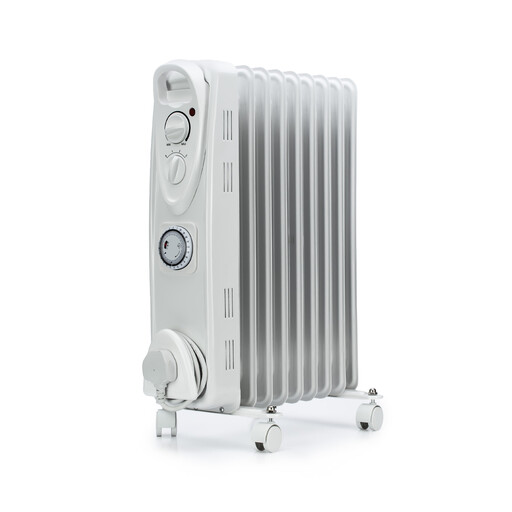
White Status nine-fin oil-filled radiator

Status 2000W nine-fin oil-filled radiator, white

Consider this model if you want a choice of heat settings while warming one occupied room; check which setting is comfortable rather than assuming maximum output is needed throughout a desk session.

Its title specifies three heat settings, an adjustable thermostat and a timer. Plan for an upright, stable position with suitable clearance, and let the radiator cool before moving or storing it.

View on Joybuy

Frequently asked questions

Can an oil-filled radiator stand beside my desk?

Yes, if it has a stable floor position and the space meets its instructions. London Fire Brigade advises sitting at least one metre from a heater; keep papers and furnishings clear, avoid trailing the lead across your route and never cover the appliance.

What wattage should I choose for a desk room?

Choose wattage in relation to the room, not the size of the desk. Compare the exact model’s room-use guidance and selectable outputs with your insulation, draughts, ceiling height and desired warm-up time; a lower setting is helpful only when it provides enough warmth.

How can I assess a radiator’s electricity use?

Multiply the power drawn in kilowatts by the hours it operates at that level to estimate energy use in kWh. A thermostat may cycle the heater rather than draw its maximum power continuously, so your actual use depends on the setting and the room.

Can I leave an oil-filled radiator on overnight or use a smart plug?

Electrical Safety First recommends not using portable heaters overnight. Check the exact heater’s manual before using any external control: Dimplex’s OFXE instructions prohibit supplying that range through an external switching device such as a timer.

Do I need to top up the oil?

No: the oil is sealed inside the appliance. If a radiator leaks oil, has been dropped or is damaged, stop using it and follow its manual’s directions for contacting the supplier or an appropriately qualified service provider.