Choose an oil-filled radiator by matching its rated output to the room, then deciding whether your hobby sessions call for basic temperature control or a timer. A 2 kW model offers more heating headroom than a 1.5 kW model, but room size and heat loss still matter; whichever you choose, controls do not replace clear, stable placement and careful electrical use.
Who this choice matters to
Regular hobby-room users
If you spend extended sessions making, repairing or crafting in a chilly indoor room, consider the room conditions alongside the radiator's output and thermostat. The aim is to choose a heater you can adjust during use, not simply one with a high wattage on its label.
Evening and weekend hobbyists
If sessions follow a predictable routine, a timer may be more useful to you than it is to someone who enters the room at different times. Check the controls on the exact model: De'Longhi lists an electronic timer on the TRRS0920E.G, while its TRRS0920 uses mechanical controls.
Users of shared or crowded rooms
Paper, fabrics, projects and trailing cables make heater position part of the buying decision. Leave space around the radiator and keep its lead out of walkways; Electrical Safety First advises choosing and using portable heaters carefully because of fire risk.
What to check before choosing
Start with the room's size and heat loss, then decide which controls fit your routine. Check that the radiator can be positioned safely before treating convenience features as a reason to choose it.
| Concern |
What to check |
Who this matters to |
| Enough heating output |
Compare rated output with room size, insulation and draughts. Treat any stated room capacity as guidance for that exact model. |
If my room stays chilly throughout a long session, I need enough heating headroom to make it comfortable. Around 33% of consumers put room warmth first. |
| Timing and temperature control |
Check whether the exact variant has a room thermostat and whether its timer or electronic controls fit your routine. |
When I use the room at set times, I want controls that suit those sessions without repeated manual adjustment. Roughly 25% of consumers prioritise scheduled control. |
| Safe placement |
Allow clear space around the heater, use a stable position and keep the lead away from walkways and hobby materials. |
With projects and materials sharing my workspace, I need a place for the radiator where it will not be covered or knocked. Around 25% of consumers put safe placement first. |
| Electricity use |
Use rated kW and actual heating time to assess consumption; check how the thermostat and timer control operation. |
For long sessions, I want to understand how much electricity the heater uses while it is heating. About 17% of consumers make control over electricity use their primary concern. |
Mistakes to avoid
-
Assuming a timer makes unattended heating safe
A timer or thermostat controls operation; it does not remove the precautions that apply to a portable heater.
Follow GOV.UK fire-safety advice to unplug electric heaters when you go out or go to bed, even if the radiator has scheduled controls.
-
Letting projects crowd the radiator
Paper, fabric, clothes or furniture can obstruct a heater. Dimplex's ECR20 instructions expressly warn against covering it.
Keep airflow clear, do not dry items on the radiator and choose a position away from hobby materials and traffic routes.
-
Choosing by wattage alone
Rated output helps compare heating headroom, but it cannot establish how warm a particular room will become or how long the heater will run.
Check the room's size and heat loss, then compare the exact model's output, heat settings and thermostat. To assess electricity use, consider rated kW alongside the time the heating element is active.
-
Assuming every online listing describes a suitable UK model
Plug and adaptor details matter: Electrical Safety First has documented a recalled heater supplied with an unsuitable plug and adaptor arrangement.
Before buying, confirm the exact radiator's intended market, plug, voltage, instructions and current recall status. A travel adaptor alone does not establish suitability.
Relevant brands to compare
De'Longhi
Its UK Radia S and Dragon ranges include oil-filled radiators with different outputs and controls.
- De'Longhi lists a 2 kW output and room thermostat for the Radia S TRRS0920; the TRRS0920E.G adds electronic control and a timer.
- Check the complete model name rather than assuming features listed for one Radia S or Dragon variant apply to another.
Dimplex
Its portable-heating range includes radiator designs as well as oil-free alternatives.
- Dimplex lists thermostat and scheduling controls for its oil-free EvoRad line and provides model-specific operating instructions.
- EvoRad is oil-free, so it is an alternative to compare rather than an oil-filled model. Do not apply its listed controls to other Dimplex radiators.
Zanussi
Which? includes Zanussi among the brands covered in its UK oil-filled-radiator guide.
- It is a relevant brand to consider when comparing oil-filled models.
- Judge room fit and controls from the specifications of the particular Zanussi model you are considering, not the brand name.
B&Q
Which? includes B&Q in its UK oil-filled-radiator coverage.
- Its inclusion gives you another product source to consider when comparing exact models.
- Check a particular radiator's output, controls and room guidance before deciding whether it suits the hobby room.
Oil-filled radiators on Joybuy
These oil-filled models offer different rated outputs and controls for a chilly hobby room. Choose against your room conditions and session routine, and confirm the plug, voltage and instructions for the exact version before buying.
 No image available
DAEWOO HEA1891G 2500 W oil-filled radiator, black
Consider this model if your room calls for more rated heating headroom and you want timed operation. Its listed features include an 11-fin design, digital timer, LED display and remote control; check its room-fit guidance against your space.
View on Joybuy
 No image available
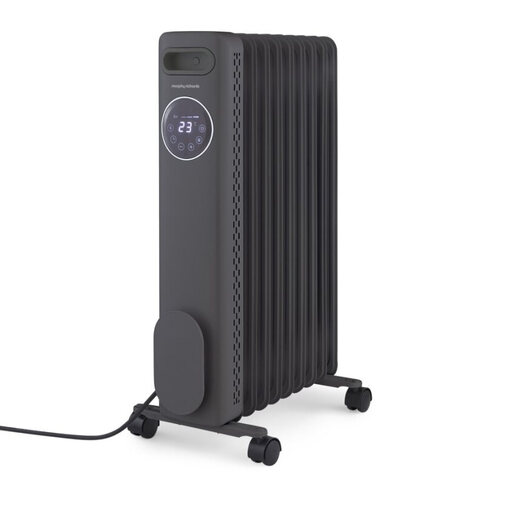
Morphy Richards HeatFlux 827752 2 kW oil-filled radiator, grey
This is a 2 kW option to consider for regular sessions if its output suits your room. The model name identifies digital controls and a remote; check the exact timer and thermostat operation against your routine.
View on Joybuy
 No image available
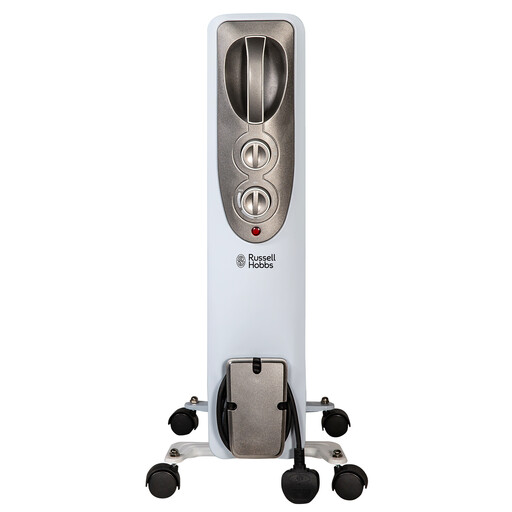
Russell Hobbs RHOFR5002 2 kW oil-filled radiator, white
Consider this nine-fin model if you want 2 kW rated output and plan to adjust the heat during use. Confirm the wattage of each setting in the manual or with the seller before comparing individual settings with another radiator.
View on Joybuy
 No image available
DAEWOO HEA1976GE 1500 W oil-filled radiator, black
This seven-fin option is worth considering where 1.5 kW suits the room but scheduled sessions make a timer useful. Its title lists an adjustable thermostat and 24-hour timer; check room conditions before choosing it over a higher-output model.
View on Joybuy
 No image available
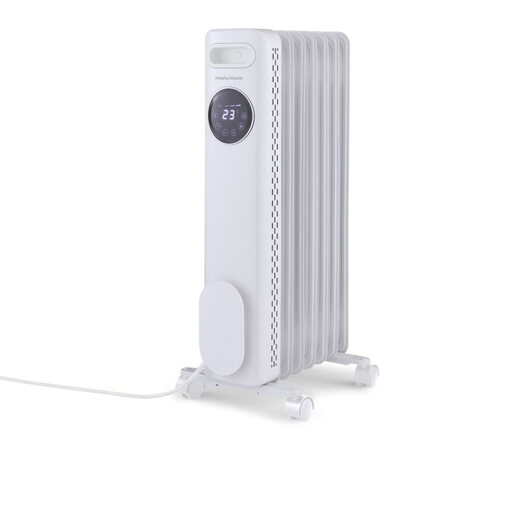
Morphy Richards HeatFlux 827501 1.5 kW oil-filled radiator, white
Consider this model for a room where 1.5 kW is adequate and remote operation appeals to you. Check the exact control functions and room guidance before deciding whether it fits longer or colder hobby sessions.
View on Joybuy
Common questions
What size oil-filled radiator should I choose for a chilly hobby room?
Choose the output against the room's volume, insulation, draughts and the warmth you want during a session. A 2 kW radiator has more rated heating headroom than a 1.5 kW model, but that does not establish which will suit every room. De'Longhi states a working capacity of 60 m³ for its 2 kW TRRS0920; treat that as guidance for that model, not a rule for all radiators.
Can I leave an oil-filled radiator on overnight or while I am out?
Unplug a portable electric heater when you go out or go to bed, as GOV.UK fire-safety guidance advises. A timer or thermostat can control heating during use, but it does not change that precaution.
Can I use an extension lead with a 2 kW radiator?
Use a suitable wall socket where practical. If an extension lead is unavoidable, check its rating and the combined load of everything connected to it. Electrical Safety First warns that overloaded sockets create a fire risk and notes that extension leads have different current ratings.
How can I work out how much electricity the radiator will use?
Multiply its rated power in kW by the hours it actively heats to estimate consumption in kWh. A 2 kW radiator heating continuously for one hour uses up to 2 kWh; a thermostat may switch the heating element off after the room reaches its set temperature, so actual use depends on the room and settings.


