People working at a lounge desk
If you work or study for longer stretches, you may value the warmth an oil-filled radiator continues to give out after it is switched off. Electrical Safety First notes that these heaters take longer to warm up.


Choose an oil-filled radiator for longer desk sessions if gradual, lingering warmth suits you better than an immediate burst of heat. Check that a floor-standing unit can sit on a stable surface at least one metre from furniture and curtains; then compare its output settings, thermostat and any built-in timer against how you use the shared room.
Oil-filled heating is most useful here when desk work lasts long enough to allow for a gradual warm-up, and the lounge has a clear place for a floor-standing heater.
If you work or study for longer stretches, you may value the warmth an oil-filled radiator continues to give out after it is switched off. Electrical Safety First notes that these heaters take longer to warm up.
A thermostat, suitable output settings or a built-in timer may help you plan an attended desk session around other lounge users. Check the controls on the exact model rather than assuming every radiator has them.
Children, pets, moving chairs and walkways make placement especially important. Plan a stable position that stays clear of traffic, furniture and curtains even while the desk is in use.
Decide whether you need sustained warmth or immediate heat before comparing radiator controls. For an oil-filled model, establish a safe floor position before choosing an output or timer.
Consider it when: Desk sessions are long enough to allow a gradual warm-up and you want heat that lingers after switch-off.
Trade-off: It will not provide instant warmth, and its hot, floor-standing body needs a stable, clear position.
Consider it when: Immediate heat for a short spell matters more than lingering warmth.
Trade-off: Electrical Safety First notes that fan heaters can be noisy, which may disturb others using the lounge.
| Concern | What to check | Who this matters to |
|---|---|---|
| Safe placement | Allow at least one metre from furniture and curtains, as Devon and Somerset Fire and Rescue Service advises. Check floor stability and the cable route. | If people pass behind my chair, I need a position that stays clear while the lounge is in use. Around 31% of consumers put safe shared-room placement first. |
| Sustained warmth | Allow for warm-up time; consider whether a built-in timer suits an attended desk routine. | For a longer work session, I would rather wait for gradual warmth than bring a noisy burst of heat into the room. Roughly 25% of consumers prioritise this less disruptive heat pattern. |
| Electricity use | Compare maximum and lower wattage settings, thermostat control and your household electricity tariff. | When I only need supplementary warmth, I want control over the power setting rather than running at full output throughout. Around 25% of consumers make controllable electricity use their primary concern. |
| Floor-space fit | Measure the available floor area and check dimensions, weight and any castors before choosing a model. | If the desk chair moves into the lounge walkway, I need a radiator that fits without obstructing it and can be moved after cooling. Approximately 19% of consumers put physical fit and repositioning first. |
Electrical Safety First says oil-filled radiators take longer to warm up, although they continue giving out heat after switch-off. That pattern may frustrate someone who only needs heat for a brief desk visit.
Choose this type for longer sessions when you can allow warm-up time. If immediate heat is essential, weigh a fan heater against the noise it may add to the shared room.
A thermostat or built-in timer helps manage an operating period; it does not make leaving a portable heater on while you are out or asleep a sound plan.
Use the controls for an attended session, then switch off and unplug the heater before going out or going to bed. Follow the model instructions for timer use.
A chair, curtain or sofa can enter the heater’s space during normal lounge use. Devon and Somerset Fire and Rescue Service advises keeping heaters at least one metre from furniture and curtains.
Measure the clear floor zone with the chair pulled out and account for the cable. Do not cover the radiator or use it to dry clothes.
A higher wattage means greater electricity use while the heater operates continuously at that setting. A thermostat may cycle the heater instead of keeping it on throughout.
Compare the exact model’s settings with the warmth you need near the desk, and use your household tariff when assessing running costs.
These examples show controls and output ranges to compare; the features described belong to the named models or ranges, not every radiator from each brand.
The Radia S TRRS0715E is a 1.5 kW oil-filled model with three power settings, a room thermostat and a 24-hour timer, according to De'Longhi.
Dimplex offers OFX oil-filled models at 0.75 kW, 1.0 kW and 1.5 kW, including timer variants.
The RHOFR5001B is a seven-fin, 1.5 kW radiator with 600 W and 900 W lower settings and a variable thermostat, according to Russell Hobbs.
Swan’s Retro nine-fin oil-filled radiator has a 2.0 kW maximum output, three heat settings and an adjustable thermostat.
These Joybuy oil-filled radiators offer floor-standing options for supplementary warmth during lounge desk sessions. Compare their stated controls and output with the space you can safely give the heater; none should be positioned against the desk or soft furnishings.
 No image available
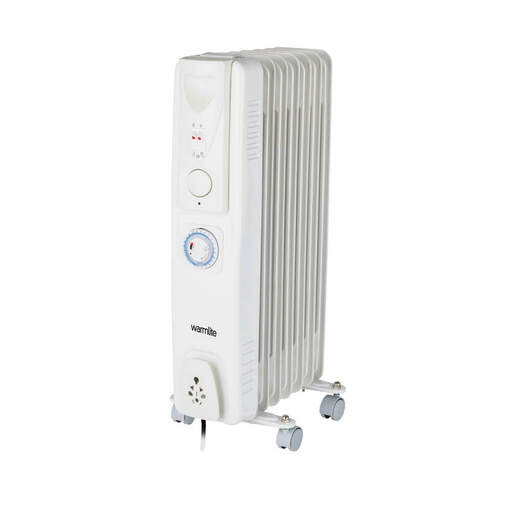
Consider this model if you want to schedule warmth for a longer desk session. Its stated features include three heat settings, an adjustable thermostat, a 24-hour timer, castors, and overheat and tip-over protection.
It still needs a stable floor position at least one metre from furniture and curtains; its safety features do not replace that clearance.
 No image available
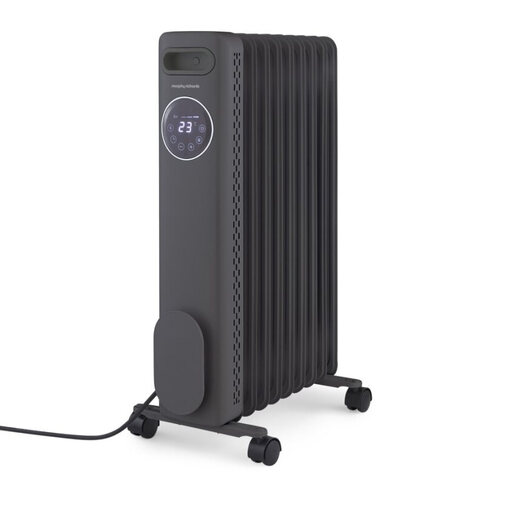
Consider this model if remote-controlled adjustment is useful while you work. It is a digital oil-filled radiator with a 2 kW maximum rating and a remote control.
For warmth near one desk, compare that maximum output with the settings you expect to use; electricity use depends on the selected setting and thermostat operation.
 No image available
Consider this model when a built-in timer matters for an attended desk routine. Its stated features include an adjustable thermostat, a 24-hour timer, and tip-over and overheat protection.
If you need a particular low-power setting, confirm the wattage of each heat level before choosing it. Keep the operating position clear rather than relying on its protective cut-outs.
 No image available
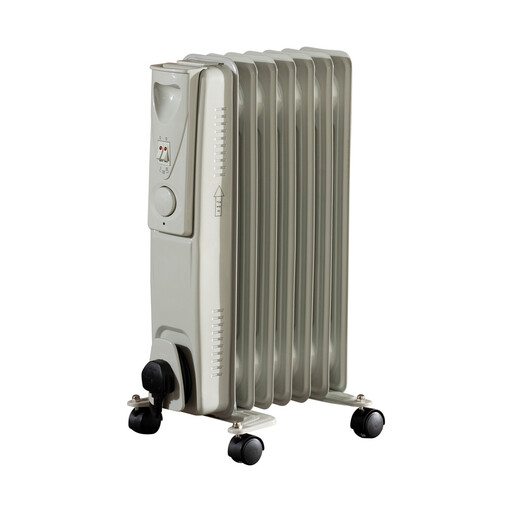
Consider this model if you want adjustable supplementary warmth and a wheeled base for moving the heater after use. Its stated features include an adjustable thermostat, a carry handle and tip-over shut-off.
Check its dimensions against your clear floor area. If lower-setting wattage or scheduled operation is important, confirm the exact model’s settings and controls before buying.
 No image available
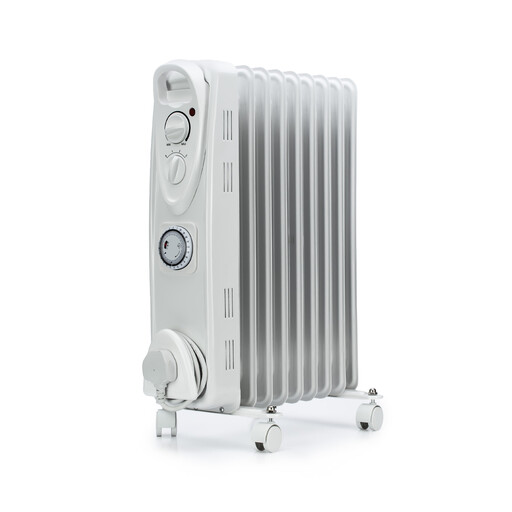
Consider this model if you want to compare several heat levels for supplementary lounge warmth. It has three stated heat settings, an adjustable thermostat and a timer.
Confirm the timer’s operating period and the unit’s dimensions if scheduling or floor-space fit will determine your choice. Its 2,000 W maximum is a different electricity-use consideration from a 1,500 W model running continuously at full output.
No: an oil-filled radiator warms up gradually, making it more suited to a longer desk session than a brief need for immediate heat. Electrical Safety First notes that it continues giving out heat after switch-off.
Keep the heater at least one metre from furniture and curtains, as Devon and Somerset Fire and Rescue Service advises. Include the desk chair’s full movement and the cable route when checking whether that space remains clear.
No: use a timer to manage an attended period, not as a reason to leave a portable heater running while you sleep or are out. Switch it off and unplug it before going to bed or leaving home, and follow its instructions on switching devices.
At its full 1.5 kW rating, it uses 1.5 kWh if it runs continuously for one hour. A lower selected setting or thermostat cycling changes consumption, so compare the model’s controls and your household tariff rather than treating its maximum rating as its constant use.
Check that the exact heater has a suitable UK three-pin plug and follow its instructions for connection to a wall socket. Electrical Safety First advises against overloading sockets; avoid an extension lead for this heater.