People heating a bedroom with cold walls
If the room loses warmth quickly, a portable radiator may help while it is occupied, but it will not address the underlying heat loss. Check for draughts and insulation issues alongside the heater choice.


A portable oil-filled radiator can provide supplemental warmth in a cold-walled bedroom while you are awake, provided there is a safe place to use it. Choose its controls and output with the room in mind, but do not expect the heater to fix heat escaping through walls or draughts. If you need regular background heating, consider the room’s heat loss and whether a fixed heating arrangement is appropriate; unplug a portable heater before going to bed.
If the room loses warmth quickly, a portable radiator may help while it is occupied, but it will not address the underlying heat loss. Check for draughts and insulation issues alongside the heater choice.
If you use the bedroom for reading or getting ready for bed, a thermostat and timer may help you plan awake-time heating. An oil-filled radiator warms gradually rather than delivering an immediate blast of warm air.
A freestanding heater is an option only if it can stand securely away from bedding, curtains and furniture, with access to a suitable wall socket.
For a cold-walled bedroom, consider heat loss before deciding whether a movable heater or a more fixed heating arrangement suits the room. Then check the controls and the space needed to use a portable model safely.
| Concern | What to check | Who this matters to |
|---|---|---|
| Heat loss through walls and draughts | Check for unwanted draughts and compare the exact heater model’s room guidance with the bedroom; keep necessary ventilation clear. | If warmth disappears quickly after heating stops, I need to address the room as well as heat it. Around 40% of consumers put heat loss first. |
| Controllable warmth while awake | Look for a room thermostat, suitable output settings and a timer for supervised use. | For a settled evening routine, I would rather adjust the heat than rely on maximum output throughout. Quiet, controllable warmth comes first for around 30% of consumers. |
| Bedroom heater safety | Confirm stable floor space away from combustible items and a direct wall-socket connection; check the exact model’s protective features. | If bedding and furniture leave little room, I need to know where the heater can stand safely before buying. Safe placement is the primary concern for around 30% of consumers. |
A heater supplies warmth but does not insulate the room. Energy Saving Trust explains that heat escapes through poorly insulated walls, so the room may need heating for longer to remain comfortable.
Investigate draughts and insulation alongside the heater’s room-size guidance. Do not seal ventilation needed for safety or air quality.
Continuing heat loss can mean longer heater running times.
A timer does not make unattended portable-heater use safe. GOV.UK advises unplugging electric heaters when going to bed, and Warwickshire Fire and Rescue Service advises turning portable heaters off and unplugging them when leaving the room.
Use a timer for planned, awake-time heating; switch off and unplug the heater before sleep or when leaving.
Tip-over and overheat protection do not replace a stable position clear of bedding, curtains, clothes and furniture. Warwickshire Fire and Rescue Service advises plugging a portable heater directly into a wall outlet.
Check the available clear space and socket position before buying, and avoid an extension lead or power strip.
Electrical Safety First advises buying from a reputable retailer, avoiding second-hand heaters and registering an appliance so the manufacturer can make contact about recalls.
Check the exact model, its plug and instructions, and how to register it before purchase.
The portable Dragon 4 line is relevant if you want a freestanding radiator with adjustable output and room controls.
The MK1E oil-filled panel line is a reference point for a fixed, programmed heating arrangement rather than a radiator moved between rooms.
The portable IGHO02620W is an example to examine if adjustable output, a timer and protective features are priorities.
These portable oil-filled radiators are options for supplemental warmth while the bedroom is occupied. Compare their stated controls, then check each model’s room guidance and whether you have space to use it safely; none will insulate a cold wall.
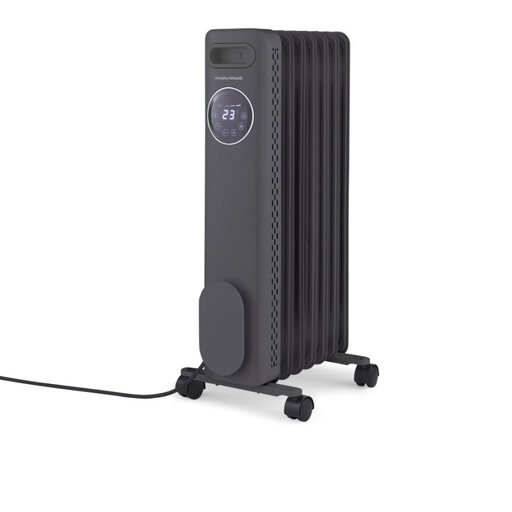 Image unavailable
Consider this portable model for awake-time bedroom heating if its output suits the room. The product name specifies 1.5kW output and a remote control; check its room guidance and the clearance required before buying.
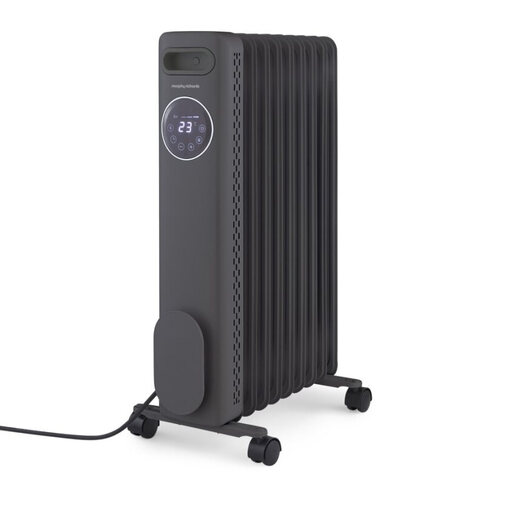 Image unavailable
This is another portable option for heating the bedroom while it is occupied. Its product name specifies 2kW output and a remote control; compare its exact room guidance and placement instructions rather than assuming the higher rating resolves cold-wall heat loss.
 Image unavailable
Consider this model if a digital heater with a timer fits your awake-time routine. The product name specifies 2000W output and a timer; check the exact room guidance and allow the unit to cool before moving it.
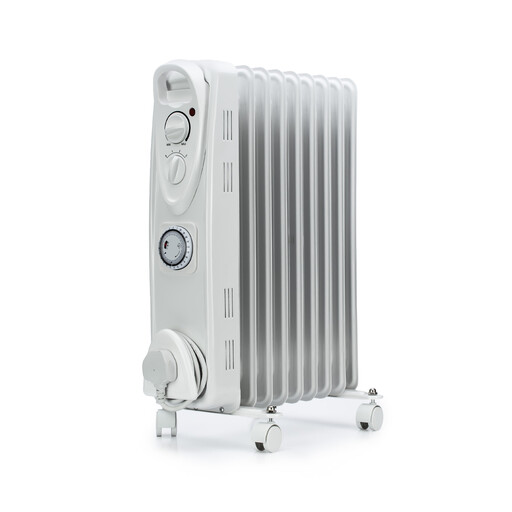 Image unavailable
This freestanding option is worth considering where adjustable, supervised heating is the priority. Its product name specifies three heat settings, a thermostat and a timer; confirm that the bedroom provides clear, stable floor space.
 Image unavailable
Consider this model for adjustable warmth during occupied-room use. Its product name specifies a thermostat, 24-hour timer, tip-over and overheat protection; check its fit for your room and keep it clear of flammable materials.
No. It adds heat but does not insulate a wall or stop unwanted draughts. Energy Saving Trust advises addressing insulation and appropriate draught-proofing to reduce heat loss, while maintaining necessary ventilation.
No: switch it off and unplug it before going to bed. GOV.UK advises unplugging electric heaters at bedtime, and Electrical Safety First does not recommend using portable heaters overnight; a timer does not replace that precaution.
Make sure the radiator can stand securely away from bedding, curtains, clothes and furniture and plug directly into a suitable wall socket. Follow the exact model’s clearance instructions; Warwickshire Fire and Rescue Service also identifies tip-over and overheat protection as useful safeguards, not substitutes for safe placement.
Compare the power setting you expect to use and how long the heater runs, rather than relying on an efficiency label. A 2kW radiator running continuously at that setting uses 2kWh in one hour; actual use with a thermostat depends on its cycling, the chosen temperature and the room’s heat loss.
No. In England and Wales, GOV.UK guidance says that since 1 April 2020 landlords cannot let or continue to let domestic private rented properties covered by the minimum energy efficiency regulations with an EPC rating below E unless a valid exemption applies. Check whether the rules cover your tenancy; Scotland and Northern Ireland have separate rules.