Short-stay conservatory users
If you use the room at predictable times, a thermostat helps control warmth while a timer lets you plan when the heater runs. De’Longhi lists both controls on its TRRS0715E.


Choose an oil-filled radiator by the conservatory’s heat loss and the times you use it, rather than floor area alone. A thermostat is useful for controlling warmth; a timer is worth considering for a regular routine. A 1 kW model may suit a small, enclosed space, while a colder or more glazed room may call for higher rated output, but neither rating guarantees the temperature you want.
If you use the room at predictable times, a thermostat helps control warmth while a timer lets you plan when the heater runs. De’Longhi lists both controls on its TRRS0715E.
If glazing, draughts or limited insulation make the room hard to warm, compare a radiator’s output with the room’s dimensions and condition. The room guides published for individual Dimplex and De’Longhi models cannot guarantee the result in your conservatory.
If the radiator will sit near seating or curtains, plan a stable position with clear space around it. GOV.UK advises keeping heaters away from curtains and furniture, while Electrical Safety First warns against overloaded sockets and extension leads.
Start with the room’s dimensions, glazing and draughts; then decide which controls fit the hours you spend there and where the radiator can stand safely.
| Concern | What to check | Who this matters to |
|---|---|---|
| Heat output | Measure the room and note its glazing and draughts. Compare the exact model’s rated output and room guide, distinguishing area in m² from volume in m³. | If my glazed conservatory cools quickly, I need to judge whether the heater can keep up rather than rely on a small-room label. Around 29% of consumers put heat-loss fit first. |
| Controls and scheduling | Check for a thermostat and, if your routine is regular, a timer on the exact model. | When I use the room at set times, I want control over when the heater runs instead of managing it by hand each time. Routine control comes first for around 29% of consumers. |
| Safe placement | Check the manual for positioning requirements and allow clear space from furnishings, walking routes and the socket. | With furniture and curtains nearby, I need a stable place for the radiator where it will not be knocked or crowded. Around 21% of consumers make safe placement their primary concern. |
| Fit and features | Compare the radiator’s dimensions and carrying or moving features with the available floor space; choose controls you expect to use. | If usable floor space is tight, I need the radiator to fit without blocking a door or seat, and I may prefer straightforward controls for occasional use. Physical fit and a suitable feature set lead the choice for around 21% of consumers. |
A floor-area or room-volume guide belongs to a particular model; it does not account for every conservatory’s glazing, insulation and draughts.
Measure the room, including ceiling height, and use the published guide as a starting point when judging the output you need.
A timer controls operating hours, not the risks created by placement or unattended use. GOV.UK advises unplugging electric heaters when going out or going to bed.
Plan timed use around occupancy, follow the appliance instructions, and switch off and unplug the heater when leaving or going to bed.
GOV.UK advises keeping heaters away from curtains and furniture and never using them to dry clothes. A restricted walking route also makes a portable radiator easier to knock.
Choose its position before buying, allowing clear space around the heater and a clear route through the room.
The exact model’s instructions and any applicable product alert matter more than a general category description.
Keep the model number, read its manual and check the UK Office for Product Safety and Standards’ product safety alerts, reports and recalls service.
The OFX100E illustrates a compact, thermostatically controlled option: Heater Shop lists it at 1 kW with a room guide of up to 10 m².
The Radia S range includes the mechanically controlled TRRS0715 and the digital, timer-equipped TRRS0715E for buyers choosing between simpler controls and scheduled use.
The RHOFR5001B is a seven-fin, 1.5 kW option with manual power settings and an adjustable thermostat.
These oil-filled radiators offer different rated outputs and controls to compare against your conservatory’s heat loss, available floor space and hours of use. Check the exact model’s instructions for indoor placement and electrical use before choosing.
 No image available
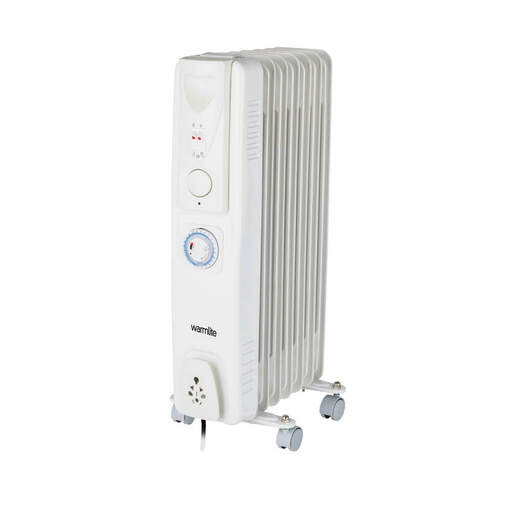
Consider this model if you use the conservatory at predictable times and want a timer alongside manual heat settings.
The product name specifies three heat settings, an adjustable thermostat, a 24-hour timer, castors, and overheat and tip-over protection. Check that the room and intended position suit the heater; its 1,500 W rating alone cannot establish the temperature it will maintain.
 No image available
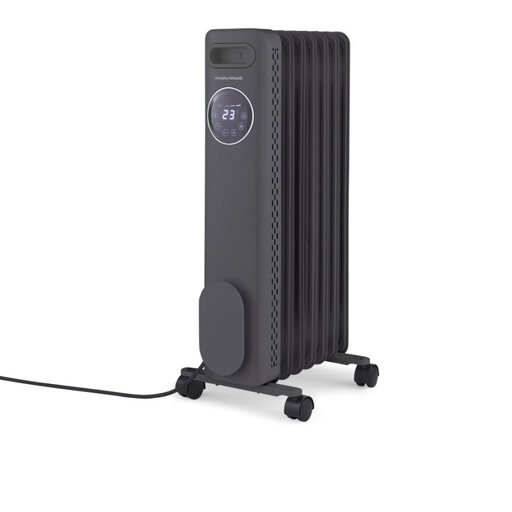
Consider this 1.5 kW model if digital controls and a remote suit the way you use the room.
The product name identifies the remote control. Compare the rated output with your room’s dimensions and heat loss, and check the model instructions for placement and socket use.
 No image available
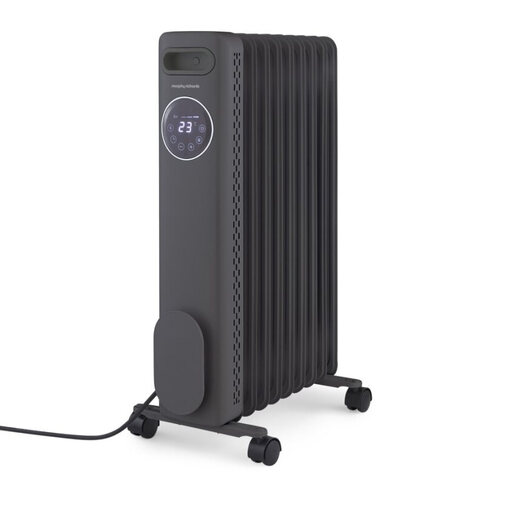
Compare this model if your room conditions make a higher rated output worth considering and you want digital controls.
Its product name specifies 2 kW and remote control. Higher rated output does not establish that the heater is necessary or sufficient for your conservatory; check the room and the model’s positioning instructions.
 No image available
Consider this model if a thermostat and timer suit regular use and its footprint fits your intended position.
The product name specifies a 24-hour timer and tip-over and overheat protection. Protection features do not replace stable placement; check the instructions before using it in the conservatory.
 No image available
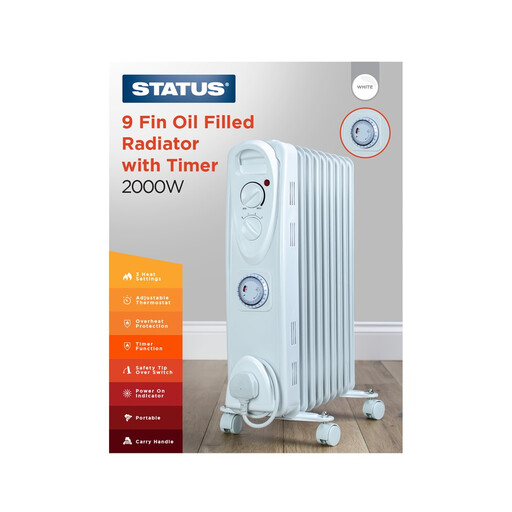
Compare this higher-output option if your conservatory’s heat loss warrants considering a 2,000 W rating.
The product name specifies three heat settings, an adjustable thermostat and a timer. Check whether the output suits the room and follow the model’s instructions for clearance and attended use.
Yes, if the exact appliance is suitable for the room’s conditions and can stand on a stable, level surface away from furnishings. A conservatory that becomes damp or exposed to water needs particular care: check the model’s manual and ingress-protection rating rather than assuming an ordinary indoor portable heater is suitable. Dimplex’s OFXE instructions, for example, require its feet to be securely fitted.
A timer does not make unattended use appropriate. GOV.UK fire-safety guidance advises unplugging electric heaters when you go out or go to bed; use the timer within the appliance’s instructions and switch off and unplug the heater at those times.
Plan to use a suitable socket in accordance with the heater’s manual rather than relying on an overloaded extension lead. Electrical Safety First warns that overloaded sockets and extension leads are particularly dangerous with high-powered appliances, including heaters.
A thermostat can limit continuous full-power operation once its set temperature is reached, but it does not change the electricity needed per unit of direct electric heat. Energy Saving Trust notes that electric heaters warm a single room and can be expensive to run compared with main heating systems.
Yes. Once you have a brand and model number, check the UK Office for Product Safety and Standards’ product safety alerts, reports and recalls service. If an applicable recall gives instructions to owners, follow them before further use.