
24/7 Customer Support

Free returns

Same-day & Next-day Delivery

Quality Guaranteed

Unlock Your Welcome Offers: FREE Delivery | Up to 80% OFF | Free 30-day JoyPlus trial
Download the APP
Navigating the world of art supplies can be tricky. When it comes to oil pastels, the shelves are filled with options that look similar but perform very differently. Many aspiring artists and hobbyists end up with a set that doesn't suit their needs, leading to frustration and wasted money. As a Joybuy Product Recommendation Officer, my role is to help you see past the marketing and focus on what truly matters for your creative projects.
Before you add that colourful box to your basket, let's look at a few common pitfalls that can trip up even seasoned buyers.
To make a confident choice, you only need to understand a couple of key factors. These are the non-negotiable specifications that separate a useful tool from a drawer-filler.
The binder is what holds the pigment together and dictates the pastel's behaviour. Understanding the three main types is the most important step in your decision.
Instead of focusing on the sheer number of pastels in a set, consider the quality and selection of the colours.
To help you find the right fit, we've matched some reliable options to different types of artists and their needs.
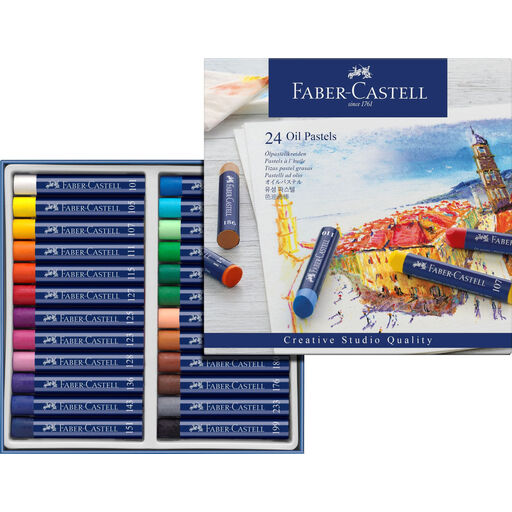
Why This Fits Their Persona: This set is an ideal entry point for students or hobbyists in the UK. It provides a genuine oil pastel experience—creamy, vibrant and blendable—from a reputable brand without a significant financial commitment. The 24-colour palette is versatile enough for learning techniques and completing a wide range of projects.
It sidesteps the "more is better" trap by offering a curated set of 24 high-quality, well-pigmented colours that blend cleanly, rather than a huge set of weak, muddy pastels.
Features a smooth, waxy consistency that is easy to control and blend. The colours are bright and intense, providing satisfying results for beginners.
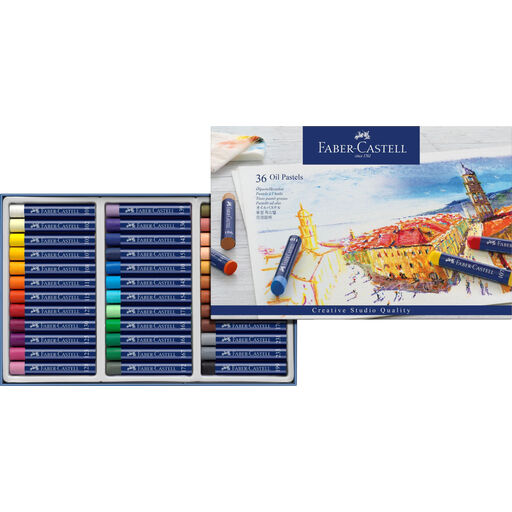
Why This Fits Their Persona: For the artist who is ready to tackle more complex work, this larger set provides a broader palette. It allows for more nuanced colour mixing and layering directly on the paper, making it suitable for ambitious projects, from expressive portraits to vibrant landscapes.
This set expands the colour range without sacrificing quality. Each of the 36 pastels maintains the same high pigment load and smooth consistency, ensuring your work remains vibrant and clean.
The extensive colour selection includes unusually intense shades, and the formulation is suitable for advanced techniques like encaustic and sgraffito (scratching through layers).
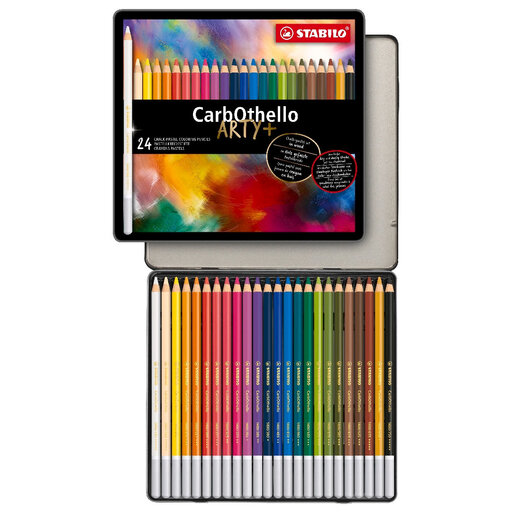
Why This Fits Their Persona: Perfect for artists who work with mixed media or require fine control. These pencils provide the texture and blendability of chalk pastels with the precision of a pencil, allowing for detailed line work, hatching and crisp edges that are impossible with a chunky pastel stick.
This product directly solves the "chalky vs. creamy" confusion by offering a distinct third category. It gives artists who need control a tool designed for that purpose, preventing frustration with broader mediums.
The lead can be sharpened to a fine point for intricate details. The highly pigmented colours are dry-blendable and can be used with water for versatile, aquarelle-style effects.
We have compiled a complete, real-time list of products that fully satisfy these strict selection criteria and UK safety regulations.
Unlike dusty soft pastels, oil pastels are not prone to smudging once they have settled and do not require a fixative for general use, such as in a sketchbook. Because they contain oil and wax, they never fully "dry" or cure. If you plan to frame your artwork or want to ensure maximum protection against smudging over the long term, applying a specialised oil pastel varnish or fixative is a good idea.
The right paper makes a huge difference. For drawing with pastels, especially oil-based ones, you need a surface with some texture or "tooth" for the colour to adhere to. Heavyweight drawing paper, cartridge paper, watercolour paper, or dedicated pastel paper are all excellent choices. Avoid using very smooth or glossy paper, as the waxy pastel will struggle to grip the surface and may appear faint or patchy.
It is generally not advisable to mix the two types directly. The waxy, non-porous surface created by oil pastels will repel the dry, dusty pigment of soft pastels, preventing them from adhering properly. Think of it as trying to write with chalk on a crayon drawing. However, you can use them in a mixed-media piece by applying oil pastels over a layer of soft pastels that has been sealed with a fixative.