People coordinating a shared lounge
When occupants use the room at different times, adjustable heat and a timer can be more useful than leaving one fixed setting on. Check that everyone who will operate the radiator can use its controls.


For a moderately chilly shared lounge, a 2 kW oil-filled radiator with an adjustable thermostat and selectable heat settings is a starting point. Consider 1.5 kW for lighter supplementary warmth or 2.5 kW for a colder, draughtier room, accepting its greater maximum electricity draw. Check that the room has a clear, safe place for the heater before deciding on output.
When occupants use the room at different times, adjustable heat and a timer can be more useful than leaving one fixed setting on. Check that everyone who will operate the radiator can use its controls.
If the radiator will supplement warmth in one occupied room, compare its rated power, lower settings and likely operating hours. A higher maximum output also permits a higher maximum electricity draw.
Children, pets, walkways and soft furnishings make stable placement and clear space particularly important. Electrical Safety First also warns against overloading sockets and extension leads with high-powered appliances such as heaters.
Judge how much supplementary heat the lounge needs, then compare controls and maximum electricity draw. Whatever the output, leave room for a stable position away from furnishings.
Consider it: When the lounge needs modest supplementary warmth rather than recovery from a pronounced chill.
Trade-off: Its lower maximum draw also limits its maximum heat output; check the room’s draughts and insulation.
Consider it: For a moderately chilly lounge where occupants want a higher maximum setting alongside adjustable heat.
Trade-off: Full-power use draws more electricity than a 1.5 kW model; a thermostat or timer controls operation, not the power used while it is heating.
Consider it: If the lounge is larger or notably draughty and needs more potential heat output.
Trade-off: Full-power electricity draw is higher. Check the exact model’s weight if the radiator will often be moved.
| Concern | What to check | Who this matters to |
|---|---|---|
| Enough heat | Compare maximum output and lower settings against the lounge’s size, insulation and draughts. A model’s stated room capacity is not a guarantee for a different room. | If my lounge stays chilly or doors are opened often, I need enough heat output for those conditions. Roughly 33% of consumers put adequate output first. |
| Electricity use | Compare rated power, operating hours and your electricity tariff; check the thermostat and timer on the exact model. | When I only need warmth while people are using the room, I want control over how long the heater runs. Around 27% of consumers prioritise electricity use. |
| Safe placement | Check documented safety cut-outs and plan a stable position clear of furnishings, without overloading a socket or extension lead. | In a lounge with pets, children or busy walkways, I need a place where the heater is less likely to be knocked or obstructed. About 20% of consumers put safe placement first. |
| Timing and movement | Check the timer’s schedule, castors or handles, and the model’s weight if it will be repositioned. | With different people using the lounge at different times, I want heat when it is needed and a radiator I can reposition safely. Roughly 20% of consumers prioritise timing and movement. |
An oil-filled radiator still uses electricity while heating. Its rated power and operating time matter when assessing running costs; a thermostat or timer does not eliminate the electricity used at a high setting.
Compare the maximum and lower settings, then use your own tariff and expected hours of use when weighing up outputs.
Curtains, furniture and other combustible items can make placement hazardous. Electrical Safety First warns that high-powered appliances such as heaters can overload socket-outlets or extension leads.
Choose a stable, clear position, follow the model’s clearance instructions and avoid overloading its electrical connection. Do not use the radiator to dry clothes.
A tip-over switch or overheat cut-out addresses a particular hazard; neither makes an obstructed or poorly positioned heater safe.
Check which features the exact model has, keep its cable and surroundings clear, and follow its instructions for switching off and supervision.
Recalls concern identifiable products, not every oil-filled radiator. Electrical Safety First’s UK recall list recorded a Kobe 2 kW oil-filled 9-fin radiator recall dated 29 July 2026.
Check recall notices against the exact brand and model before use; if your unit is affected, stop using it and follow the recall instructions.
Its Dragon 4 Pro oil-filled range offers models with electronic controls, including 2 kW and 2.5 kW versions.
Warmlite lists oil-filled radiators at several outputs, including 1.5 kW and 2 kW timer models.
The ECR20 is a 2 kW oil-free column radiator to consider only if an oil-filled design is not essential.
These models cover 2 kW options for a moderately chilly lounge and 1.5 kW options for lighter supplementary warmth. Check the conditions of your own room and the exact product instructions before choosing.
 No image available
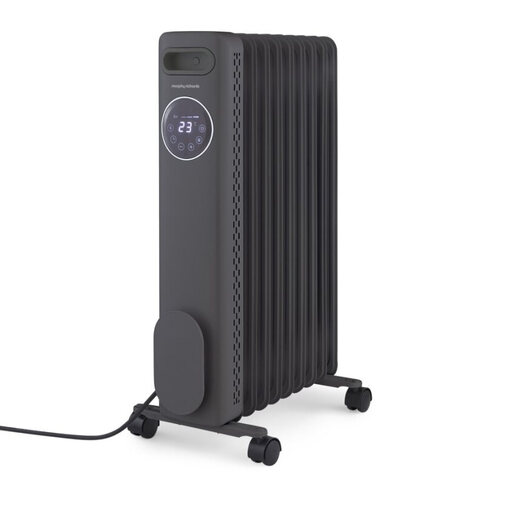
Consider this 2 kW option if the shared lounge needs adjustable supplementary heat. The product name identifies digital controls and a remote; check that its output and the space required around it suit your room.
 No image available
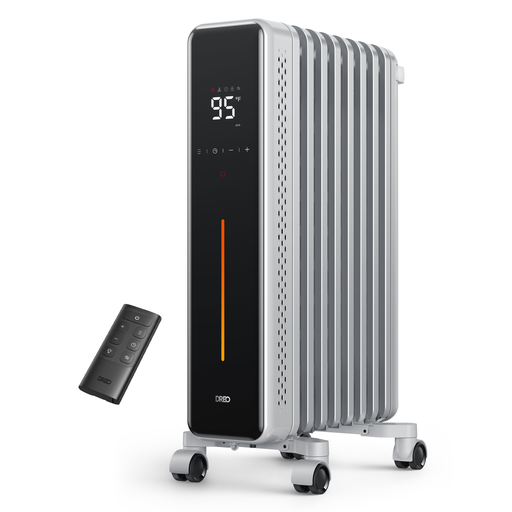
This 2 kW model is an option to assess for a moderately chilly lounge. Check the exact room guidance before choosing it for a larger, poorly insulated or draughty space.
 No image available
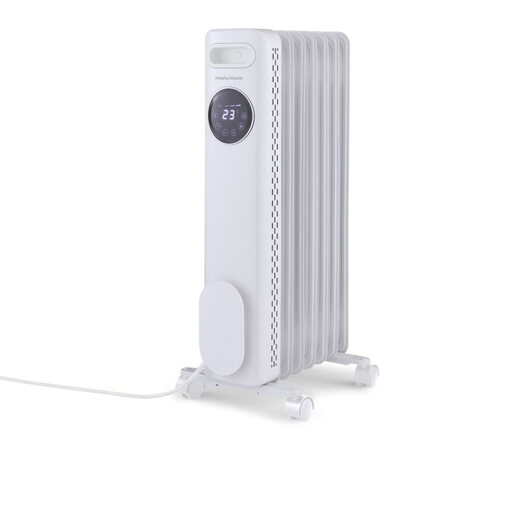
Consider this lower-output option for modest supplementary warmth rather than a persistently cold lounge. Its product name identifies a remote; check the room conditions and placement instructions before choosing 1.5 kW.
 No image available
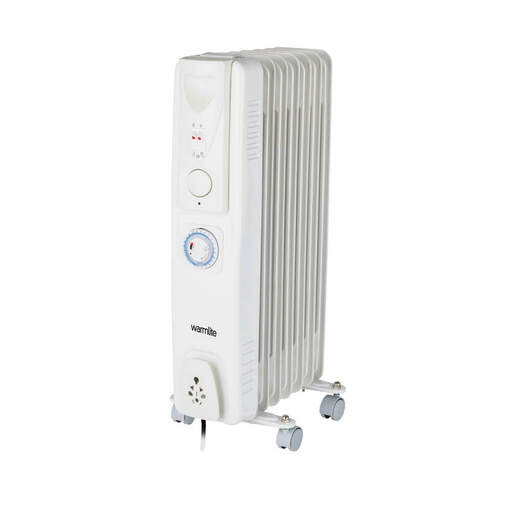
This is a lower-output choice for lighter supplementary heating. Its named features include three heat settings, an adjustable thermostat, a 24-hour timer, castors, and tip-over and overheat protection. Check whether 1,500 W is enough for the lounge.
 No image available
Consider this model when the lounge needs modest supplementary warmth. Its named features include an adjustable thermostat, a 24-hour timer, and tip-over and overheat protection. Check that its output and heat settings suit the room.
Start with how cold and draughty the lounge is, not its floor area or radiator fin count alone. A 1.5 kW model is a conditional choice for lighter supplementary warmth, 2 kW is a starting point for a moderately chilly room, and 2.5 kW offers more maximum output for a colder or draughtier space at a higher maximum electricity draw.
Use the setting’s power in kW, your electricity unit rate and the time the heater will draw power. A thermostat may cycle the heater rather than keep it at full output continuously, so actual use depends on the setting and room conditions.
Avoid an overloaded extension lead or socket arrangement for a high-powered heater. Electrical Safety First warns about overloading sockets and extension leads; follow the exact radiator’s connection instructions and choose a clear, stable position away from flammable furnishings.
Check the exact model’s instructions, electrical connection, placement requirements and recall notices before use. Safety cut-outs are useful features to look for, but they do not replace clear space around the heater or careful operation.