For supplementary heat in a genuinely small bedroom, consider a compact, lower-output oil-filled radiator if you can accept gradual warm-up. If the room is larger or colder, compare models with greater output and a thermostat against its dimensions and insulation. Whichever you choose, leave clear space around the heater and use it during occupied periods rather than overnight, in line with Electrical Safety First’s portable-heater advice.
Who this suits
Small-bedroom top-up heat users
You want supplementary warmth in a compact occupied bedroom and can wait for an oil-filled radiator to warm up. Electrical Safety First notes that these heaters take longer to heat up but continue giving out heat after switch-off.
Safety-first bedroom users
You have space to keep a portable heater away from bedding, curtains, clothes and furniture, as Electrical Safety First advises, and plan to switch it off rather than use it overnight.
Routine-based comfort users
You use the bedroom at regular times and want to compare thermostat or timer controls for those occupied periods. Check the controls on the exact model: features differ between radiators.
What matters when choosing
Start with safe placement and the room’s size; then decide whether straightforward thermostat control or a timer suits your routine.
| Concern |
What to check |
Who this matters to |
| Bedroom safety |
Check the supplied plug and the model’s instructions. Allow clear floor space away from bedding, curtains, clothes and furniture; do not plan overnight use. |
I need to position the heater clear of bedroom furnishings and switch it off before sleeping. Around 36% of consumers put safe bedroom use first. |
| Room-heating capacity |
Compare room volume, insulation and draughts with the exact model’s output and stated room guidance; check whether it has a thermostat. |
If my room is cold or takes time to warm, I need output suited to its actual size rather than wattage alone. For around 36% of consumers, room fit is the primary concern. |
| Controls and warm-up |
Choose between simple controls and a timer for occupied periods. Allow for the gradual warm-up that Electrical Safety First describes for oil-filled radiators. |
When I use the bedroom at regular times, I want controls that fit my routine without expecting instant heat. Around 21% of consumers prioritise this need. |
| Floor and storage space |
Check dimensions, weight and the space needed for safe placement; confirm any handle or castors on the exact model. |
With little free floor space, I need a radiator I can position safely and store when cool. Compactness is the main concern for around 7% of consumers. |
Bedroom heating mistakes to avoid
-
Planning to leave the radiator on overnight
Electrical Safety First advises against using portable heaters overnight. Heat retained after switch-off does not change that advice.
Use the heater during occupied periods, switch it off when no longer needed and keep a smoke alarm near bedrooms.
-
Choosing by wattage alone
De’Longhi states a 15 m³ working capacity for its 500 W TRNS0505M and 45 m³ for its 1.5 kW TRRS0715. Those are specifications for the respective models, not universal room-sizing rules.
Measure the bedroom and consider insulation and draughts before comparing a model’s output, thermostat and stated capacity.
-
Relying on a timer or cut-out to make placement safe
Protective features vary by model and do not remove the risk of placing a heater close to bedding, curtains, clothes or furniture.
Check the exact model’s features and instructions, then maintain the required clearance whenever it is in use.
-
Drying clothes on the heater or overloading an extension lead
Electrical Safety First advises against drying clothes on a portable bedroom heater and warns about overloaded extensions used with high-powered appliances.
Keep clothes away from the radiator and follow its connection instructions without overloading leads or socket-outlets.
Relevant brands to consider
De’Longhi
Its oil-filled range includes compact supplementary-heating models and higher-output Radia S models with mechanical or electronic controls.
- De’Longhi specifies its TRNS0505M at 500 W with a 15 m³ working capacity, and its TRRS0715 at 700–1,500 W with a 45 m³ working capacity.
- Those capacities apply to the named models. Compare the room and available floor space rather than treating either figure as a rule for every bedroom.
Dimplex
Its oil-filled panel radiators provide an alternative format for buyers comparing portable heaters and scheduled controls.
- Dimplex lists a 7-day timer and adaptive start for its MK1E range.
- Dimplex states that its OFXE product is suitable only for well-insulated spaces or occasional use; check the conditions for the particular model and bedroom.
Igenix
Its IGHO02620W offers an example of a higher-output oil-filled radiator with digital controls.
- Igenix specifies 800 W, 1,200 W and 2,000 W settings, a thermostat and a 24-hour timer for the IGHO02620W.
- Check whether a radiator with a 2,000 W maximum setting and its required floor clearance fit a genuinely small bedroom.
Oil-filled radiators on Joybuy
These models offer different controls and output levels for supplementary room heating. Compare each one with your bedroom’s size, available clearance and routine before choosing.
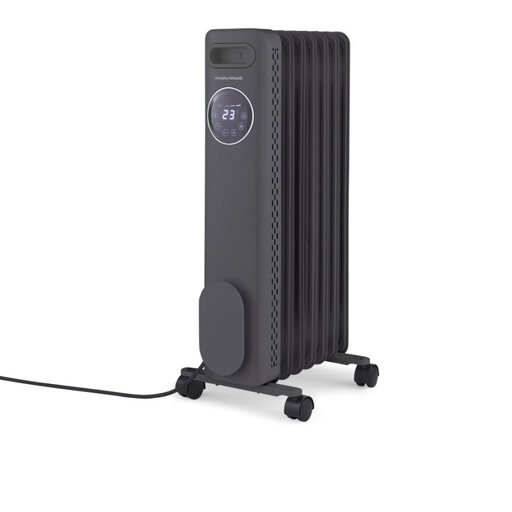 Image unavailable
Morphy Richards HeatFlux 827502 1.5 kW digital oil-filled radiator, grey
Consider this model if you want digital controls and a remote for occupied-time heating. The product title specifies 1.5 kW output; check the room guidance, supplied plug and operating clearance before buying.
View on Joybuy
 Image unavailable
DAEWOO HEA1976GE 1,500 W seven-fin oil-filled radiator, black
For a regular occupied-room routine, this model’s title lists an adjustable thermostat and 24-hour timer, alongside tip-over and overheat protection. Check whether its 1,500 W output suits your room; the protective features do not replace safe placement.
View on Joybuy
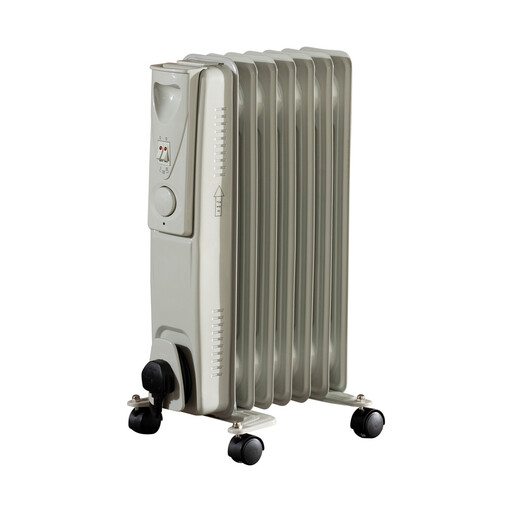 Image unavailable
DAEWOO 1,500 W seven-fin portable oil-filled radiator, white
Consider this version if you want thermostat control and a heater that can be repositioned when cool. Its title lists a wheeled base, carry handle and tip-over shut-off. Check the room fit, supplied plug and required clearance.
View on Joybuy
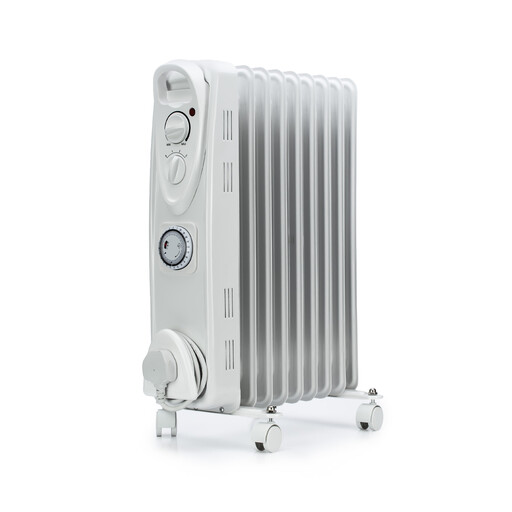 Image unavailable
Status 2,000 W nine-fin oil-filled radiator, white
If selectable heat settings matter, the title lists three settings, an adjustable thermostat and a timer. Its maximum output is 2,000 W; check the room guidance, dimensions and timer interval rather than assuming that maximum suits a small bedroom.
View on Joybuy
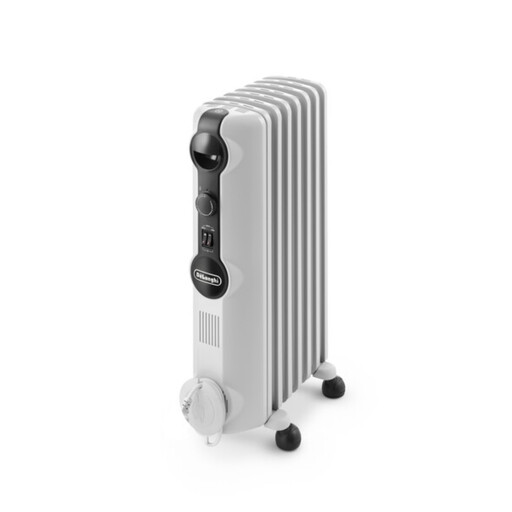 Image unavailable
De’Longhi Radia S TRRS0715 1,500 W seven-fin radiator, white
Consider the mechanical controls if you prefer physical adjustment to programming. De’Longhi states a 45 m³ working capacity for the TRRS0715, but check that against your room. Confirm the exact selectable output settings for the offered variant before buying.
View on Joybuy
Common questions
Can I leave an oil-filled radiator on overnight in a bedroom?
Electrical Safety First advises against using portable heaters overnight. Use the radiator during occupied periods, switch it off when no longer needed and keep it away from bedding, curtains, clothes and furniture.
What output should I choose for a small bedroom?
Choose against the room’s volume, insulation and heating needs rather than wattage alone. De’Longhi states a 15 m³ working capacity for its 500 W TRNS0505M and 45 m³ for its 1.5 kW TRRS0715; compare the exact model’s guidance with your bedroom rather than applying either figure to other radiators.
Can I use an extension lead with a bedroom heater?
Avoid an overloaded extension lead or socket-outlet. Electrical Safety First warns that high-powered appliances such as heaters can make overloaded extensions dangerous; follow the heater’s connection instructions and check the cable and plug for damage.
What should I check before using a portable heater in a bedroom?
Check the supplied plug and the exact model’s instructions, then make sure it can stand securely with the required space around it. Electrical Safety First advises keeping portable heaters well away from flammable materials and not using them to dry clothes.


