Students seeking warmth beside a desk
If you mainly want to take the chill off your desk area in a compact bedroom, consider the radiator’s size and where you will store it as well as its output.


For warmth mainly around a desk in a genuinely small room, consider a compact 650W oil-filled radiator; for longer study sessions in a small bedroom, a thermostatic 1.5kW model may be more appropriate. Choose a 2kW model for the room’s size and conditions, not simply because it has a higher output. Before buying any portable heater, check your accommodation rules and whether you can position and power it safely.
If you mainly want to take the chill off your desk area in a compact bedroom, consider the radiator’s size and where you will store it as well as its output.
If you want background warmth through several hours of study, match the heater to the room and look for thermostat control rather than choosing the smallest unit solely for its size.
If bedding, furniture and sockets leave little clear floor space, check the accommodation’s appliance rules and work out where the radiator could stand before ordering.
Start with permission and a safe place for the heater, then compare the output needed for your room with the controls you would use during study.
| Concern | What to check | Who this matters to |
|---|---|---|
| Room and desk-area warmth | Compare maximum output and the manufacturer’s room-size guidance with your room’s size and condition. | If I mainly need warmth at my desk, I do not want to choose a larger heater just by its wattage. Around 31% of consumers put matching output to the space first. |
| Safe placement and permission | Check accommodation rules, a suitable socket position and whether the heater can stand at least one metre from flammable items. | When my desk is close to bedding or papers, finding a permitted, clear position determines whether I can use a radiator at all. For around 31% of consumers, safe placement and permission are the primary concern. |
| Electricity use | Compare selectable power settings and thermostat control; check your own electricity arrangements. | For regular study sessions, I want control over how much power the heater draws and how long it runs. Around 23% of consumers prioritise electricity use. |
| Controls and storage | Look at the thermostat, any timer and how you would move and store the unit. | If I need to put the radiator away after studying, straightforward controls and handling matter most to me. Around 15% of consumers make convenience and portability their first consideration. |
A higher maximum output can suit a larger or colder room, but it is not automatically necessary for local warmth. Russell Hobbs states room-size guidance of up to 10m² for its cited 650W model, 15m² for its 1.5kW model and 20m² for its 2kW model; those figures are manufacturer guidance, not a guarantee in a draughty room.
Measure the room and decide whether you want warmth mainly at the desk or across the bedroom before comparing output and lower heat settings.
Desk areas can leave little space between a heater and curtains, papers or bedding. Hampshire & Isle of Wight Fire and Rescue Service advises keeping heaters at least one metre from flammable items.
Keep the radiator upright and clear of those items, do not dry clothes on it, and switch it off before sleeping or leaving the room.
Accommodation providers can set appliance and fire-safety rules that affect whether you may use a portable radiator in your room.
Check your accommodation agreement and ask the accommodation team before ordering.
Electrical Safety First warns that overloading sockets or extension leads can be dangerous, particularly with high-powered appliances.
Plan a suitable socket arrangement, check the cable and plug, and do not combine the heater with other high-load appliances on an overloaded extension setup.
Its cited oil-filled models range from a compact 650W five-fin radiator to 1.5kW seven-fin and 2kW nine-fin options.
The cited 1.5kW Radia S models include mechanical-control and electronic-control variants.
Its EvoRad is an oil-free column-radiator alternative for someone considering programmable control rather than specifically requiring an oil-filled model.
These oil-filled radiators cover compact 650W desk-area use and 1.5kW options for students considering longer periods of background warmth. Match any model to your room, available floor space and accommodation rules before choosing.
 No image available
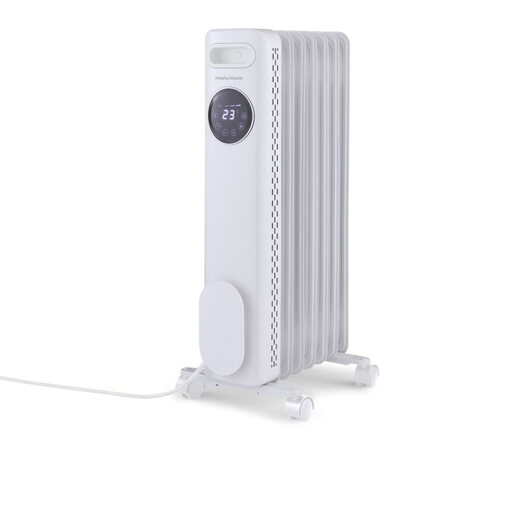
Consider this 1.5kW option if you want remote control during study sessions. Compare its room-size guidance with your bedroom before buying.
 No image available
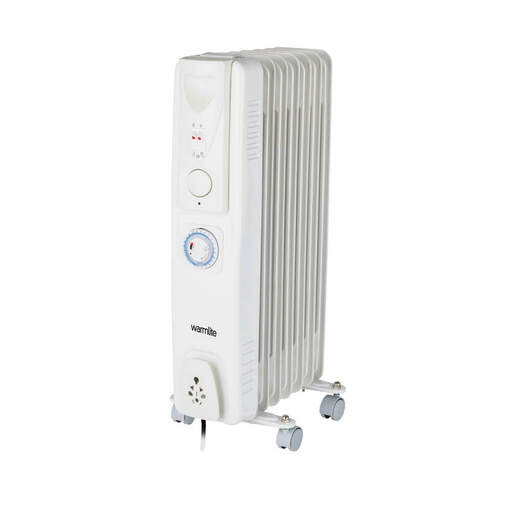
For a study routine where adjustable heat matters, this model lists three heat settings, a thermostat and a 24-hour timer. Its title also specifies castors, overheat protection and tip-over protection; check its room-size guidance against your space.
 No image available
This 1.5kW model is worth comparing if a thermostat and 24-hour timer suit your study routine. The title specifies tip-over and overheat protection; check the output of its individual settings and its recommended room area before choosing.
 No image available
Consider this compact-output option if warmth near the desk is your main aim. Check that its recommended room size and selectable controls suit your space, particularly if the whole bedroom feels cold.
 No image available
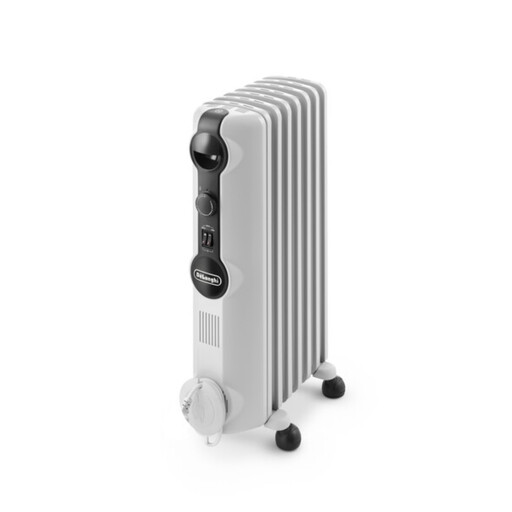
Consider this mechanical-control model if you prefer to adjust a heater while you are present. De’Longhi specifies a room thermostat for the TRRS0715; check the model’s room guidance and do not assume it has the timer fitted to the TRRS0715E variant.
Check your halls’ accommodation agreement and appliance rules before buying; permission depends on the provider. A radiator’s suitability for your room does not establish that privately owned heaters are allowed there.
Keep it at least one metre from flammable items, including bedding, curtains, clothes and loose papers, following Hampshire & Isle of Wight Fire and Rescue Service advice. Do not dry clothes on it, and switch it off before sleeping or leaving the room.
Do not use an extension lead if doing so would overload it or the socket. Electrical Safety First warns about overloaded sockets and extension leads; check the equipment rating and plan a suitable electrical arrangement before using the heater.
Check the instructions for the exact radiator. De’Longhi describes the oil reservoir in its TRRS0715E as permanently sealed and not requiring refilling, but that model-specific statement should not replace another heater’s instructions.