Students who want warmth during quiet study
An oil-filled radiator suits time spent at a desk or relaxing in one room when a quick burst of heat is less important. It takes time to warm up and continues releasing heat for a while after switch-off.


Choose an oil-filled radiator if your accommodation permits portable heaters and you want steady supplementary warmth while studying or relaxing. Allow for a slower warm-up and enough clear floor space; a heater will not fix persistent cold walls, damp or mould. Check the residence rules before comparing thermostats, power settings and safety features.
An oil-filled radiator suits time spent at a desk or relaxing in one room when a quick burst of heat is less important. It takes time to warm up and continues releasing heat for a while after switch-off.
Supplementary heat may make time in the room more comfortable, but a radiator does not correct a cold wall or a damp or mould problem. Report recurring conditions to the landlord, managing agent or accommodation team rather than relying on a heater alone.
Permission is the first buying check in managed accommodation. The University of St Andrews restricts high-powered heaters in study bedrooms unless supplied by the residence, while the University of Manchester lists portable heaters among banned items in its halls.
Confirm that you may use a portable heater and can position it safely. Then decide whether sustained warmth, adjustable controls or easier storage matters most in your room.
| Concern | What to check | Who this matters to |
|---|---|---|
| Permission and safety | Check the residence rules, the heater’s plug and where it can stand clear of bedding, papers and curtains. | If my halls prohibit portable heaters, the model’s features will not help me; around 36% of consumers put permission and safe use first. |
| Sustained warmth | Compare the chosen model’s output settings and thermostat; treat room-size claims as a guide, not a promise for a cold-walled room. | I spend long periods in a chilly room and would rather wait for steady warmth than have a quick burst of heat. Around 29% of consumers place that need first. |
| Heating controls | Look for an adjustable thermostat and selectable power settings; consider a timer only if it suits supervised use. | I want to adjust the heat as the room warms without leaving the radiator running unnecessarily; roughly 21% of consumers prioritise that control. |
| Space and storage | Check the exact model’s dimensions, weight and castors against the available clear floor space. | My room has little space to position and store a floor-standing heater, so around 14% of consumers make its size and movability their main concern. |
A portable heater may not be permitted in your particular room: the University of St Andrews and the University of Manchester publish restrictions for their residences.
Read your current residence handbook or tenancy agreement and ask the accommodation team for written clarification if the rule is unclear.
A heater that your accommodation prohibits may have to remain unused or be removed.
Supplementary heat does not repair the building conditions behind recurring cold, damp or mould.
Record the problem with photos and dates, then report it in writing to your landlord, managing agent or accommodation provider.
Controls and safety cut-outs do not remove the risks of blocked airflow, nearby combustible items or overloaded sockets. Electrical Safety First advises against using portable heaters overnight.
Follow the model’s placement instructions, keep bedding and clothes off the heater, avoid overloaded extensions and switch it off when it is not needed.
Output does not by itself tell you how comfortable a room with cold walls or draughts will feel. A larger floor-standing model also needs suitable space.
Compare the exact model’s settings and thermostat with your room layout, and check any electrical limits set by your accommodation.
De'Longhi offers mechanical oil-filled radiators alongside models with electronic controls.
Dimplex offers an oil-free column-radiator alternative for shoppers considering a similar freestanding format.
VonHaus offers oil-filled radiators with mechanical controls as well as timer-equipped options.
These floor-standing oil-filled radiators are options for supplementary student-room heating where portable heaters are permitted. Compare their stated controls and size against your room and confirm plug suitability before buying.
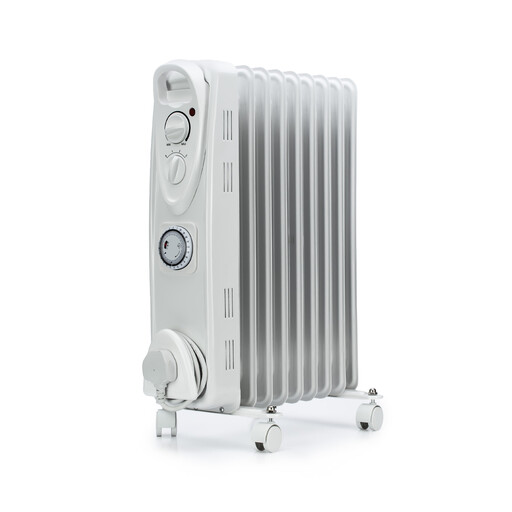 No image available
Consider this model if you want to schedule supplementary heat while you are using the room.
Its title specifies three heat settings, an adjustable thermostat and a timer. Check that its plug suits your accommodation and that you have clear space for it.
 No image available
This model suits someone who wants a built-in timer for planned periods of supplementary heating.
Its title specifies an adjustable thermostat, a 24-hour timer, tip-over protection and overheat protection. Follow the product’s warning against external timers or controllers, and confirm plug suitability before use.
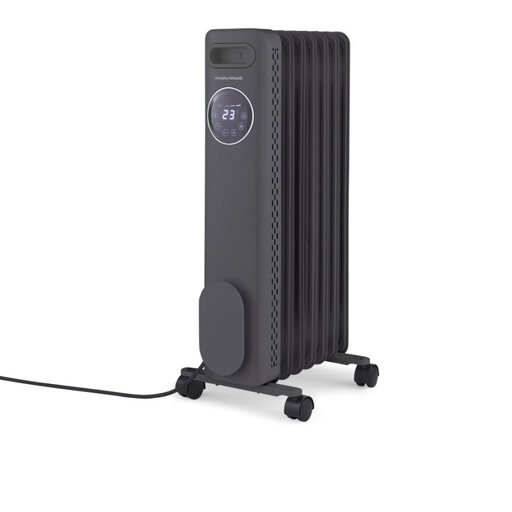 No image available
Consider this HeatFlux variant if you want digital controls and a remote for supplementary room heating.
Its title specifies 1.5kW output and remote control. Check its floor-space requirements, plug suitability and your accommodation rules before buying.
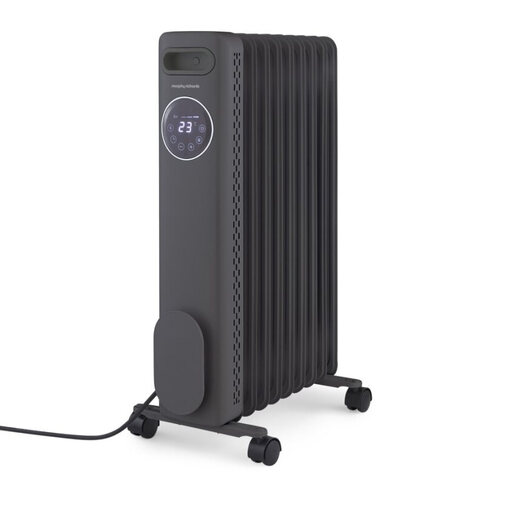 No image available
This is the 2kW HeatFlux variant for shoppers comparing output and available floor space, not a guarantee of warmth in a poorly insulated room.
Its title specifies digital controls and remote control. Check the exact unit’s dimensions and plug suitability before choosing it over the 1.5kW variant.
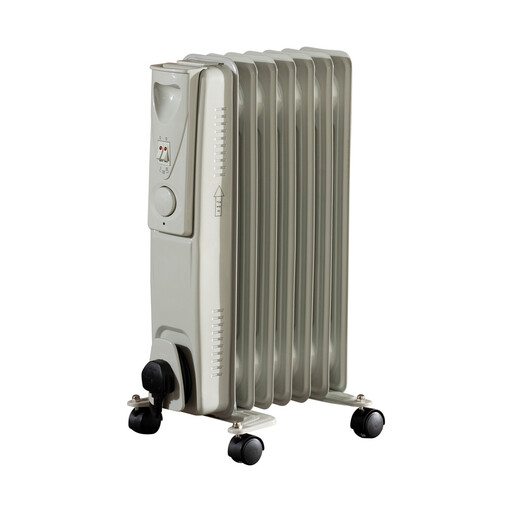 No image available
Consider this model if moving the radiator within a permitted room matters more to you than having a built-in timer.
Its title specifies an adjustable thermostat, wheeled base, carry handle and tip-over shut-off. Follow its instruction to plug directly into a wall socket, and confirm that its plug suits your accommodation.
Check your own residence rules before buying, because permission varies by accommodation. The University of St Andrews restricts high-powered heaters in study bedrooms unless the residence provides them, and the University of Manchester lists portable heaters among banned items in its halls.
No: an oil-filled radiator can add room heat but cannot repair the conditions causing persistent cold walls, damp or mould. Report the problem in writing to your landlord, managing agent or accommodation provider; in England, government tenant guidance also describes contacting the local council about unresolved housing concerns.
Electrical Safety First advises against using portable heaters overnight. Follow the appliance instructions, keep combustible items clear and switch the heater off when it is not needed; a thermostat or timer does not replace safe placement and supervision.
Check the exact model for overheat protection and, where it might be knocked, a tip-over cut-out. An adjustable thermostat helps control heating, but none of these features replaces a sound socket, clear placement or permission from your accommodation provider.